


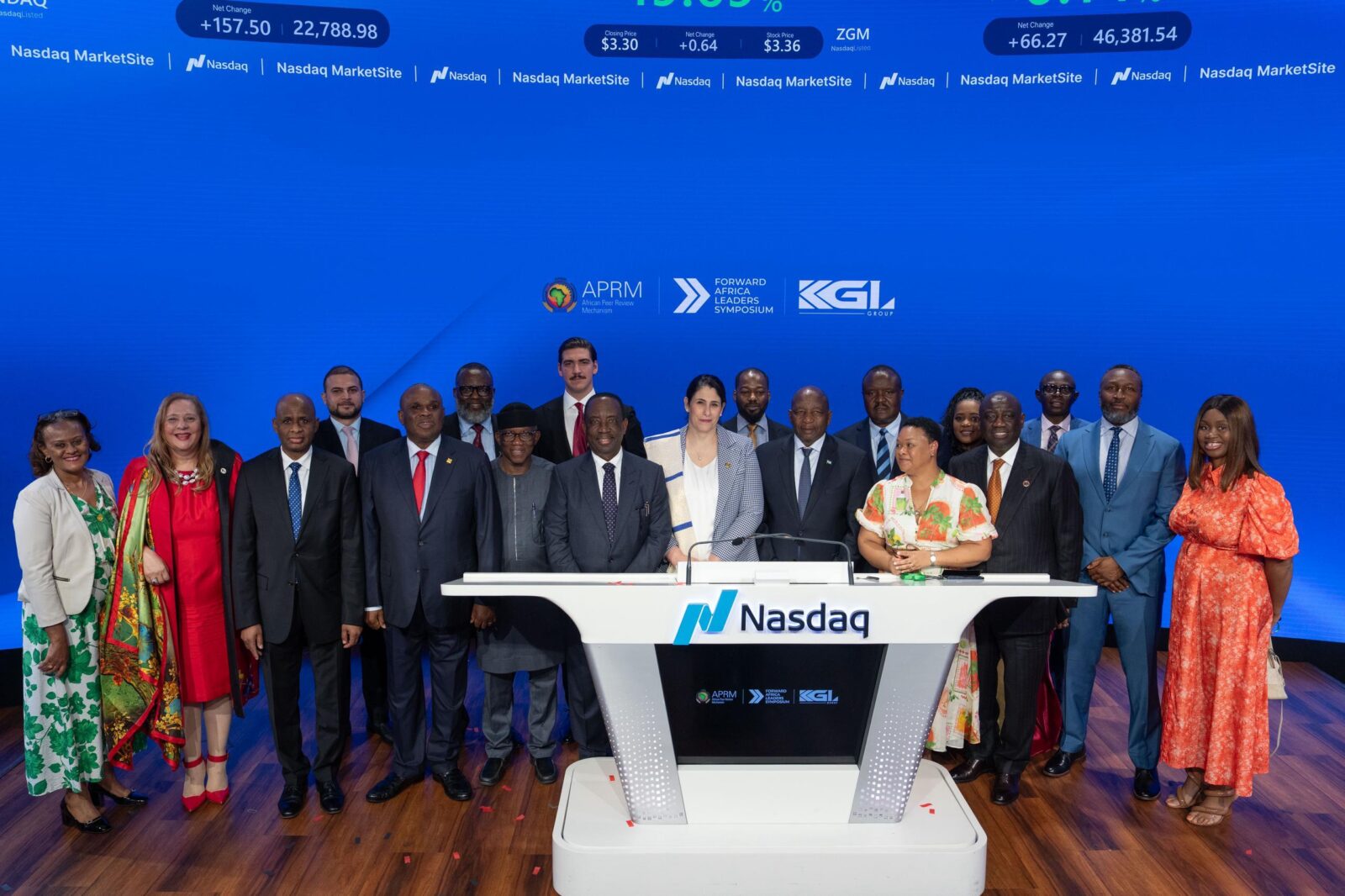
The African Union has commended the Forward Africa Leaders Symposium (FALS) for its pivotal role in highlighting the continent’s digital evolution at a crucial juncture. The AU cautioned that without unified policies and increased investment, Africa’s aspirations to thrive in the global digital marketplace could be hindered.
Convened at the Nasdaq MarketSite in New York alongside the UN General Assembly, the event attracted top-tier policymakers, investors, and innovators. The central theme, “Advancing Africa’s Digital Transformation: Inspiring Action, Accelerating Growth, Accelerating Impact,” underscored the urgency of accelerating digital progress across Africa.
Topics of discussion spanned critical areas such as data sovereignty, cybersecurity, artificial intelligence, and the importance of fostering public-private partnerships to drive sustainable development.
Selma Malika Haddadi, Deputy Chairperson of the African Union Commission, emphasized the continent’s pivotal moment in shaping its digital future. She highlighted the AU’s Digital Transformation Strategy for Africa (2020-2030), which envisions establishing a unified digital market by 2030. However, she noted that inconsistent national policies continue to fragment progress.
“Disjointed regulations act as obstacles rather than enablers,” Haddadi remarked. “We are laying the groundwork for a harmonized framework because without consistency and clear standards, Africa’s digital growth cannot transcend borders effectively.”
Hannah Awuku, the founder of the symposium, described Forward Africa not merely as an event but as a dynamic movement. “Our mission is to channel investment, encourage cross-border partnerships, and highlight indigenous innovations fueling economic expansion from cities like Lagos, Nairobi, Accra, and Cape Town,” she explained. With projections indicating that Africa’s digital economy will contribute over 5% to GDP by 2025, Awuku stressed the narrowing window for decisive action.
Investment, Infrastructure, and Expansion
Financial experts at the symposium underscored that securing capital and enhancing execution capabilities are paramount challenges. Samaila Zubairu, President and CEO of the Africa Finance Corporation, asserted that the digital economy is indispensable for Africa’s future, serving as the foundation for entrepreneurial innovation, business competitiveness, and youth employment.
He cited AFC’s support for MainOne, a pioneering broadband provider in West Africa that was later acquired by global infrastructure leader Equinix, as evidence that Africa can develop world-class digital assets attracting international investment. “The next step is scaling these successes continent-wide. With sound governance and adequate funding, Africa can leapfrog traditional development stages into a digital era,” Zubairu stated.
Empowering the Private Sector
Alex Apau Dadey, Executive Chairman of Ghana’s KGL Group and former head of the Ghana Investment Promotion Centre, argued that governments must acknowledge the private sector as the primary driver of economic growth.
“Transformation cannot be government-led alone. Unfortunately, private enterprises that spearhead change are often sidelined in national agendas,” Dadey noted. “The real question is not if change will happen, but how swiftly and inclusively we can harness it.”
Drawing on extensive international experience, Dadey emphasized that authentic and strategic public-private collaborations are crucial for Africa to develop competitive digital economies.
Artificial Intelligence and Governance
The dialogue also explored emerging technologies. Marie-Antoinette Rose-Quatre, CEO of the African Peer Review Mechanism, highlighted AI’s transformative impact on governance worldwide, referencing Albania’s recent initiative to deploy an AI system for overseeing procurement processes.
“For Africa, such innovations offer opportunities to bypass bureaucratic hurdles and enhance transparency,” she observed.
A Defining Continental Opportunity
As the symposium concluded, participants agreed that Africa’s digital transformation hinges not on rhetoric but on aligning policy frameworks with investment, ensuring infrastructure development keeps pace, and positioning private sector innovators at the forefront of strategic planning.
The second Forward Africa Leaders Symposium was hosted in collaboration with the African Peer Review Mechanism and supported by partners including the KGL Foundation, GSMA, and the Africa Business Council.