


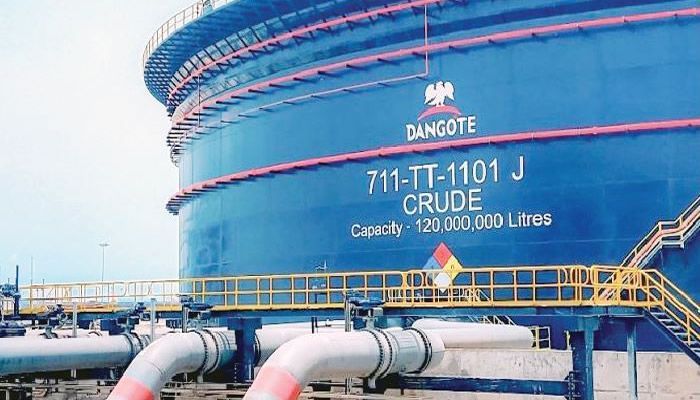
The launch of the Dangote Refinery (DR) represents more than just another industrial milestone; it signifies a transformative moment in Nigeria’s petroleum downstream industry. This development has disrupted long-standing business frameworks and challenged influential groups such as the Depot and Petroleum Products Marketers Association of Nigeria (DAPPMAN), Independent Petroleum Marketers Association of Nigeria (IPMAN), National Union of Petroleum and Natural Gas Workers (NUPENG), Petroleum Products Retail Outlets Owners Association of Nigeria (PETROAN), and Major Oil Marketers Association of Nigeria (MEMAN).
Dangote Refinery’s innovative approach-particularly its direct supply system to authorized filling stations-has revolutionized the marketing of petroleum products in Nigeria. By eliminating traditional intermediaries, it has introduced operational efficiencies that diminish the role of some established stakeholders. This shift is akin to how digital platforms like Uber and Bolt transformed urban transportation in Lagos, redefining industry norms. The downstream sector has been fundamentally reshaped, compelling all participants to evolve or risk obsolescence.
DAPPMAN, in particular, must come to terms with the fact that the era of easy profits from product importation has ended. The lucrative benefits once enjoyed during the importation period cannot be duplicated in a landscape dominated by local refining and direct-to-market distribution. Efforts to cling to outdated business models-or to impose unrealistic financial burdens exceeding N1.5 trillion annually on DR-are counterproductive and detrimental. Such demands stifle innovation and exacerbate the economic challenges faced by Nigerians.
The industry’s future depends on embracing strategic transformation. Stakeholders need to critically evaluate their business models, cost frameworks, and value offerings. Moving away from rent-seeking and entitlement mindsets toward innovation and value creation aligned with national priorities is essential. Success will hinge on enhancing logistics, optimizing last-mile delivery, fostering consumer confidence, and leveraging technology for transparency. For DAPPMAN and others, this is a pivotal moment to support Nigeria’s energy security rather than hinder progress.
While DR enjoys a significant competitive edge due to its strategic design, it also bears a national obligation. Nigerians have entrusted the refinery to address long-standing issues of inefficiency, scarcity, and exploitation in the sector. Maintaining this trust requires transparent pricing, equitable distribution, adherence to international environmental standards, and robust corporate social responsibility. These elements are critical for sustaining DR’s credibility and public support.
The downstream sector’s landscape has undergone an irreversible transformation. Nigerians have welcomed this change, and all industry players must reinvent themselves to stay relevant. For instance, NUPENG, which has traditionally relied on dues, levies, and industrial actions to assert influence, must now pivot towards welfare-oriented initiatives such as affordable housing projects, cooperative financial institutions, healthcare programs, and transport enterprises. Additionally, investing in workforce development through training and certification in refinery operations, petrochemicals, and logistics technology is vital.
Moreover, NUPENG should establish pension and investment schemes to ensure members’ long-term financial security, reducing reliance on confrontational tactics and rent-seeking behaviors.
Similarly, IPMAN and PETROAN must innovate to thrive in the direct-to-station distribution era. Digitizing retail operations with consumer engagement apps, real-time pricing tools, and delivery tracking will enhance competitiveness. Diversifying into alternative energy sources such as LPG, CNG, and renewables can transform filling stations into comprehensive energy hubs. Above all, building consumer trust through consistent service quality, precise measurement, and operational transparency is paramount.
DAPPMAN and MEMAN also face the imperative to evolve. No longer can they function as gatekeepers; instead, they must become champions of efficiency, technology adoption, and service excellence. Having accumulated substantial wealth during the importation era, these associations should reinvest in transformative ventures. Developing modular refineries to supplement DR’s capacity will bolster Nigeria’s refining autonomy.
They should also take proactive steps to acquire and rehabilitate government-owned refineries in Port Harcourt, Warri, and Kaduna, which have suffered from prolonged neglect. Expanding into petrochemical production will open new revenue avenues and enhance long-term sector sustainability. These initiatives will not only safeguard their relevance but also fortify Nigeria’s refining infrastructure, reducing overreliance on a single mega-refinery.
The path forward for all stakeholders lies in strategic reinvention focused on sustainability and growth. Clinging to outdated practices, resistance to change, and entitlement will only accelerate marginalization. This marks the beginning of a new chapter in Nigeria’s petroleum downstream sector-one where innovation, national pride, and ethical conduct will dictate success. Industry players must seize this opportunity to reposition themselves, prioritizing not just profitability but the broader welfare of Nigeria and its citizens.
Prof. Enikanselu (retired), Lagos.