


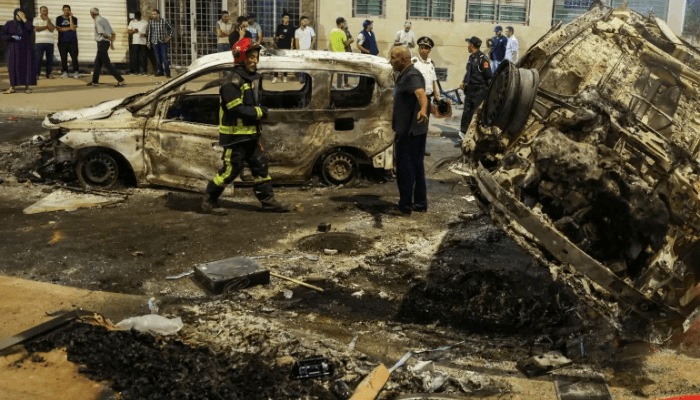
Security forces in Morocco have fatally shot at least three individuals amid protests near the southern city of Agadir, marking the sixth consecutive night of demonstrations opposing government budget priorities.
The fatalities occurred on Wednesday in the town of Lqliaa, representing the first deaths since the youth-driven protests began nationwide last Saturday. Authorities stated they responded in “legitimate self-defense” after protesters attempted to breach a police station.
These protests have been ignited by widespread frustration over the allocation of billions of dollars toward the 2030 FIFA World Cup preparations, which Morocco is set to co-host, while essential public services like healthcare and education suffer from chronic underfunding.
The slogan “We have stadiums, but where are the hospitals?” has become a unifying chant among demonstrators. Many participants are mobilized through an anonymous youth collective known as GenZ 212, which leverages platforms such as TikTok, Instagram, and Discord to organize thousands of young Moroccans across the country.
One protester from Oujda, near the Algerian border, described his local hospital as resembling a “prison,” where patients are forced to pay bribes just to receive medical attention. Speaking anonymously due to fear of retaliation, he called the conditions “degrading and unsanitary.”
Despite the rising tensions, GenZ 212 has publicly condemned violence against law enforcement. In a statement released Thursday, the group emphasized its dedication to “peaceful and responsible” demonstrations, urging participants to maintain nonviolent conduct.
Meanwhile, Morocco’s Interior Ministry reported extensive damage across 23 provinces caused by the protests, including vandalism of vehicles, banks, and government buildings. In Marrakesh, a police station was set on fire. Authorities confirmed over 400 arrests, with injuries reported among 260 police officers and 20 protesters.
Prime Minister Aziz Akhannouch indicated on Thursday that the government is open to dialogue aimed at reducing tensions. The ruling coalition expressed a willingness to engage with youth representatives “within institutional frameworks and public forums to develop practical solutions.”
The current unrest in Morocco reflects a broader pattern of youth-led movements worldwide this year. For instance, mass protests in Nepal led to the prime minister’s resignation, while Madagascar’s president dissolved his cabinet earlier this week in response to public dissatisfaction.
Experts note that these demonstrations represent the most intense unrest Morocco has experienced since the Rif region protests of 2016-2017, which were sparked by economic grievances in the northern part of the country.