


By Dele Sobowale
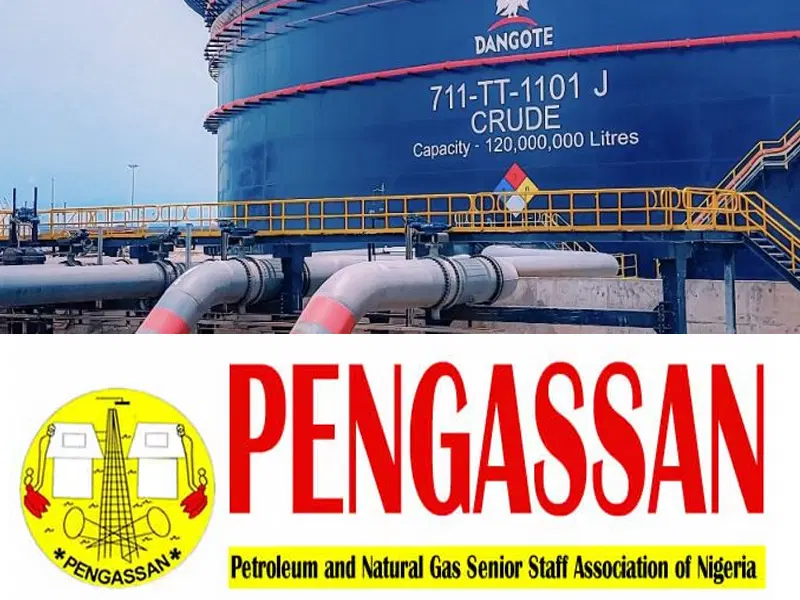
“Dismissed Employees: PENGASSAN Threatens to Protest at Dangote Refinery” – Report, September 29, 2025
When Alhaji Dangote initiated the construction of what would become the world’s largest single-train refinery in Lagos, his vision extended far beyond mere business success. His goals included eradicating Nigeria’s chronic fuel shortages, conserving foreign exchange, and generating hundreds of thousands of jobs both directly and indirectly. Yet, as the French thinker Charles Péguy once observed, “Every grand endeavor begins with noble enthusiasm but often ends mired in trivial politics.”
At its core, politics revolves around the struggle for control. While the Dangote Refinery may still fulfill its ambitious objectives, it is already entangled in the intricate power dynamics surrounding the distribution of petroleum products. Despite its vast financial resources, production capacity, and workforce, Dangote is discovering that sheer scale does not guarantee immunity from conflicts over influence and authority.
Among the various disputes facing Dangote, the most volatile centers on the reported dismissal of 800 refinery employees. Legally, the principle that “the right to hire includes the right to fire” remains valid. Dangote made hiring decisions independently and, by extension, should have the autonomy to terminate employment without external approval. However, since the legalization of collective bargaining in Britain in 1891, this absolute employer prerogative has been tempered. Trade unions have since challenged employers’ unilateral decisions, with varying degrees of success. The Nigerian Labour Congress (NLC), for instance, has struggled to enforce the Minimum Wage Act passed two years ago, highlighting the limitations of labor organizations in Nigeria.
Mass layoffs often provoke intense emotions among those affected and attract vocal support from social media sympathizers. The dismissed workers are frequently cast as victims of an uncaring billionaire who has deprived hundreds of families of their livelihoods amid a tough job market. Empowered by public sympathy, these workers may feel justified in defending their rights, even if it means resorting to confrontational or violent tactics.
The Risks of Picketing
“There’s no dispute a well-placed punch can’t settle,” said Joe Kowalski, a former US Marine and union enforcer in Boston during the 1970s. Joe, once a heavyweight boxing contender before an injury ended his career, was known for enforcing union pickets, which often escalated into physical altercations. Although such violence is less common today, it remains a possibility, especially if dismissed workers become desperate. The challenge of unemployment after years of steady work can push individuals to extremes. Picket lines, if not managed carefully, can spiral out of control.
This caution is particularly relevant given Dangote’s ongoing disputes with other industry stakeholders who might be tempted to support the picketers, either directly at the refinery gates or through other disruptive actions. Dangote’s recently introduced fleet of 20,000 tankers could become targets for sabotage. A lone tanker stranded on a highway at night is vulnerable, and even a convoy may not be safe. Innocent customers at MRS filling stations could also suffer collateral damage. With Nigeria’s four existing refineries currently non-operational, any disruption risks reigniting fuel shortages nationwide.
Dangote’s Justification for the Layoffs
“The Dangote Petroleum Refinery wishes to address recent reports regarding its ongoing restructuring. This process is not arbitrary but necessary to protect the refinery from repeated sabotage attempts that have compromised safety and operational efficiency.”
This statement reflects the company’s position that the dismissals were essential to safeguard investor interests. From this perspective, management’s actions are justified, as the destruction of refinery assets harms everyone, including the dismissed employees who might lose their entitlements. A historical parallel can be drawn to a brewery in Ogun State during the early 1980s, where labor disputes escalated into property damage, leading to permanent closure and unpaid staff benefits. Investors lost everything in that instance.
While the motives behind Dangote’s decisions may be questioned, the priority of asset protection cannot be dismissed outright.
Understanding the Root of the Conflict
“The toughest disputes to settle are those where parties cannot agree on the cause of the conflict.” – Anonymous
In the early 1990s, I taught a course on Conflict Management and Resolution at the Nigerian Institute of Management, Victoria Island. One key insight from research was that how disputing parties define the problem heavily influences the ease of resolution. In this case, if one side views the issue as job security and the other as asset protection, the deadlock can deepen quickly. However, these concerns are not mutually exclusive and can be addressed simultaneously.
It is crucial for stakeholders, including government officials and the media, to ask: How did tensions arise so early in the refinery’s operation? The Board of Directors and management of a new enterprise have a unique chance to shape corporate culture and establish an internal social contract. The foundation they lay will determine whether the company enjoys peace and cooperation during its formative years, a period when conflict should ideally be minimal to allow focus on strategic goals.
Identifying the initial signs of discord, their causes, and whether they were addressed promptly is essential for preventing escalation.
Seeking a Peaceful Solution for All
“Remember, every story has two sides, and rarely is anyone entirely blameless.”
When disputes like this erupt, various groups and individuals often take sides prematurely, influenced by bias or incomplete information. The media has already begun to pass judgment, fueling further tension. It would be a grave mistake for Nigerians not to strive for a peaceful resolution in this matter. The consequences of prolonged conflict will be detrimental to all parties involved.