


In 2016, Lagos embarked on an ambitious journey to transform itself into a “smart city,” envisioning a future where residents could access free WiFi across public venues such as parks, transit centers, and government buildings. Partnering with Dubai Holdings, the initiative aimed to install complimentary internet access points at key sites like Ikeja City Mall, Tafawa Balewa Square, and Murtala Muhammed Airport. For a moment, it appeared that Africa’s largest city was poised to join the global wave of enhanced digital connectivity.
Nearly a decade later, those public WiFi networks have all but disappeared. Lagosians continue to rely predominantly on expensive mobile data subscriptions for their online needs. Despite multiple attempts by government bodies and private sector players, the city still lacks a dependable, citywide public WiFi infrastructure-a surprising gap for Nigeria’s commercial and technological epicenter.
Persistent Efforts and Their Limitations
Connectivity projects have been plentiful but short-lived. After the initial Smart City plan stalled, the Lagos Ministry of Science and Technology collaborated with MainOne in 2017 to provide free WiFi in select public parks such as Muri Okunola Park, Ndubuisi Kanu Park, and Johnson Jakande Tinubu Park. This service offered students, freelancers, and small businesses complimentary internet access for about a year before fading away due to challenges with maintenance, funding, and limited bandwidth.
Public transit was also targeted for digital enhancement. When the Lagos Blue Line Metro launched on September 4, 2023, officials pledged free WiFi for commuters. However, by 2025, most passengers report that the service is no longer available.
Maryam, a video producer who used the metro shortly after its debut, confirmed the WiFi was initially operational but has since been discontinued. The provider, Cowry WiFi, has been inactive on social media since 2023.
Attempts to obtain comments from the Lagos State Commissioner for Innovation, Science, and Technology were unsuccessful. Yet, an anonymous senior government source disclosed that WiFi is accessible within certain government offices like the state secretariat and Lagos State University, though these networks are password-protected and restricted to staff.
“We once tried to offer open WiFi in public parks for anyone nearby to connect,” the official said. “However, sustaining such services consistently proved difficult, leading to the eventual shutdown of the park WiFi program.”
In 2018, Google partnered with Lagos State to launch Project Link, a fiber infrastructure initiative, alongside Google Station, a public WiFi program aimed at delivering free internet in busy urban areas. Unfortunately, Google Station was discontinued worldwide by 2020.
Despite a promising start, the project encountered two major obstacles: declining mobile data prices reduced demand for free WiFi, and maintaining a sustainable business model across diverse infrastructure settings proved challenging. By late 2019, most Google Station hotspots in Lagos had ceased operations, with the global shutdown confirmed in early 2020.
Why Do These Networks Keep Failing?
Experts point to a mix of insufficient infrastructure, unclear policies, and limited funding as the root causes of Lagos’s repeated public WiFi setbacks.
Ladi Okuneye, a telecom expert and CEO of cloud services firm Unicloud, explained, “Bandwidth costs money for operators, and there’s also the capital investment needed to build the network. The key question is: who covers these expenses? While advertising partnerships with companies like Google or Meta exist, the challenge lies in attracting enough users to generate meaningful revenue.”
Although Lagos has made strides with metro fiber and fiber-optic expansions, the city lacks a unified digital infrastructure policy to coordinate efforts across agencies and ensure long-term sustainability. The Lagos Innovation Bill, introduced in early 2025, seeks to tackle this by encouraging broadband expansion, offering investment incentives, and streamlining regulations to boost digital inclusion and innovation. The bill’s draft was finalized in January 2025, followed by stakeholder consultations in June, and as of October 2025, it remains under public review before submission to the state assembly.
Financial hurdles also play a significant role. Deploying and maintaining public WiFi is expensive. Beyond costly bandwidth, capital expenditures include hardware (ranging from $80 to $400 per access point), fiber or wireless backhaul infrastructure ($10,000 to $50,000 per site), power systems, and installation. The largest costs often stem from civil works required for fiber deployment. While wireless backhaul can reduce expenses, fiber offers superior reliability and scalability. Medium-scale public WiFi projects can cost anywhere from $10,000 to over $100,000 depending on scope and location.
“Even with policies in place, funding is crucial,” said a telecom executive who wished to remain anonymous. “Historically, Lagos’ budgets have not earmarked dedicated funds for this.”
Private firms often depend on advertising deals with platforms like Google or Meta to offset costs, but these arrangements rarely succeed. To secure significant ad revenue or sponsorships, networks typically need to attract over 100,000 active monthly users-a difficult milestone for most public WiFi projects in Nigeria.
Concerns over infrastructure upkeep also deter private investors. Wole Adetuyi, CEO of internet service provider Swift Telephone Network, noted, “Investing in infrastructure without reliable government maintenance is risky. Take the Bus Rapid Transit (BRT) system-out of roughly 800 buses, only about 220 to 250 are operational daily.”
This analogy is telling. The Lagos BRT fleet, designed to serve major routes, suffers from maintenance issues, breakdowns, and scheduling problems, resulting in only a fraction of buses being active at any time. Routes like Mile 12-CMS and Mile 12-Ikorodu typically deploy between 220 and 250 buses, with others rotated for repairs and optimization.
Although Lagos State has announced plans to upgrade and expand the active bus fleet, this shortfall underscores a broader challenge with infrastructure management that erodes confidence in public digital services like WiFi. As Adetuyi points out, even well-intentioned public projects struggle without sustainable maintenance, clear oversight, and consistent funding.
The Policy Gap and Its Consequences for Digital Equity
Public WiFi is more than a convenience-it’s a vital instrument for closing the digital divide. When paired with fixed broadband infrastructure, especially fiber optics, it eases the burden on mobile data networks, reduces congestion, and lowers access costs. It also offers affordable or free internet to those unable to afford pricey data plans, promoting greater inclusivity.
“It’s essential to recognize that government investment is necessary to sustain this kind of service,” said DIseye Isoun, CEO of internet service provider Content Oasis. “While maintaining WiFi hotspots may not be commercially lucrative, it’s an investment in nation-building that enhances healthcare, education, and commerce.”
In cities like Nairobi, public WiFi has become a cornerstone of digital access. Kenyan provider Poa! Internet operates over 3,000 hotspots across Nairobi and Kiambu, with government plans to expand to 25,000 by 2027. Johannesburg offers 84 free WiFi locations in libraries, clinics, and parks, while Cairo provides complimentary connectivity at eight major metro stations.
By contrast, Lagos-with a population exceeding 20 million-struggles to sustain even the few public WiFi projects it once had. This gap forces students, entrepreneurs, and low-income residents to rely almost entirely on mobile data plans, which have become less affordable following recent tariff hikes.
Income levels significantly influence broadband and public WiFi access. Research by Austin Coleman (2016) found that in the U.S., every $10,000 increase in per capita income corresponded with a 9.36% rise in broadband adoption. Similarly, data from the International Telecommunication Union (ITU) and other studies show that a 10% increase in broadband penetration can boost GDP per capita by 1.9-2.3%.
Global research consistently links higher household income with greater broadband and device access, underscoring how economic disparities directly impact digital inclusion. Communities with strong broadband adoption tend to experience higher entrepreneurship, investment, and income growth worldwide.
Understanding income distribution enables policymakers to craft targeted digital inclusion strategies, subsidize services, and assess the social equity impact of public WiFi initiatives.
“Without clear government incentives-such as data collection or enabling digital public services-public WiFi won’t become a priority,” said a telecom analyst who requested anonymity. “This is not merely a technological issue; it’s fundamentally about governance.”
Establishing a Fiber-Optic Foundation for Tomorrow
The current administration under Governor Babajide Sanwo-Olu has emphasized physical infrastructure development. Through the Lagos State Infrastructure Maintenance and Regulatory Agency (LASIMRA), the government has deployed over 6,000 kilometers of metro fiber connecting public schools, hospitals, and government offices as of September 2025. The goal is to complete a 30,000-kilometer network and then explore sustainable ways to leverage this fiber backbone.
“This infrastructure will create hubs where internet service providers, both large and small, can invest,” a senior official explained. “They could offer free internet access for trial periods around these hubs, delivering better latency and bandwidth, then monetize the service afterward.”
In theory, this fiber network could underpin a reliable, high-capacity public WiFi system. Fiber optics provide faster speeds, lower latency, and greater dependability than mobile broadband backhaul-critical for serving hundreds of users simultaneously in busy locations. However, realizing this potential hinges on completing the rollout and ensuring ongoing maintenance-areas where Lagos has historically faced difficulties.
“Public WiFi cannot succeed as a purely private venture; it demands government leadership paired with clear commercial incentives for private partners,” Isoun emphasized.
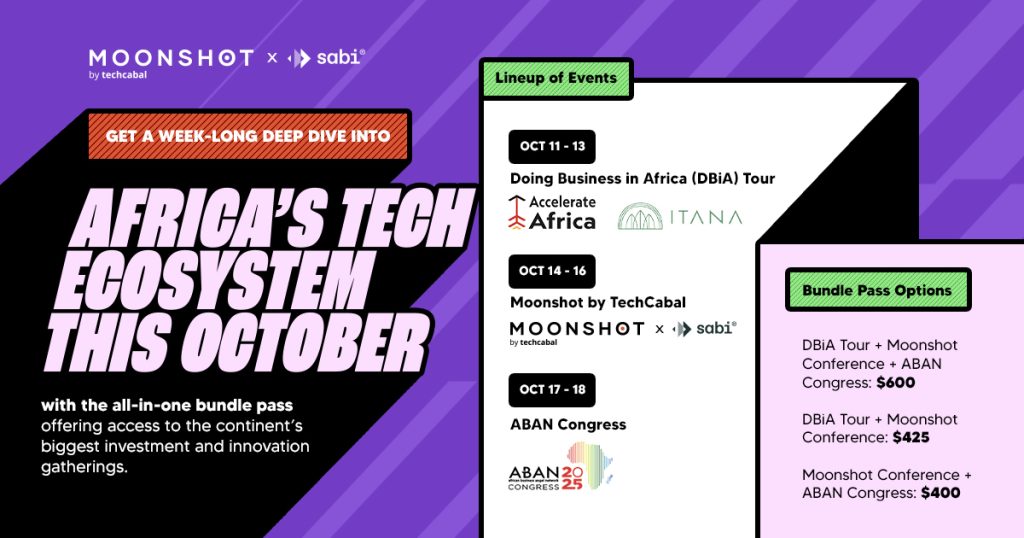
Mark your calendars! Moonshot by TechCabal returns to Lagos on October 15-16. Join Africa’s top founders, creatives, and tech innovators for two days of inspiring talks, networking, and visionary ideas. Get your tickets now at moonshot.techcabal.com.