


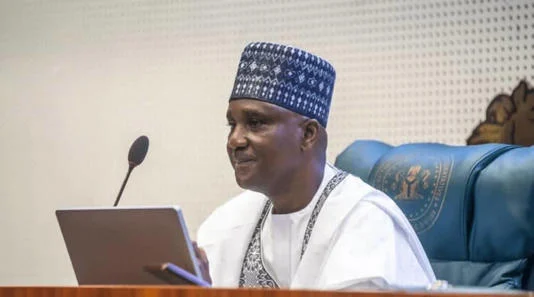
Dr. Tajudeen Abbas, Speaker of the House of Representatives, has reiterated the legislature’s dedication to endorsing legislation aimed at enhancing intelligence operations to combat insecurity across Nigeria.
This declaration was made during a public hearing on a proposed bill to establish private intelligence and investigation councils, convened by the House Committee on National Security and Intelligence in Abuja.
Represented by Hon. Muhktar Shagaya, the Speaker officially inaugurated the hearing. The bill intends to create a comprehensive regulatory framework to govern private intelligence and investigative agencies, ensuring their activities adhere to ethical standards, accountability, and professional integrity.
Abbas emphasized that reforming the security sector remains a critical national agenda, highlighting the necessity to transition multi-tiered policing from concept to practical implementation.
He remarked, “In addition to constitutional amendments, it is imperative to bolster community policing as outlined in the Police Act of 2020, tailoring it to be more effective and attuned to the unique needs of local communities.”
Earlier, Hon. Ahmed Satomi, Chairman of the House Committee on National Security and Intelligence, explained that the bill’s enactment would standardize operational procedures within the private security industry, introduce accreditation systems, and mandate ongoing training to foster stronger cooperation between private entities and public security forces.
He stated, “Revamping our security framework demands innovative strategies, including the stringent regulation of private security operations.”
In a post-hearing interview, Navy Captain Umar Abubakar Bakori (Rtd), Commandant General of the Vigilante Group of Nigeria (VGN), revealed that the organization boasts over one million members distributed across all 774 local government areas nationwide. He emphasized that the VGN, representing grassroots communities, is uniquely positioned to support official security agencies in community policing efforts.
“Establishing State Police is not the ultimate answer. The Police are responsible for internal security, while the military handles national defense. They cannot manage these responsibilities alone. We, the VGN, are vital partners in this endeavor,” he asserted.
Captain Bakori further noted, “When combined, all formal security personnel number fewer than one million, whereas our membership exceeds that figure. Our close ties with local populations enable us to gather intelligence more effectively than many other organizations.”
He called on both federal and state governments to recognize and back the VGN’s voluntary contributions to community policing, pointing out that despite the government’s substantial annual security expenditure, the VGN receives no financial support for its efforts.
Additional contributors to the hearing included representatives from the Nigerian Army, Navy, Federal Fire Service, Police Force, and Nigerian Immigration Service, all of whom provided valuable insights on the bill.