


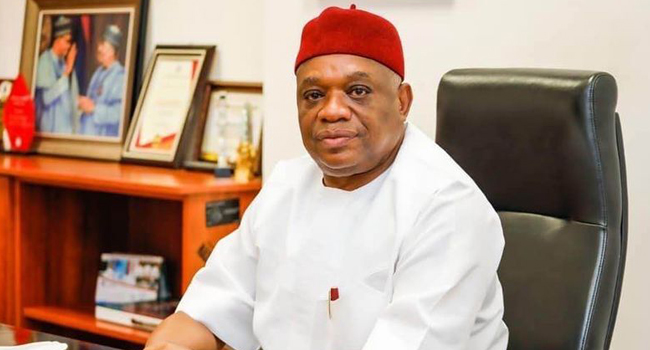
Senator Orji Uzor Kalu, representing Abia North, clarified that the Senate’s responsibilities do not extend to authenticating the academic credentials of ministerial nominees or other presidential appointees. He stressed that the Senate’s function is confined to vetting and confirming individuals nominated by the president for official positions.
Kalu’s remarks followed the controversy involving Uche Nnaji, the Minister of Innovation, Science, and Technology, who resigned amid allegations of falsifying his educational background.
During an appearance on Channels Television’s Politics Today on Wednesday evening, Kalu defended the Senate’s screening process, affirming that lawmakers conducted a comprehensive and meticulous evaluation of all nominees.
“Our duty is to evaluate the overall qualifications and suitability of the candidate, not to verify their academic documents,” Kalu explained. “The Senate performed a thorough vetting and fulfilled its constitutional role effectively.”
He praised Nnaji’s resignation as a responsible and honorable decision in light of the controversy.
“I commend his choice to step down quietly; it reflects a sense of accountability,” Kalu noted. “This issue should not be exaggerated beyond its actual significance.”
Responding to fears that the scandal might tarnish the South-East’s reputation within the APC, Kalu dismissed such concerns, assuring that President Tinubu would promptly nominate a successor.
“The president will soon present a new candidate. When one opportunity closes, another arises,” he remarked. “I sympathize with Uche personally, as he is a close friend, but these situations do occur.”
Kalu also pointed out that controversies over academic qualifications are not exclusive to Nigeria.
“Uche Nnaji is not the first individual globally to face such allegations,” he said. “Even in the United States Congress, there have been disputes regarding educational credentials. I prefer not to engage with remarks from others, such as Atiku.”
When questioned about the authenticity of his own academic certificates, Kalu responded candidly, “No.”
On the wider topic of certificate scandals, Kalu acknowledged their gravity but warned against allowing them to overshadow more pressing national issues.
“I do not condone these incidents,” he stated. “However, they should not dominate our national conversation when critical economic challenges demand our attention.”
He reiterated that Nnaji’s resignation was a dignified response and criticized the public’s rush to judgment before due process is completed.
“His resignation was commendable and ought to bring closure to the matter,” Kalu emphasized. “Once someone admits wrongdoing and steps down, why continue to publicly condemn them instead of allowing the appropriate authorities to handle the case?”