


Each year, Ghana faces staggering post-harvest losses estimated at nearly $1.9 billion. The agricultural workforce, which accounts for over 30% of Ghana’s population and contributes about 20% to the country’s GDP, suffers significant losses-sometimes up to half of their crops-due to unpredictable weather patterns, antiquated farming techniques, and inadequate storage or market infrastructure. Concurrently, illegal artisanal mining, commonly referred to as galamsey, has severely contaminated Ghana’s freshwater resources. Reports indicate that nearly 60% of rivers and streams are polluted, rendering vast tracts of farmland unsuitable for cultivation.
In response to these challenges, Anaporka Adazabra founded Farm.io Limited in 2020, introducing what she terms “Farms of the Future.” This initiative combines climate-resilient greenhouses with precision agriculture technologies, expert agronomic support, market integration, and adaptable financing options.
“Farm.io is more than just a provider of agricultural tools; it’s a comprehensive ecosystem that links farmers from production through to market access, enhancing their ability to withstand climate variability,” Adazabra explains.
Her innovative approach earned her the prestigious Bayer Foundation Women Empowerment Award in 2025, spotlighting a transformative model that is reshaping smallholder farming practices across Ghana.
Innovative greenhouses enabling continuous cultivation
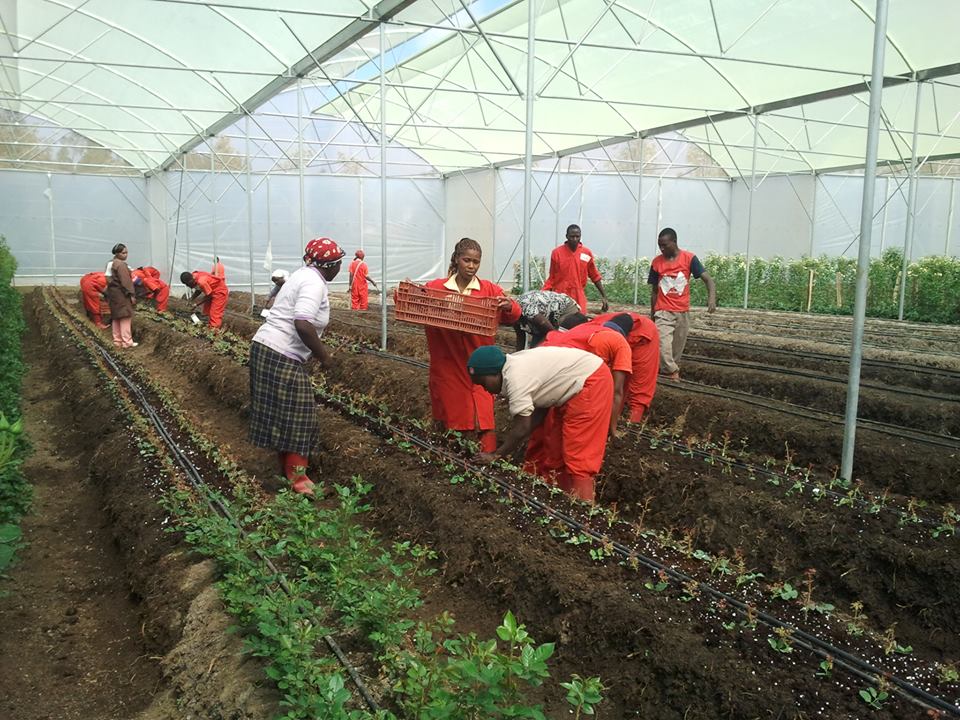
Farm.io’s greenhouses are engineered to endure Ghana’s varied climatic conditions. Constructed from recycled yet robust materials, these structures have a lifespan exceeding 15 years and shield crops from heat extremes, irregular rainfall, and pest infestations.
“Traditional open-field farming is highly susceptible to weather fluctuations and pest damage,” Adazabra notes. “Our greenhouses create controlled environments that allow farmers to cultivate crops year-round, optimize water consumption, reduce pest-related losses, and boost yields by up to fivefold compared to conventional methods.”
Each greenhouse is equipped with drip irrigation systems to conserve water, adjustable ventilation to regulate temperature and humidity, and fine mesh screens to deter pests. Advanced models incorporate digital sensors linked to Farm.io’s USSD platform, enabling farmers to monitor environmental conditions and receive customized agronomic advice remotely.
Understanding the financial barriers to commercial greenhouse adoption, Farm.io developed modular units using locally sourced materials. Prices start at approximately $500 for small-scale backyard setups and scale up to several thousand dollars for larger community installations.
To date, Farm.io has deployed over 200 modular greenhouses nationwide, ranging from compact urban kits to expansive commercial units for farming cooperatives. More than 100 projects have been completed, with users consistently reporting reliable harvests throughout the year.
“Farmers who once harvested only once or twice annually can now enjoy multiple growing cycles, supplying markets with fresh produce like tomatoes, peppers, and leafy vegetables on a steady basis,” she adds.
Farm.io also offers flexible payment plans. Adazabra highlights a “pay-as-you-grow” model, allowing farmers to settle greenhouse and input costs gradually from their harvest revenues rather than upfront.
“For larger installations, we provide lease-to-own options that spread payments over several seasons until full ownership is achieved,” she explains. “We are actively pursuing collaborations with financial institutions and impact investors to facilitate access to affordable credit and blended financing solutions.”
Empowering farmers with digital farm management
Complementing its physical infrastructure, Farm.io delivers a digital platform accessible via smartphone app and USSD for basic mobile phones. This platform functions as a virtual farm manager, guiding farmers through every stage of the crop cycle.
“Whether through the app or the USSD interface, farmers receive climate-smart recommendations, irrigation and pest control alerts, crop monitoring tools, and can order inputs or services directly from Farm.io,” Adazabra explains. “It also links them with buyers ahead of harvest, helping to minimize post-harvest losses.”
For regions with limited internet connectivity, the USSD service ensures continuous access to essential features without requiring data.
“We designed the system with offline capabilities that store updates and synchronize when connectivity is available,” she adds. “By integrating USSD, SMS notifications, and low-data usage design, we ensure inclusivity regardless of device type or location.”
Farm.io’s field agents conduct practical training sessions to familiarize farmers with the technology and maximize adoption.
To facilitate market access, Farm.io employs a dual-channel approach: connecting farmers directly with aggregators, retailers, and institutional buyers who pre-commit to purchases, and operating an online marketplace where farmers can sell directly to consumers. All produce undergoes standardized sorting, packaging, and quality assurance to meet both domestic and export requirements.
Accolades and future aspirations
Receiving the Bayer Foundation Women Empowerment Award has been a pivotal milestone for Farm.io.
“The recognition elevated our global profile and credibility, unlocking opportunities with partners, investors, and policymakers who previously overlooked the agricultural sector due to perceived risks,” Adazabra reflects.
The award also bolstered her position as a female leader in agribusiness, connecting her with a network of mentors and peers. Since then, Farm.io has forged new alliances to expand greenhouse adoption and enhance financing options for farmers.
Logistical challenges remain significant, particularly in transporting inputs, greenhouses, and produce to and from remote locations. “We are tackling these issues through improved route optimization, establishing aggregation centers, and partnering with local stakeholders,” she says.
Looking ahead, Adazabra envisions Farm.io becoming Africa’s premier platform for climate-resilient agriculture within the next five years.
“Our goal is to scale modular greenhouses across every district, enabling farmers-from rural villages to urban backyards-to maintain consistent production year-round,” she states. “We also plan to evolve our SuperApp into a comprehensive ecosystem offering training, financing, inputs, and market access.”
At full scale, Farm.io aims to empower millions of farmers to supply burgeoning urban populations and tap into export markets, transitioning from subsistence farming to commercial-scale production.
“Our greatest success lies in demonstrating that smallholder farmers can flourish when technology and agriculture converge,” Adazabra concludes. “We have constructed hundreds of greenhouses, onboarded farmers onto our digital platforms, and proven that productivity and incomes can significantly improve.”