


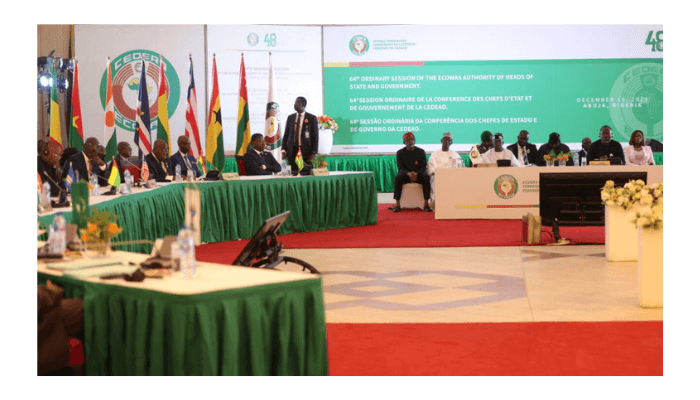
The Economic Community of West African States (ECOWAS) has raised serious concerns about the future of democracy and security in West Africa, warning that the region is currently facing major dangers that could roll back years of progress. The organisation says that political leaders manipulating constitutions, rising insecurity, and a growing disconnect between governments and citizens are weakening the foundations of democracy.
Speaking in Abuja at a high-level meeting on the future of ECOWAS, Omar Alieu Touray, the President of the Commission, sent a strong message about the situation. He was represented by Abdufatah Musah, the commissioner for political affairs, peace and security, who explained that the trend of excluding citizens from important political decisions and changing constitutions to keep leaders in office has become widespread. He said democracy is now in a crisis in the region, while insecurity continues to get worse.
Read also: Governance failures, not insurgency fuel West Africa’s security crisis Fayemi
Touray said ECOWAS must pay attention to the declines happening across member states, especially with the recent rise of military coups, political conflicts, and violent attacks. He explained that the region is no longer enjoying the level of peace and stability it once had. Countries such as Mali, Burkina Faso, Niger, and Guinea have experienced unconstitutional changes of government, which has created division within ECOWAS and damaged confidence in democratic systems.
He reflected on the history of ECOWAS, saying the organisation had passed through three important phases. The first was when it was created in 1975, during the Cold War, which he described as a miracle because it united English-, French-, and Portuguese-speaking countries for a common goal. The second phase took place in the 1990s, when ECOWAS became known as a peacekeeping force by intervening in violent conflicts in countries like Liberia and Sierra Leone. According to him, the third phase is the current period, which is dominated by problems of insecurity and bad governance across the region.
Touray explained that today’s world has changed greatly from the past, shifting from a simple two-power system to a much more complicated one where countries now have many choices regarding who to partner with. He said this new global reality means that West African nations must decide whether they want a future built on democracy and putting the people first or a future where leaders ignore citizens and embrace authoritarian rule.
He said the challenges threatening West Africa come from both outside and inside the region. External pressures include global economic difficulties, foreign political influence, and the spread of terrorist and extremist groups. Internal weaknesses, he added, include corruption, weak institutions, and leaders who refuse to leave power when their term ends. These issues together have created a turning point for ECOWAS.
Read also: West African unity must begin with language, culture Turner-Moyet
Touray called on West African leaders to look within and renew the founding purpose of ECOWAS, which was built on unity, cooperation, and improving the lives of people in the region. He said the organisation must honestly assess whether it is still committed to the original vision set by its founders almost 50 years ago.
The event was organised with the African Leadership Centre, Codesria, and Wathi to discuss possible future paths for ECOWAS as it approaches its 50th anniversary.