


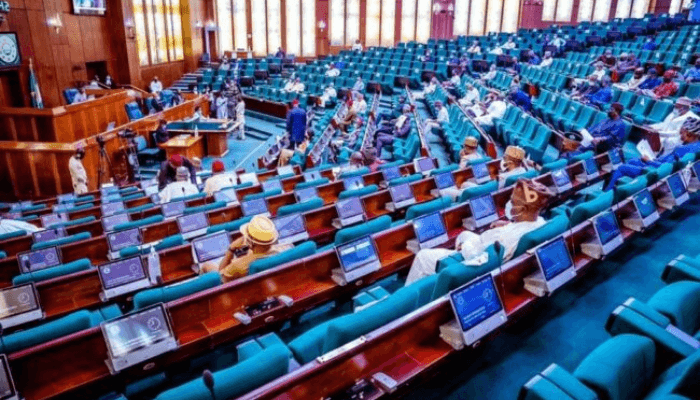
For nearly two weeks, the House of Representatives has been engulfed in tension, frustration and unusually sharp internal exchanges, all rooted in one issue: the non-release of funds for capital components of the 2024 and 2025 budgets particularly constituency projects and payments to local contractors.
The stand-off has been as dramatic and disruptive. Legislative business suffered as plenary sessions were suspended, and lawmakers retreated repeatedly into closed-door meetings that stretched across days.
The first signs of trouble appeared Tuesday, November 4, after local contractors blocked major entrance to the National Assembly over non payment of funds for projects executed.
Read also: Nigeria eyes $20bn in investments from 70 priority gas projects
The visibly angry lawmakers refused to take any motion. Proceedings stalled almost immediately, prompting a move into an executive session.
By Thursday, November 6, lawmakers suspended plenary altogether.
When they reconvened the following Tuesday, the tension lingering from the unresolved funding crisis again stalled proceedings. The Hosue again resolved into an executive session were Lawmakers exchanged heated words over the non releases of budgetary funds to enable them executive their constituency projects. When the House recovened from the Executive session, it adjourned plenary abruptly.
Members said they had endured months of financial difficulty, while projects they argued were vital to communities across their constituencies stood abandoned. The non-payment of indigenous contractors who had executed 2024 capital projects, they insisted, had only compounded the crisis.
Some lamented that they had been forced to sell their properties or shut down their businesses after waiting endlessly for payments.
The protest of local contractors rattled many lawmakers, who said the anger of contractors mirrored the frustration they were already facing inside the chamber.
In the middle of what some insiders described as “near paralysis,” Philip Agbese, a House spokesman, revealed that President Bola Ahmed Tinubu’s intervention had “prevented what could have been a major crisis.”
“The frustration expressed by some of our colleagues was genuine. Many projects across the country, especially constituency projects, were stalled due to the non-release of funds. This also affected indigenous contractors who executed 2024 capital projects but were yet to be paid”, be said.
According to Agbese, House leadership immediately escalated the matter to the Presidency to forestall an institutional breakdown. In response, President Tinubu reportedly directed Minister of Finance Wale Edun and the Accountant-General of the Federation, Shamseldeen Ogunjimi, to commence immediate payment to contractors.
The House had earlier issued a one-week ultimatum to the Ministers of Finance, Budget and National Planning, as well as the Accountant-General, demanding the clearance of outstanding debts owed to indigenous contractors. That ultimatum expired without result, which inflammed tempers until the President’s directive calmed the situation.
Yet while the funding crisis affected public projects, a separate, quieter crisis was unfolding within the ranks of lawmakers themselves. Ismaila Dabo, who represents Toro Federal Constituency in Bauchi State, penned a stark internal memo titled “My concern and the sad reality about the 10th National Assembly.”
Dabo’s assessment was frank.
“When we began the 10th Assembly, the National Assembly budget was less than N160bn. However, in 2024 and 2025, it has increased by more than 100%, now standing at approximately N360bn,” he wrote.
“This consistent increase has been made in the name of Honourable Members. Unfortunately, the reality today is deeply troubling”, he said.
According to him, many lawmakers are struggling financially. Hw claim some cannot afford rent, and others cannot even travel to their constituencies.
He also said loan defaults have piled up, and “banks are issuing threats. Local moneylenders are reportedly “pursuing members over unpaid debts. Sadly, members have been reduced to beggars in town,” he lamented.
Read also: FG approves over N1trn for road projects nationwide
Dabo linked much of the frustration to what he described as a proliferation of committees under Speaker Tajudeen Abbas. He argued that too many committees had weakened legislative oversight.
“More than five different committees are sometimes assigned to oversee a single ministry or agency. These agencies have stopped taking the National Assembly seriously,” he said.
He also raised questions about internal inequality, alleging that while some principal officers control project portfolios worth over N50bn, ordinary members manage less than N1.1bn — and even that remains unfunded.
As the House braces for the detailed stages of the 2024 and 2025 budget, observers believe the episodes have exposed profound internal stress, simmering inequalities and a legislative body struggling to meet public expectations while confronting its own financial and structural challenges.