


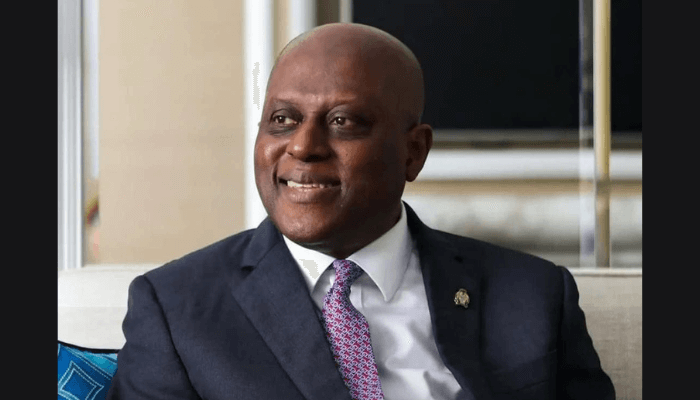
During a recent forum at the London School of Economics, CBN Governor Yemi Cardoso revealed that the Central Bank of Nigeria has incorporated artificial intelligence into its monetary policy framework to enhance macroeconomic forecasting and decision-making processes. This move places the CBN alongside other prominent central banks such as the European Central Bank, the Bank of Canada, and the Bank of Indonesia, which have already embraced AI technology in their core functions. The event, moderated by Economics Professor Helen Ray, allowed Governor Cardoso to discuss a wide array of topics including inflation trends, interest rate policies, banking sector recapitalisation, cryptocurrency regulation, and developments in the bond market. He also mentioned that the CBN plans to release an official statement soon regarding cryptocurrency operations in Nigeria, recognizing its growing significance among the youth.
“Political rhetoric should have its limits. AI technology can swiftly generate up-to-date estimates of GDP growth and inflation, while also pinpointing potential risks and weaknesses within the financial system.”
Addressing the issue of interest rates, Governor Cardoso admitted that current rates remain excessively high but expressed optimism that they will gradually decline. He highlighted that with the elimination of arbitrage opportunities in the foreign exchange market, banks will be better positioned to channel funds into productive sectors of the economy. With just five months remaining until the March recapitalisation deadline, Cardoso noted that many banks have already met the required capital thresholds-N500 billion for international banks, N200 billion for national banks, and N50 billion for regional banks. However, institutions unable to meet these targets should prepare for either a downgrade in their operating licenses or consider mergers.
The most striking announcement was the CBN’s adoption of AI to manage monetary policy, a development with profound implications. Historically, the bank has faced numerous challenges such as inflation volatility, external shocks from commodity price swings, exchange rate instability, a disconnect between policy and lending rates, fiscal constraints, security issues, and limited institutional capacity. By leveraging AI, the CBN aims to overcome these hurdles and significantly improve the precision and timeliness of its economic forecasts. The technology will enable the bank to analyze vast datasets-including textual information, images, and statistical figures-offering a richer and more nuanced understanding of economic dynamics. AI’s ability to detect intricate patterns and correlations will empower the CBN to generate more reliable predictions on inflation, economic growth, and other critical indicators.
Moreover, the CBN will utilize real-time data analysis on key economic metrics such as unemployment rates, GDP figures, trade balances, and the purchasing managers’ index. This capability will allow for swift policy responses to evolving market conditions. The current administration under President Tinubu has set an ambitious target of achieving a $1 trillion GDP by 2031, a goal that has sparked debate among economists regarding its attainability. With AI-driven insights, the CBN will be better equipped to advise the government on the feasibility of this objective, providing accurate and timely assessments of economic growth prospects and inflationary pressures. As Governor Cardoso emphasized, “Political posturing must be curtailed. Advanced technology can deliver real-time estimates of economic performance and highlight vulnerabilities within the financial system.”
Speculations Surrounding Military Unrest
Recently, Nigeria’s military leadership disclosed that several high-ranking officers have been detained and are under investigation for serious breaches of military discipline and ethical conduct. This announcement triggered widespread speculation in the media, with some outlets suggesting the arrests were linked to a planned coup scheduled for October 1. However, the Defence Headquarters quickly refuted these claims, clarifying that their statement did not mention any coup attempt. Despite official denials, investigative reports by outlets such as Premium Times and Sahara Reporters have alleged that the detained officers are indeed being probed for involvement in a coup plot. Further reports from the Daily Trust on October 20 indicated that a former governor from one of the Southern states is also under scrutiny for allegedly financing the purported coup, which was reportedly planned for October 25. A review of former governors from the 17 Southern states reveals that many are advanced in age, with some in their late 80s.
The nation awaits clarity on this matter, and a prompt disclosure of the investigation’s findings would greatly benefit Nigeria’s political stability and democratic health. Rumors of coups tend to generate fear and uncertainty, potentially destabilizing the country. Therefore, it is crucial for authorities to avoid prolonged ambiguity. Historically, during the Second Republic, the Shagari administration swiftly publicized arrests related to coup conspiracies, with those implicated facing trial and sentencing in civilian courts rather than military tribunals. Between 1984 and 1999, Nigeria experienced multiple coups and coup attempts, but since the return to democratic governance in 1999, such incidents have been rare. The Defence Headquarters’ recent statement marks the first indication of a possible coup plot in over two decades. The eventual revelation of the identities involved and the specifics of the alleged plan will undoubtedly be a significant development as the year draws to a close.