

Africa must accelerate economic reforms or risk falling behind in a rapidly shifting global economy, as experts say the continent can no longer rely on potential alone to attract capital.
Experts stressed that Africa’s challenge is no longer about promise but about execution and that Nigeria, in particular, stands at a pivotal moment.
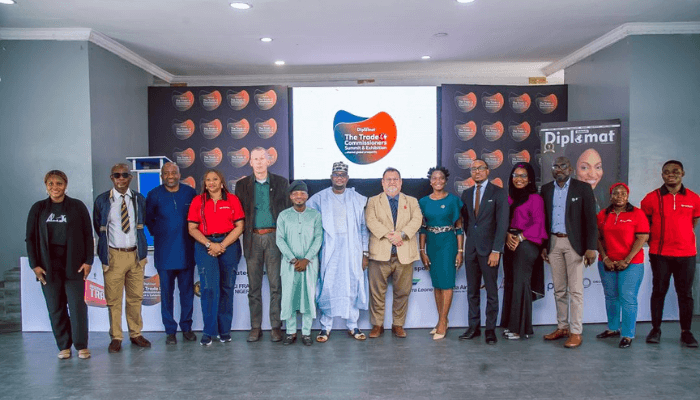
The message came at the Trade Commissioners summit organised by Globalafri Diplomat magazine in Lagos on December 2, speakers stressed that the future of Africa is about execution.
Oswald Osaretin Guobadia, managing director of Digit A, argued that Africa’s future depends on governments moving from vision to delivery.
“Africa sits in a great position where a lot of the future globally is already in progress. It is now up to us to catch up,” he said. “The idea of Africa as a future is really about execution.”
Read also:West African women push ECOWAS for laws mandating gender quotas in politics
O’tega Ogra, senior special assistant to the president on digital and media, challenged the narrative urging that Nigeria is open for investors.
“They say Africa is risky. They say the world is ignoring the continent. They say Nigeria is unpredictable, yet Nigeria has delivered some of the fastest structural reforms in the last 18 months,” he said.
“Africa is the present and the world is only learning how to understand it. A nation becomes unstoppable once it understands that its future depends on its decision. Nigeria has made a decision. Africa is making a decision.”
Celso de Arruda Franca, Brazil’s deputy consul general in Lagos, said commercial partnerships are becoming an essential part of diplomacy as countries look to deepen South South cooperation.
“We know that when business to business work together, there is potential to facilitate dialogue in the private sector,” he said. “President Tinubu visited Brazil three times in 12 months. There are opportunities for both countries. It is a South South operation where we learn from each other. There are opportunities to foster economic and trade relations.”
Read also:African remittance startups to watch in 2026
Deji Ajomale Mcword, the summit organiser, said it was designed to give states a direct route to investors and foreign economic advisers.
“It is a platform to bring commissioners of commerce, trade and investment in Nigeria in contact with economic counsellors and investors so they can explore shared opportunities,” he said. “The commissioners pitch their states and the international community shares theirs.”
Rea also: Nigeria joins Arab Africa trade bridges program to boost agribusiness, industrial growth
Technical sessions focused on turning Nigeria’s asset base into bankable opportunities. Mining specialist Pere Anthony outlined a pathway for monetising critical minerals through strategies such as asset discounting and arbitrage, calling it a foundation for “critical minerals diplomacy”.
Oyebanji Oguntoye of Lekki Worldwide Investments Ltd highlighted how free trade zones can accelerate industrial growth. Using the Lekki Free Zone, Alaro City and the Lekki Deep Seaport as examples, he said Nigeria’s 42 licensed zones now host more than 500 foreign and local companies across manufacturing, petrochemicals, pharmaceuticals, banking, food processing, steel and maritime services. Officials say the zones have attracted more than $300 billion in investment and generated more than N650 billion naira in government revenue.
Haruna Abbas Bashir, Sokoto’s commissioner for commerce, trade and industry, noted the state’s strengths in agriculture and critical minerals, saying it is positioning itself as a northern hub for long term investors.