


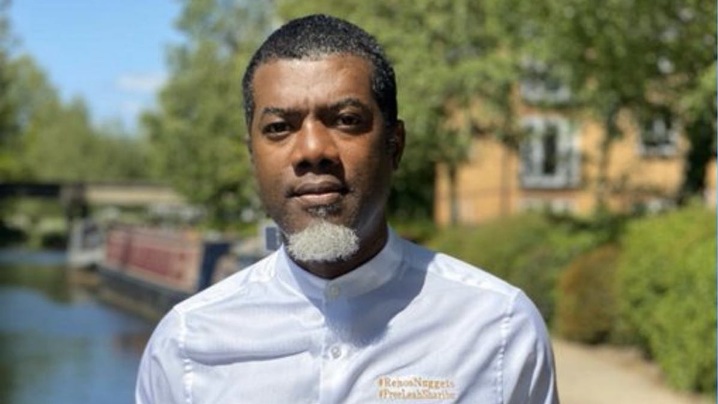
The Senate is bracing for one of its most contentious confirmation showdowns in recent memory as President Bola Tinubu’s nomination of Reno Omokri as a non-career ambassador continues to divide lawmakers.
What began as a quiet objection by a handful of senators has now widened into a full-blown confrontation touching on political loyalty, regional grievances, ideological convictions, and long-standing personal feuds.
With the chamber already reeling from last weekend’s heated exchanges, the question now is whether Omokri can survive the fierce opposition gathering against him or whether he will become the first major casualty of the president’s new diplomatic list.
Read also: Politics trumps competence as Tinubu unveils ambassadorial nominations
President Tinubu transmitted a list of sixty-five ambassadorial nominees to the Senate, comprising thirty-four career diplomats and thirty-one non-career nominees.
Among the career nominees are figures drawn from every state of the federation—individuals such as Ambassador Mwaobiola Ezeuwo Chukwuemeka from Abia, Maimuna Ibrahim from Adamawa, Enpeji Monica Okochukwu from Anambra, and Mohammed Mahmoud Lele from Bauchi.
The career list also includes Ahmed Mohammed Monguno from Borno, Jen Adams Ni Okun Michael from Cross River, Clark Omeru Alexandra from Delta, Chima J. Leoma Davies from Ebonyi, Oduma Yvonne Ehinose and Wasa Shogun Ige from Edo, Adeyemi Adebayo Emmanuel from Ekiti, and Onaga Ogechukwu Kingsley from Enugu.
The list continues with Magaji Umar from Jigawa, Mohammed Saidu Dahiru from Kaduna, Abdul Salam Abus Zayat from Kano, Ambassador Shehu and Aminu Nasu from Katsina, Abubakar Musa Musa and Haidara Mohammed Idris from Kebbi, Bako Adamu Umar from Kogi, Sulu Gambari from Kwara, Romata Mohammed Omobolanle from Lagos, Shaga John Shama from Nasarawa, Salau Hamza Mohammed and Ibrahim Dan Lamy from Niger, Adjola Ibrahim Mopolola from Ogun, Ruben Abimbola Samuel from Ondo, Akonde Wahab Adekola from Osun, Ariwani Adedokun Esther from Oyo, Gedagi Joseph John from Plateau, Luther Obomode Ayokatata from Rivers, Danladi Yakubu Yaku from Taraba, and Bidu Dogondagi from Zamfara.
The non-career list, which contains more politically recognisable names, is where Omokri appears.
His fellow nominees include former Abia governor Dr. Victor Okezie Ikpeazu; Grace Bent representing Adamawa; former presidential aide Ita Enang from Akwa Ibom; Mahmoud Yakubu from Bauchi; Philip Ikurusi from Bayelsa; Paul Adiku from Benue; retired Naval Chief Ibok-Ette Ibas from Cross River; Abbasi Brahma from Edo; Angela Adebayo and Olumilua Oluwayemika from Ekiti; former Enugu governor Ifeanyi Ugwuanyi; Chioma Ohakim from Imo; former Interior Minister Abdulrahman Dambazau from Kano; Tasiu Musa Maigari from Katsina; Abubakar Sanusi Aliu from Kogi; former Lagos deputy governor Olufemi Pedro; Mohammed Obanduma Aliu from Nasarawa; Senator Jimoh Ibrahim and Ambassador Joseph Shara’aji from Ondo; Femi Fani-Kayode from Osun; Ajimobi Fatima Florence and Lola Akande from Oyo; Yakubu N. Gambo and Senator Nora Ladi Daduut from Plateau; Onweze Chukwudi from Rivers; Dr. Kulu Haruna Abubakar from Sokoto; Jerry Samuel Manwe from Taraba; and Adamu Garba Tarba-Nagri from Yobe.
Three nominees, Ayodele Oke from Oyo, Amin Mohammed Dalhatu from Jigawa, and Retired Colonel Lateef Kayode, are from Ogun and have already been cleared by the Senate Committee on Foreign Affairs.
The Senate committee is expected to screen the nominees and return in the week.
Amid this extensive list, Omokri’s nomination has drawn the widest controversy by far.
Initial murmurs of dissent began circulating immediately after the list was released from the Statem House.
Several senators argued that Omokri’s past description of President Tinubu as a “drug baron” made him unsuitable for a diplomatic posting.
Others pointed to the activist’s combative style on social media, claiming it undermined the decorum expected of an ambassador. Civil society groups issued strongly worded statements condemning his nomination, while former political operatives urged the Department of State Services to withhold clearance.
But what truly ignited the firestorm was the explosive confrontation among senators last weekend, which revealed that the opposition to Omokri extended far beyond his remarks about the president.
According to insiders, the Senate’s WhatsApp group became so charged with insults and counter-insults that senior lawmakers had to call for its temporary shutdown.
Several senators, particularly from the South-Eas, openly expressed anger at Omokri’s political commentary.
The most powerful pushback is reportedly coming from the caucus led by Senator Osita Ngwu of Enugu, whose opposition to Omokri is described as deeply emotional and politically symbolic.
According to Ngwu, someone who called the President a ‘drug baron’ cannot represent the president and the country.
He posted on the Senator’s platform, “Someone who called the President of Nigeria a drug baron and who has not retracted the statement should not represent Nigeria and Nigerians in the international and diplomatic society.
“It’s about the office of the President, not about an individual.
“Meanwhile, bring it up…”
Omokri had, on multiple occasions, condemned Kanu and the IPOB movement.
In one widely shared commentary, he even praised the Federal Government for Kanu’s conviction and sentencing—remarks that many in the South-East view as insensitive to the region’s political turmoil and collective sentiment.
A ranking senator who pleaded anonymity said Ngwu’s agitation over the issue was more personal than fighting for the president.
He said,“Let us tell ourselves the truth. Ngwu’s problem with Omokri is not about Tinubu or integrity.
“It is about Nnamdi Kanu. Omokri insulted a man many in the South-East see as a political prisoner. That is why they don’t want him.”
Another lawmaker, angered by what he called hypocrisy within the caucus, pushed back sharply.
“What is Ngwu’s headache with Omokri’s past criticism of the president? After all, the same President Omokri who abused is the one who nominated him.
“Ngwu is not fighting for the president. He is fighting his own personal vendetta over Kanu’s sentencing.”
The Omokri debate has dragged the Senate into uncomfortable territory.
It is forcing lawmakers to weigh political loyalty against the principle of free speech; diplomatic suitability against ethnic sentiments; and personal grievances against national interest. Some senators argue that Omokri’s intellect, global exposure, and communication skills should stand in his favour.
Read also: Vacant embassies stir calls for strong, smart ambassadors
Others insist that his penchant for inflammatory commentary disqualifies him from representing the country abroad.
More strikingly, the Senate leadership, particularly Senate President Godswill Akpabio, is on Omokri’s side, stating that Omokri had on numerous occasions defended the president via his various social media platforms.
Whether Omokri survives this battle will depend on complex alliances that are still shifting.
The South-East caucus is holding its ground. Some Northern senators are reportedly undecided.
A few South-South lawmakers view Omokri as a political ally and see the opposition to him as excessive.
Key figures in the ruling party are also concerned that rejecting Omokri could embarrass the president, but clearing him might provoke public backlash.
Omokri’s confirmation has become more than a routine diplomatic approval. It is now a referendum on the Senate’s character, on whether Nigeria’s diplomacy will be shaped by competence, politics, or grievance.
As the upper chamber prepares for the screening, the question on many lips remains unresolved, hanging like a heavy cloud over the Red Chamber: Will the Senate confirm Reno Omokri?