


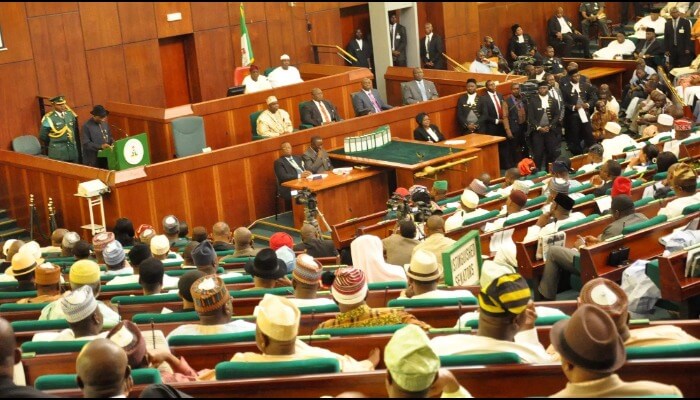
When the House of Representatives went into a shouting match on Wednesday, it wasn’t because lawmakers were expressing anger over the non-remittance of more than ₦16 trillion, Central Bank of Nigeria (CBN), but what sent voices flying, fingers pointing was simply about who and who should be part of the investigation into the matter.
This has become a pattern in the lower chamber. Each time an investigation comes up, Lawmakers don’t just argue about the issue at stake; they argue, sometimes fiercely, about which committee should take ownership of it, and who should be part of it. And ownership matters, because committee probes come with influence, and, as some past reports and even Lawmakers have alleged, opportunities to pressure ministries and agencies for kickbacks.
Read also: Why lawmakers must take a second look at the proposed excise amendment bill
Last Wednesday, Bamidele Salam, chair of the Public Accounts Committee (PAC), had barely finished presenting his motion accusing the CBN of withholding trillions, when the chamber split over who should lead the inquiry. Salam wanted his committee to run the investigation alone.
But Ghali Tijani proposed an amendment: set up a new ad-hoc committee made up of PAC members and lawmakers from other finance-related committees. His reason was that the probe was too significant for only one committee, an argument other Lawmakers thought was reasonable.
But within seconds, the chamber erupted as lawmakers exchanged heated arguments on live broadcast, an action Tajudeen Abbas, Speaker of the House described as very embarrassing.
Lawmakers who opposed the amendment said this was yet another attempt to dilute the powers of PAC and share out what should be its constitutional workload.
Trying to restore order, Abbas repeatedly begged members to “maintain orderliness”, but the pleas only drowned beneath the rising noise. At one point, the argument stopped being about committees and became a full-fledged quarrel about whether the CBN governor should appear before the entire House or just PAC.
By the time Abbas lost his patience, the chamber was almost at breaking point.
“I am disappointed with our conduct,” he said angrily.
“We cannot resolve issues among ourselves without shouting and insulting each other? This is not the behaviour of an honourable member.”
He singled out Kabiru Amadu and Mark Esset, warning that he would drag them to the Ethics Committee if the chaos continued. “If we continue to behave unruly in this House, I swear to God, we will start doing what we need to do,” Abbas said.
But Wednesday wasn’t an isolated incident. It was just the loudest in a series of political turf wars that have become increasingly common on the House floor.
Just few weeks back, lawmakers had fought a similar battle over another investigation, this time about the alleged illegal allocation and sale of federal land at the Lagos International Trade Fair Complex.
The motion, moved by Lagos lawmaker Ademorin Kuye, was straightforward enough. He asked the House to investigate claims that government property at the complex was being sold off illegally. And he said the Committee on Public Assets should handle it.
That’s where the trouble began.
Francis Waive, who chairs the Rules and Business Committee, immediately objected. The complex, he said, falls under the oversight of the Committee on Commerce, not Public Assets.
Read also: Tinubu, Macron, U.S. lawmakers intensify talks as concern over Nigeria’s security crisis deepens
The chamber tensed. The same territorial instincts that flared during the CBN debate resurfaced.
Yusuf Gagdi countered that the complex is federal property and therefore should naturally belong under Public Assets. Mark Esset, again fired back that whatever its ownership, the complex is still a commercial entity. Therefore, Commerce should lead.
Then came what felt like the real trigger: James Wubarka, deputy chairman of Commerce, told the House that his committee had already visited the complex twice. For him, handing the probe to Public Assets would be like stripping Commerce of a job it had already begun.
From there, the argument hardened. No side was willing to concede. Suggestions for a joint committee were rejected.
Lawmakers were so engulfed in this battle over who leads this investigation that they rejected other critical matters. Lawmakers shut down a motion on rising insecurity in parts of Kwara State, and even a motion aimed at countering what some describe as misleading narratives by the United States about religious killings in Nigeria.
It became clear that the House was no longer debating national issues, it was fighting over ownership of an investigation.
Benjamin Kalu, the Deputy Speaker eventually had to call for an executive session after the atmosphere became too toxic for any other business.
If both incidents felt familiar, that’s because they reflect a long-running culture within the National Assembly: committee probes are high-value assets. They draw media coverage. They place lawmakers in front of powerful MDAs. They shape public perception.
Oversight visits often come with allowances and access. And in darker corners of Nigeria’s political rumour mill, they are sometimes viewed as avenues for extracting informal payments.
Sometimes this year Natasha Akpoti-Uduaghan, a lawmaker in the 10th Assembly, openly alleged that lawmakers use probes to intimidate and harass MDAs for kickbacks.
Her claims resonated with stories that have floated around Abuja’s political circles for years.
Whether the allegations are widespread or isolated, the intensity of this week’s clashes suggests one thing: lawmakers value these probes, sometimes more than the underlying issue itself.
Bills on security, motions on public safety, and debates that affect millions get sidelined simply because committees are battling for control. What should be solemn moments of oversight become contests of influence.
Wednesday’s showdown over the CBN probe and th fight over the Lagos Trade Fair land sale reveal a legislature struggling to balance politics with its duty. Instead of providing a united front to question missing government funds or probe alleged corruption, the House is expending energy fighting over who should lead the questioning.
Read also: Nigeria redefines ambassadorship, the Matawalle question, and lawmakers’ wishy-washy constituency projects.
In a country where public institutions face persistent trust deficits, scenes like these do little to reassure citizens.
Yet, they also shed light on how the legislature works behind the scenes, the alliances, the rivalries, the pride, the quiet competition for relevance.
Committee jurisdiction may sound arcane, but inside the House it is a currency of power.
And as long as investigations remain some of the most politically valuable assignments lawmakers can secure, the battles will continue, louder, messier and more frequent than many Nigerians expect.