


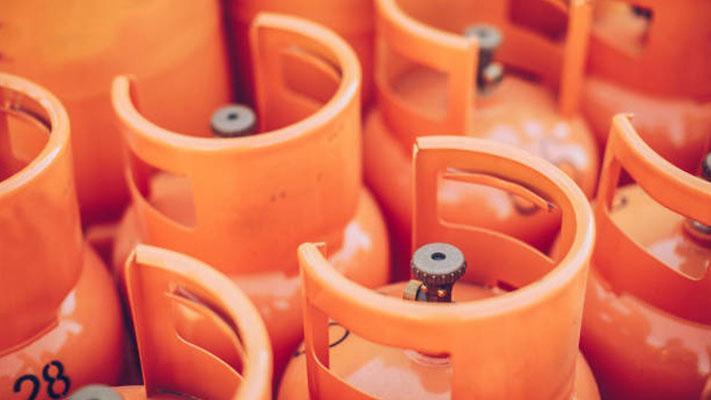
Prices for Liquefied Petroleum Gas (LPG), commonly referred to as cooking gas, have surged significantly across Nigeria, causing widespread concern among households, according to recent investigations by BusinessDay.
Market surveys reveal that in some regions, the cost of cooking gas has escalated to as much as N3,200 per kilogram, marking a staggering 100% increase from the N1,600 per kilogram recorded just three days prior.
Previously, BusinessDay highlighted a 33% price hike in major urban centers, compelling many families to limit their gas usage to cope with the rising expenses.
This price escalation follows shortly after the Petroleum and Natural Gas Senior Staff Association of Nigeria (PENGASSAN) called off its strike at the Dangote Petroleum Refinery. The industrial action had severely disrupted the supply chain, leading to a sharp increase in LPG costs. The strike was officially ended earlier this week after government mediation.
Despite the resolution of the strike, LPG prices remain elevated, with significant variations depending on geographic location.
In Lagos, residents have reported notable price differences: Ahmed mentioned that in Orile, gas is now priced at N1,600 per kilogram, while Oyin observed prices reaching N2,000 in Ikorodu. Meanwhile, Fadeke Popoola from Sabo Yaba, near the University of Lagos, disclosed paying as much as N3,200 per kilogram-more than twice the cost from a few weeks ago.
Nationwide, the cost of a 12.5kg LPG cylinder has risen to between N16,500 and N18,000, compared to N12,750 just a week earlier, based on market data and field checks.
The persistent price hike has sparked frustration on social media, with many Nigerians expressing how the crisis is straining household finances.
One user, @Macazeee, lamented on X, “If you come across anyone selling cooking gas to make ends meet, support them financially. The price of LNG has skyrocketed, and it’s nearly impossible to purchase. What kind of country is this? No gas and no sales.”
Another user, @Zoyablooms, shared, “I really despise being Nigerian. The scarcity of cooking gas is unacceptable. This situation is disheartening.”
@_realkingsley posted a photo showing a long queue in Sabo, Ikorodu, questioning, “Cooking gas shortage. No supply in my area. I ask again, is the Dangote-PENGASSAN conflict already affecting Nigerians?”
@Azizolurhemmy added, “Can someone tell me the current price of cooking gas in your location? The prices I’m hearing sound like they want to sell me the entire gas plant.”
Industry experts confirm that despite the strike’s end, supply challenges persist. Olatunbosun Oladapo, National President of the Nigerian Association of Liquefied Petroleum Gas Marketers (NALPGAM), explained that the strike severely hampered operations at gas plants, particularly in the southwest region.
He noted, “Dangote, our primary supplier known for both availability and affordability, has yet to issue loading invoices to our members who have had pending orders for over three weeks. This has forced marketers to purchase from alternative suppliers at significantly higher prices.”
Other suppliers have reportedly exploited the supply shortfall by raising their prices, further exacerbating difficulties for both retailers and consumers.