


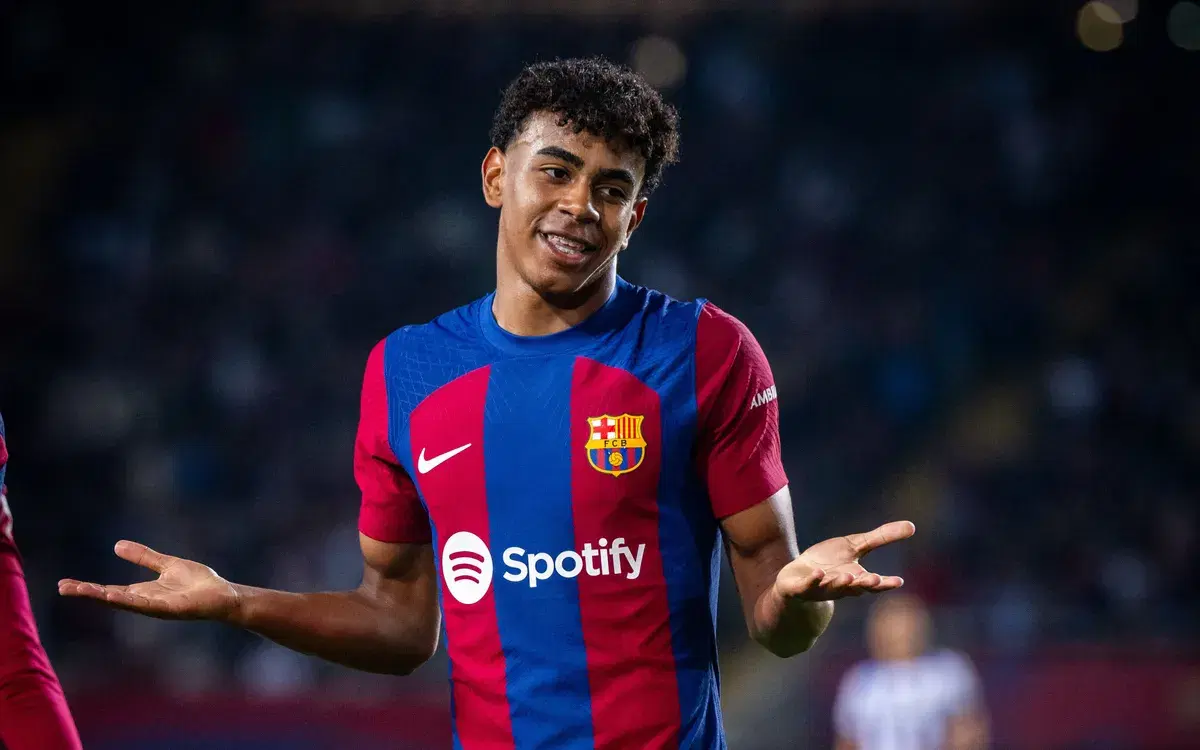
Barcelona‘s head coach, Hansi Flick, revealed on Saturday that Lamine Yamal‘s groin injury presents a challenging recovery process, making it difficult to predict when the young winger will be back on the pitch.
Although the club initially announced on Friday that Yamal would be sidelined for approximately two to three weeks, Flick indicated that the healing period might extend beyond that timeframe.
Yamal is set to miss Spain’s upcoming World Cup qualifying matches and is targeting a comeback before Barcelona’s high-profile Clasico clash against Real Madrid at the Santiago Bernabeu on October 26.
“This type of injury isn’t straightforward, unlike typical muscle strains, which we have more experience managing,” Flick explained. “With groin injuries, it’s difficult to set a clear timeline-whether it’s two, three, or four weeks before he can return, especially for a demanding match like the Clasico.”
He added, “We need to proceed cautiously, carefully monitoring his workload. He will be working closely with our rehabilitation team over the coming weeks. It’s a gradual process, and we must observe how his condition evolves.”
Yamal initially sustained the groin injury while representing Spain in September, causing him to miss four matches before making a brief return last week.
The promising 18-year-old, who was recently honored as the world’s second-best player at the Ballon d’Or ceremony, featured in Barcelona’s Champions League fixture against Paris Saint-Germain on Wednesday, where he unfortunately aggravated the injury.
Flick shared that he had a conversation with Yamal on Saturday, during which the player conveyed some encouraging signs despite ongoing discomfort.
“I spoke with him today, and while he’s feeling better than before, he’s still not fully recovered,” Flick stated ahead of Sunday’s La Liga game against Sevilla.
The coach also expressed criticism towards Spain’s manager, Luis de la Fuente, for allowing Yamal to participate in matches against Bulgaria and Turkey while relying on painkillers.
In response, de la Fuente urged Flick to show greater “empathy,” referencing his own experience as a former national team coach. However, Flick remained firm in his stance.
“I stand by my comments because my priority is to safeguard my players’ well-being,” Flick affirmed. “That chapter is behind us now. Moving forward, it’s crucial that clubs and the national federation collaborate effectively to manage situations like this.”