


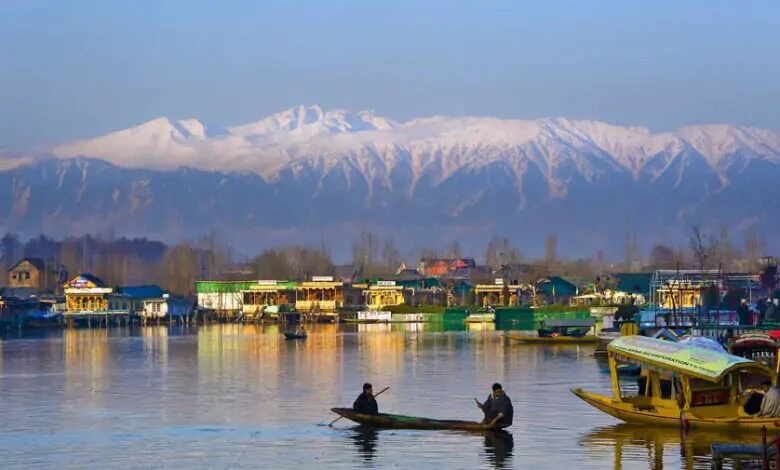
Jammu and Kashmir is witnessing a remarkable phase of economic revitalization and social progress, moving beyond its historical challenges of conflict and stagnation. This Union Territory is now embracing a future defined by stability, opportunity, and sustained development.
Since 2019, comprehensive reforms, strategic policy measures, and significant infrastructure projects have redirected the region’s economic path. The period from 2021-22 through 2024-25 stands out as a time of exceptional growth, marked by robust increases in Gross State Domestic Product (GSDP), unprecedented tourism influx, rising capital investments, and substantial social sector advancements.
At current valuation, Jammu and Kashmir’s GSDP is expected to reach ₹2.65 lakh crore by 2024-25. The post-pandemic recovery has consistently maintained an annual growth rate exceeding 7%, fueled by enhanced infrastructure development, industrial expansion, and the rejuvenation of traditional sectors like horticulture and artisanal crafts.
This upward trajectory is underpinned by improved governance, enhanced peace and security, and well-targeted welfare schemes. Programs such as universal health coverage through Ayushman Bharat, expanded access to potable water, and the construction of over 170,000 homes under the Pradhan Mantri Awas Yojana (PMAY) have significantly uplifted living conditions. Additionally, the creation of more than 30,000 government jobs has contributed to social cohesion and stability.
The region’s entrepreneurial energy has also been a catalyst for growth. Since 2019, over 650 startups have been established in Jammu and Kashmir, reflecting a blend of innovation-driven progress alongside traditional economic activities.
Industrial growth remains central to this transformation. The Industrial Policy 2021-30, coupled with the New Central Sector Scheme, offers robust incentives such as subsidies, capital assistance, and interest concessions. By December 2024, investment proposals totaling ₹1.63 lakh crore were received, with the potential to generate nearly 600,000 jobs. Nearly 2,000 industrial units are already operational, signaling a tangible shift in the economic fabric.
Tourism, a longstanding pillar of the local economy, has reached new heights. In 2023, the Union Territory recorded an all-time high of 2.11 crore visitors. Enhanced security and improved connectivity have fostered year-round tourism, with attractions ranging from winter sports in Gulmarg to eco-tourism trails and solar-powered pilgrimage sites drawing diverse travelers. The G20 Tourism Working Group’s meeting in Srinagar further elevated the region’s global tourism profile.
Infrastructure advancements have played a pivotal role. Iconic projects like the Chenab Railway Bridge-the world’s tallest rail bridge-the Zojila and Z-Morh tunnels, and the expansion of highways such as NH-44 have dramatically improved connectivity across the Himalayan terrain.
Simultaneously, energy security is being bolstered through major hydropower initiatives including Ratle, Kishanganga, and Pakal Dul. Solar energy projects at religious and tourist destinations complement these efforts, promoting sustainability.
Digital progress is accelerating rapidly. The BharatNet initiative, deployment of over 1,100 services via the eUNNAT portal, and the inclusion of Jammu and Srinagar in the Smart City Mission have introduced advanced digital governance and enhanced public service delivery.
Air travel connectivity has expanded with upgrades to airports in Srinagar, Jammu, and Leh, catering to both civilian and defense needs. The development of logistics parks and proposed metro rail systems in Srinagar and Jammu reflect a forward-looking vision for integrated urban transport.
These infrastructure improvements have generated significant ripple effects throughout the economy. Lower logistics costs, quicker market access, and improved connectivity have stimulated trade, tourism, and exports of horticultural products such as apples and saffron.
Employment opportunities have naturally increased, with thousands of jobs created in construction, logistics, tourism, and micro, small, and medium enterprises (MSMEs). Rural populations have also benefited from new avenues in non-agricultural sectors.
The investment environment has become more conducive to growth. Streamlined approvals through a Single Window system, affordable land rates, SGST reimbursements, and proactive policy frameworks have enhanced the ease of doing business. To date, nearly ₹9,600 crore worth of projects have been realized, resulting in close to 2,000 operational units employing over 63,000 individuals.
Looking forward, Jammu and Kashmir’s prospects are even more promising. The recent discovery of lithium deposits in the Reasi district positions the region as a key player in India’s clean energy ambitions. Expansion of hydropower capacity, Smart City initiatives, and skill development programs in artificial intelligence, cloud computing, and cybersecurity point to a future grounded in renewable energy and digital innovation.
Beyond economic gains, these developments also fulfill strategic objectives. The establishment of dual-use infrastructure supports both civilian needs and national security in this sensitive border area. Enhanced roads, tunnels, and airports not only facilitate commerce and tourism but also strengthen India’s defense capabilities.
With projected annual growth nearing 10% in the coming years, Jammu and Kashmir is set to become a center for renewable energy, tourism, digital industries, and modern urban lifestyles.
The ongoing transformation of Jammu and Kashmir exemplifies the impact of persistent reforms and focused development efforts. Economic momentum has accelerated, social welfare has improved, and investor confidence has deepened.
Today, Jammu and Kashmir stands on the threshold of an economic renaissance. No longer known solely for its scenic beauty, it is rapidly emerging as a jewel in India’s economic crown, blending industrial vitality, sustainable tourism, and inclusive social advancement.