


More than six decades after gaining independence and substantial investments in infrastructure, Nigeria’s transportation network continues to pose a significant obstacle to the nation’s economic advancement.
Industry specialists warn that the transport sector is nearing a critical point of failure, struggling to accommodate the demands of a rapidly expanding population and falling short of supporting national development objectives.
Despite the allocation of vast financial resources toward roads, railways, airports, and waterways, Nigeria still faces a disjointed and inefficient transport system that inflates business expenses and stifles productivity.
Samuel Odewumi, former dean of the Faculty of Transportation and Logistics at Lagos State University of Science and Technology (LASUSTECH), highlighted to BusinessDay that transport policies remain largely reactive and lack cohesive coordination across federal, state, and local governments.
“Since 1990, Nigeria’s population has more than doubled, yet infrastructure development has lagged significantly behind. This disparity creates bottlenecks that slow down economic activities and increase logistics costs,” Odewumi explained.
He cautioned that without immediate and comprehensive reforms, the transport system risks a prolonged collapse.
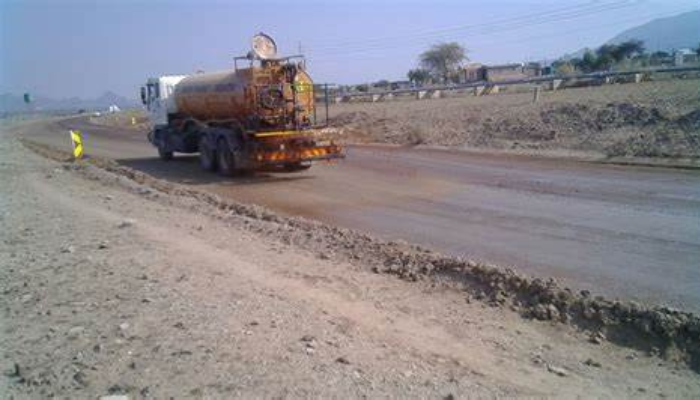
A major concern Odewumi raised is the excessive dependence on road transport. While air travel serves only a small segment of the population, the majority rely heavily on roads, many of which are in poor condition.
“Our roads suffer not only from overuse but also from misuse. For instance, trucks frequently carry loads of up to 90 tons on roads designed to handle just 30 tons, accelerating deterioration. Maintenance efforts often fail to address the root problems,” he noted.
Seasonal rains exacerbate these issues by eroding road surfaces, further weakening already strained infrastructure.
Odewumi also criticized the rail network, pointing out that only a handful of lines-such as Lagos-Ibadan, Abuja-Kaduna, and Warri-Itakpe-are operational, and even these run below their full potential.
“The Warri-Itakpe railway has been non-functional for over two months. A single locomotive has been servicing this route for years with minimal upkeep, which is unsustainable,” he said.
He expressed apprehension about Nigeria’s growing reliance on Chinese loans for rail projects, emphasizing the challenges in maintaining these assets and repaying debts.
Another persistent issue is the unclear division of responsibilities among different government tiers. “State and local authorities often await federal intervention, leading to neglect of feeder and rural roads,” Odewumi added.
He advocated for stricter regulations on freight transport and a strategic shift toward utilizing railways and inland waterways for cargo movement. Emphasizing the importance of a multimodal transport system, he called for policies that prioritize operational efficiency over political considerations.
“Constructing enough roads to meet demand is unrealistic. Goods traveling from Lagos to the eastern regions should be transported by rail or sea rather than by trucks,” he asserted.
Odewumi highlighted that inefficiencies in transport increase operational costs, deter investment, and diminish Nigeria’s competitiveness on the global stage.
He also criticized the dominance of tricycles and minibuses in urban transport, viewing them as symptoms of inadequate urban planning.
“When small vehicles dominate city transit, it signals poor infrastructure planning. A single train can carry thousands of passengers, whereas a minibus transports only a dozen, often with higher safety risks. Investing in safer, more efficient systems is essential,” he emphasized.
According to Odewumi, sustainable improvements require clear policies, strong leadership, and active private sector participation.
“Transport systems can be financially self-sustaining. The government’s role should be to foster an environment conducive to private investment and long-term strategic planning. At 65 years of independence, Nigeria should have resolved these fundamental transport challenges,” he concluded.
Isa Emoabino, a fellow of the Nigerian Society of Engineers and former chairman of the Nigerian Institution of Highway and Transportation Engineers, shared similar concerns.
Despite reforms and budget allocations-including N256.8 billion earmarked in the 2025 federal budget-Emoabino stated that Nigeria’s transport infrastructure remains insufficient.
“At this stage, our transport sector should be a catalyst for growth, but instead, it continues to impede progress,” he remarked.
He pointed out that road infrastructure development has not kept up with demographic growth or economic ambitions.
“There is a significant gap in infrastructure, and what exists is often poorly maintained,” he added.
Emoabino also questioned the proposed 5 percent fossil fuel levy intended for road maintenance, stressing the need for transparency and accountability in how these funds are utilized.
“Public support for taxes hinges on visible and responsible use of the revenue,” he said.
He linked deteriorating road conditions to increased insecurity, noting that many kidnappings and robberies occur on poorly maintained roads where vehicles must slow down.
Improved infrastructure, he argued, would reduce logistics costs, facilitate food distribution, and help stabilize inflation.
While acknowledging some progress in rail development, Emoabino emphasized that it remains inadequate.
“Between 1960 and 1990, railways were neglected as focus shifted to roads, which explains their rapid decline,” he explained.
He advocated for transporting bulk goods and petroleum via pipelines and railways instead of trucks.
“Moving petroleum by road damages infrastructure and increases hazards. We have better alternatives that are underutilized,” he said.
Emoabino urged the government to activate the National Road Fund and Federal Roads Authority laws, which have been passed but remain unimplemented.
“The legal frameworks exist; what’s lacking is decisive action,” he stressed.
He also connected transport inefficiencies to food insecurity, highlighting that many farmers struggle to get their produce to markets, resulting in waste and higher prices.
“If transportation fails, food availability and affordability suffer,” he warned.
He called for a comprehensive national transport strategy focused on sustainable financing, regular maintenance, and integration across all transport modes.
“We need less rhetoric and more implementation. Fixing transport is essential to revitalizing the economy,” Emoabino concluded.
Conversely, Chris Itsede, executive chairman of Polar-Afrique Consulting, pointed out that road construction is already fostering economic growth.
He cited benefits such as reduced travel times, lower transportation costs, and improved access to markets, healthcare, and education.
“Road projects are enhancing regional connectivity. Farmers can now reach markets more quickly, reducing post-harvest losses,” Itsede noted.
He also highlighted the job creation impact of road construction, benefiting engineers, technicians, and suppliers, thereby stimulating local economies.
“Improved roads attract investment, support small and medium enterprises, and drive economic expansion,” he said.
While acknowledging the high costs of road infrastructure, Itsede argued that the long-term advantages justify the investment.
“Efficient logistics boost productivity. Roads link people and goods. As Nigeria continues to invest in infrastructure, road development will remain a cornerstone of inclusive growth,” he affirmed.
Nonetheless, many experts concur that relying solely on roads will not achieve the desired economic impact.
Roads handle over 90 percent of domestic cargo transport, yet many are in disrepair. Rail services are limited, and inland waterways remain largely untapped.
Without integrated planning and coordinated reforms, Nigeria’s transport system risks not only failing to support economic growth but potentially becoming a hindrance to it.