


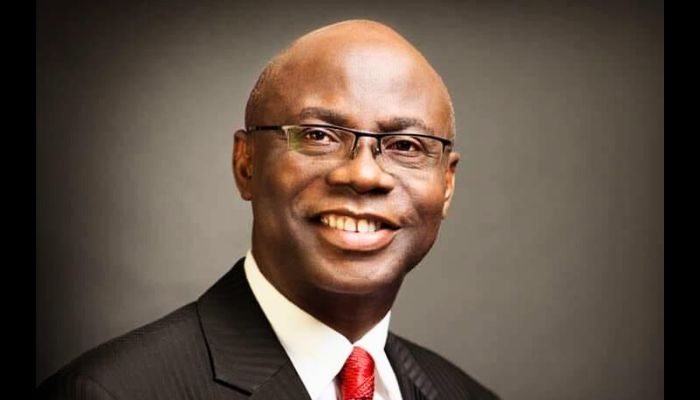
Tunde Bakare, the founder of Citadel Global Community Church and a significant figure in Nigeria’s political landscape, has once again sparked debate by resisting calls from influential politicians to join the African Democratic Congress (ADC). Speaking at the inaugural Citadel School of Governance Dialogue Series held in Lagos, Bakare emphasized that his political stance is grounded in principles rather than party affiliations.
The forum, themed “Nigeria at 65: Historical Reflections, Futuristic Projection,” attracted a diverse group of leaders, academics, and civic activists to reflect on Nigeria’s democratic evolution and future prospects. The discussion took a political turn when Bakare disclosed that several key players had approached him to affiliate with the ADC, a party positioning itself as a viable alternative to the ruling All Progressives Congress (APC).
Bakare revealed that the attempts to recruit him were persistent and personal. “Numerous prominent individuals have pressured me to join ADC,” he stated. “They visited my residence, and even during my time abroad, party officials repeatedly contacted me, expressing their desire for my endorsement.”
He further mentioned that the persuasion came from notable figures, including a former governor and a former minister from the South-West region. In a political environment where party-switching is often a survival tactic, Bakare’s account highlights how political groups actively seek to enlist respected personalities to enhance their legitimacy ahead of upcoming elections.
Despite the overtures, Bakare was unequivocal in his refusal. “I will not participate in ADC,” he asserted. “The last time I heard of ADC was in connection with a plane crash. I wish them success because a strong opposition is necessary. However, one cannot create a party like APC and then attempt to undermine it. We must avoid repeating the Awolowo-Akintola conflict in the South-West.”
By referencing the historic rivalry between Chief Obafemi Awolowo and Chief Samuel Akintola, which deeply divided the South-West in the 1960s, Bakare warned against rekindling regional political discord. For him, fostering unity rather than factionalism is essential to stabilizing both the region and the nation.
His remarks also shed light on the delicate nature of political coalitions within Nigeria’s democracy. With the 2027 elections approaching, political parties are intensifying efforts to attract influential figures who command public trust. Bakare, known for his advocacy of ethical governance, continues to wield considerable influence in both religious and political spheres.
Although Bakare previously engaged in politics-most notably as the vice-presidential candidate alongside Muhammadu Buhari under the Congress for Progressive Change (CPC) in 2011-he has since adopted a role as a moral compass rather than a partisan operative. His rejection of ADC reinforces this principled position.
Political experts interpret Bakare’s stance as a subtle caution to South-West political actors contemplating new alliances. By invoking the Awolowo-Akintola episode, he underscores the dangers of allowing personal ambitions to fracture collective progress.
Some observers view Bakare’s comments as a call for ideological integrity in Nigerian politics, a quality increasingly scarce amid the country’s fluid political affiliations. “Bakare’s refusal is not merely a rejection of ADC; it is a repudiation of the opportunistic tendencies that pervade our political system,” noted a commentator at the event.
Importantly, Bakare’s decision to distance himself from ADC does not signal disengagement from political matters. Throughout the dialogue, he passionately advocated for ethical leadership, national cohesion, and youth-driven innovation as pillars for Nigeria’s advancement.
For Bakare, political involvement transcends party membership; it is about commitment to a cause. He stressed that genuine leadership demands steadfastness and conviction rather than frequent shifts in loyalty. “We must rise above political manipulation,” he urged. “If our aim is to rebuild this nation, character development must precede the pursuit of power.”
Many Nigerians, weary of constant defections and recycled political figures, may find resonance in Bakare’s principled stance. His refusal to join ADC could symbolize a broader yearning for integrity in leadership.
Nevertheless, his position may disappoint some political allies who view expanding party membership as crucial to challenging the APC’s dominance. The ADC has been striving to rebrand itself as a platform for reformist politicians and technocrats, and Bakare’s rejection could be a setback for those efforts.
Still, Bakare’s endorsement of a “robust opposition” reflects his recognition of the necessity for diverse political voices in a healthy democracy. He affirmed that while competition is vital, it must not come at the cost of unity and shared purpose.