


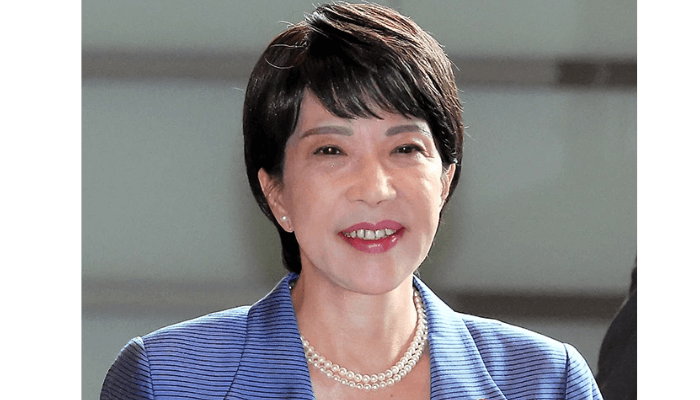
Introducing Sanae Takaichi, poised to become Japan’s inaugural female Prime Minister
In a historic development for Japan, a woman is on the verge of leading the nation’s government for the first time. Sanae Takaichi, a seasoned conservative politician and a trusted confidante of the late Shinzo Abe, has been chosen as the leader of the Liberal Democratic Party (LDP) during its 70th anniversary. This milestone victory sets the stage for her to break Japan’s longstanding political gender barrier by becoming the country’s next prime minister.
Takaichi, aged 64, brings decades of political experience to the forefront. Hailing from Nara Prefecture and born in 1961, she pursued business administration at Kobe University before embarking on her political journey in the early 1990s. In 1993, she was among the rare women elected to Japan’s parliament, a significant feat in a political landscape traditionally dominated by men. Over the last thirty years, she has earned a reputation as a resolute and disciplined figure, unafraid to engage in contentious debates.
Her ascent to the helm of the LDP represents both a continuation and a shift within the party. While the LDP has been Japan’s dominant political force since World War II, it has recently grappled with declining public support, scandals, and voter dissatisfaction. Takaichi’s triumph over the younger contender Shinjiro Koizumi underscores the party’s current preference for seasoned leadership and ideological consistency rather than generational change.
Politically, Takaichi is firmly aligned with the conservative faction of the LDP. She advocates for bolstering Japan’s defense capabilities, enacting stricter national security measures, and preserving what she terms “traditional Japanese values.” Her opposition to legalizing same-sex marriage and allowing married couples to retain separate surnames has drawn criticism from those who view these stances as out of step with modern societal shifts.
On the international stage, Takaichi aims to restore and strengthen ties with the United States following a period of diplomatic strain. She has committed to enhancing Japan’s self-sufficiency and defense budget, as well as fulfilling trade agreements initiated under the previous administration. While these policies resonate with conservative supporters domestically, they may complicate relations with neighboring countries, especially given her past visits to the contentious Yasukuni Shrine, a site that honors Japan’s war dead, including convicted war criminals.
Her leadership carries profound symbolic weight in a country where gender equality remains a significant challenge. Women occupy only about 15.7% of seats in Japan’s lower house of parliament, according to the Inter-Parliamentary Union. Takaichi’s rise could serve as a catalyst, encouraging more women to pursue political careers.
Outside the political arena, Takaichi maintains a private and understated personal life. She is married to Taku Yamamoto, who also serves as an LDP member in the lower house.
As she prepares for her formal parliamentary election scheduled for October 15, Takaichi confronts formidable obstacles: revitalizing a sluggish economy, managing the demands of an aging population, and rebuilding public confidence in a ruling party often perceived as disconnected from everyday citizens.
Throughout her leadership campaign, she balanced pragmatism with compassion. “The LDP must evolve to secure Japan’s present and future,” she stated. “Our priority will always be the national interest, and we will govern with a balanced approach.” Among her proposals are making childcare costs partially tax-deductible and offering corporate tax incentives to businesses that provide on-site childcare, initiatives designed to alleviate the burdens faced by working parents.
Her policy outlook is deeply informed by personal experience. “Having cared for family members on three separate occasions, I understand the challenges firsthand,” she shared. “This fuels my commitment to reduce the number of people forced to abandon their careers due to caregiving, child-rearing, or children’s school refusal. I aspire to build a society where career and family responsibilities can coexist.”