


National Assembly” />
By Henry Umoru
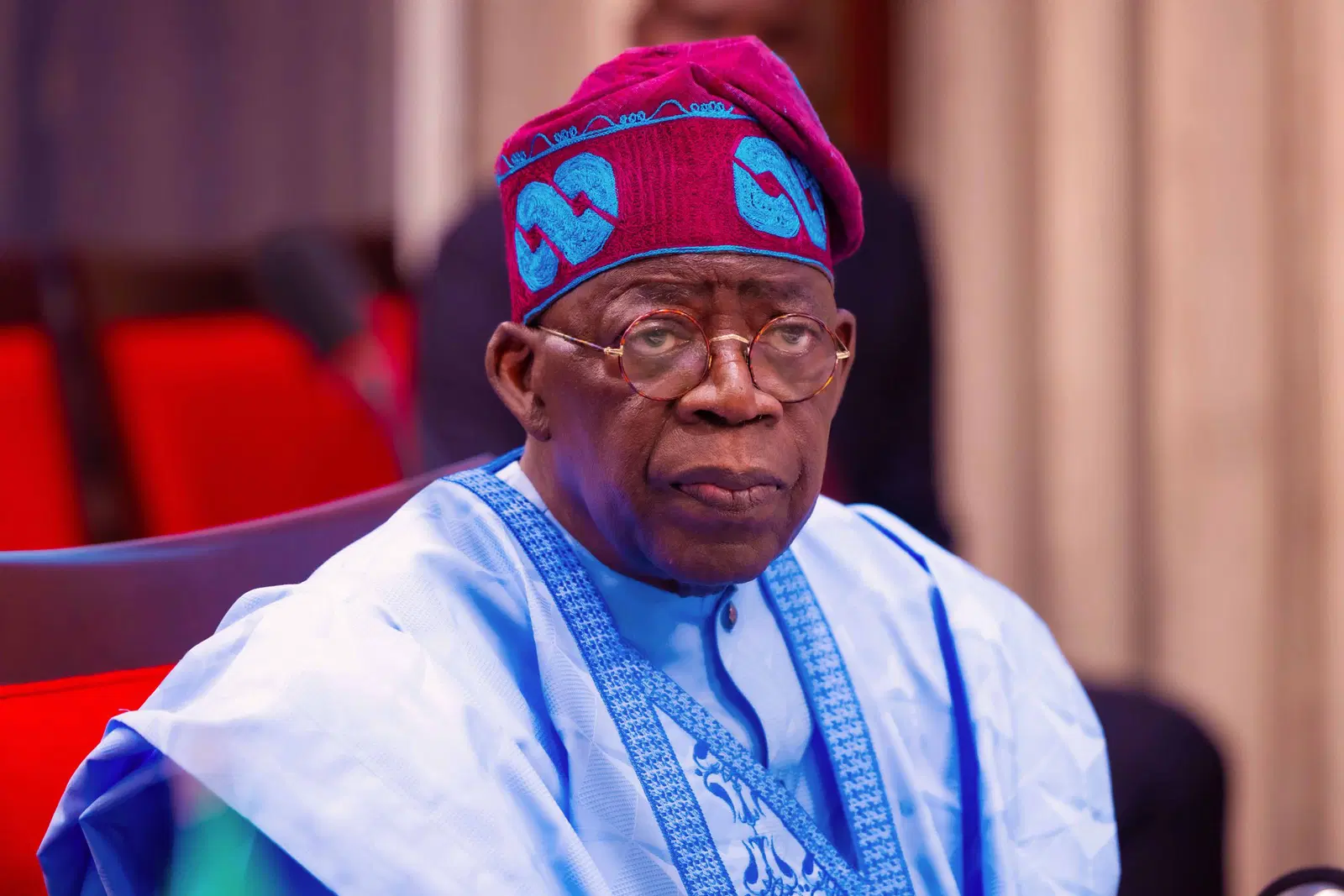
ABUJA – President Bola Tinubu has opted not to grant assent to two legislative bills recently passed by the National Assembly.
In a formal communication addressed to Senate President Godswill Akpabio and presented during Tuesday’s plenary session, President Tinubu cited critical flaws and contradictions with existing financial and constitutional frameworks as reasons for withholding his approval.
Dated July 30, 2025, the letter detailed the President’s refusal to endorse the Nigerian Institute of Transport Technology (Establishment) Bill, 2025. He highlighted that multiple provisions within the bill conflicted with current laws and could potentially lead to financial mismanagement if enacted.
President Tinubu stated, “Pursuant to Section 58(4) of the Constitution of the Federal Republic of Nigeria, 1999 (as amended), I hereby notify the Senate of my decision to withhold assent to the Nigerian Institute of Transport Technology Establishment Bill, 2025.”
He elaborated that Section 18(4a) of the bill proposed expanding the institute’s funding sources to include one percent of all import and export levies in Nigeria-a measure introduced without the Federal Executive Council’s endorsement.
The President argued that imposing such a levy, especially when the institute is already slated to receive federal funding, would result in redundant revenue streams and impose unnecessary financial strain.
Further scrutiny was directed at Section 21(2), which authorizes the institute to secure loans or overdrafts without presidential approval, except for amounts exceeding ₦50 million.
“Current legislation mandates presidential consent for borrowing. The removal of this requirement lacks justification and opens the door to potential exploitation, as the institute might repeatedly borrow sums below ₦50 million to circumvent oversight,” Tinubu cautioned, warning that this could foster significant financial abuse.
Additionally, the President pointed out inconsistencies in Sections 23 and 24(5) concerning the management and investment of the institute’s funds. While the bill designates federal appropriations as the primary funding source, it simultaneously permits the institute to invest surplus funds-an approach that contradicts established public finance norms, since government-funded agencies typically do not generate excess funds.
He also criticized Section 18(2) for creating ambiguity by allowing the institute to invest its funds in securities approved by the minister, which conflicts with the bill’s stated purpose of dedicating funds solely to advancing the institute’s core mission.
Due to these issues, President Tinubu returned the bill to the National Assembly for further review and revision.
He concluded his letter with, “Please accept, Distinguished Senate President and Esteemed Senators, the assurances of my highest consideration.”
In a separate letter also read by Senate President Akpabio, the President declined assent to the National Assembly Library Fund bill, citing concerns that its funding provisions could establish unsustainable financial precedents.
Responding to the President’s observations, Akpabio commended the thoroughness of the review and assured that the relevant committees would revisit the bills to address the highlighted issues.
Meanwhile, President Tinubu has signed into law two other bills: the Nigeria Police Force Training Institute Establishment Bill and the Nigeria Police Trust Fund Establishment Bill.