


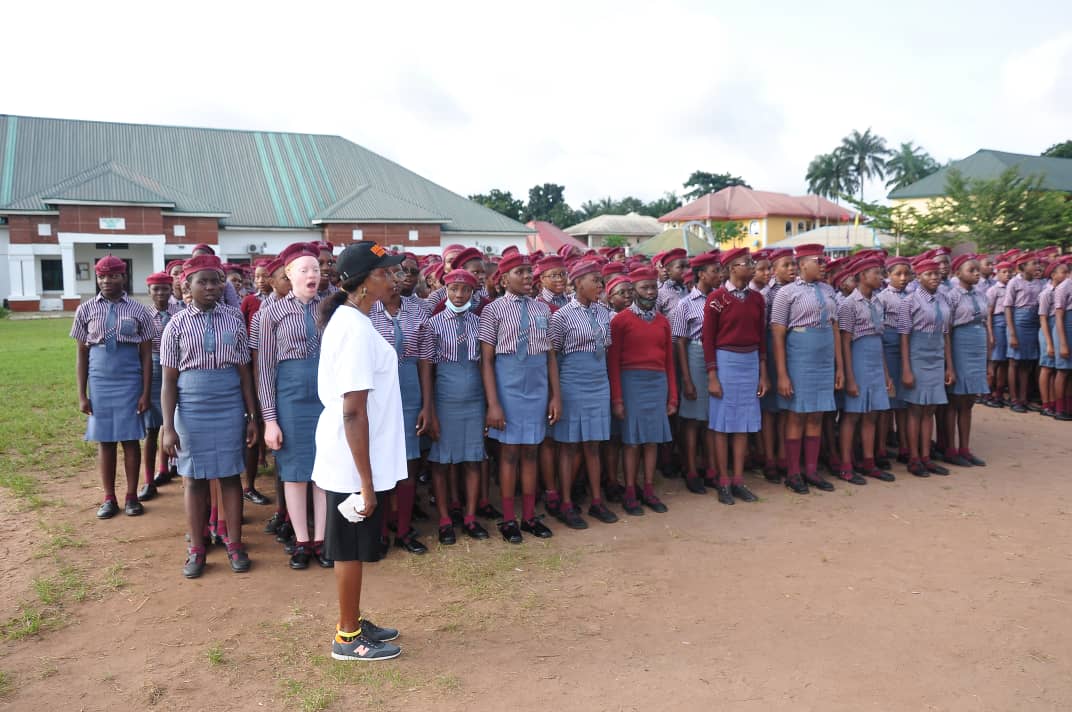
In recognition of the International Day of the Girl Child, the AIDS Healthcare Foundation (AHF) Nigeria has intensified its advocacy for enhanced funding towards girls’ health, education, and empowerment, with a particular focus on HIV prevention and addressing period poverty.
To commemorate this significant day, AHF Nigeria organized an enlightening and empowering gathering at Community Commercial Secondary School, Ikot Oku Ubo, Offort, Uyo, Akwa Ibom State, on October 10. This event united students, civil society groups, and government representatives in a shared mission to safeguard adolescent girls from health vulnerabilities while fostering leadership skills and self-esteem.
The program included interactive workshops on menstrual hygiene management, leadership training, and comprehensive sexuality education. Both in-school and out-of-school girls showcased imaginative presentations illustrating their perspectives on what “girls deserve,” with exceptional efforts being recognized through awards and gifts.
Additionally, AHF provided complimentary sanitary products-offering both reusable and disposable options-and facilitated connections to mentorship programs available within Akwa Ibom State.
Dr. Echey Ijezie, Country Program Director of AHF Nigeria, highlighted that this initiative underscores the foundation’s dedication to tackling the specific obstacles confronting young girls across Nigeria.
“Our focus at AHF Nigeria is on the multifaceted challenges adolescent girls encounter, including barriers to education, inadequate menstrual health resources, gender-based violence, and restricted access to sexual and reproductive health services,” Dr. Ijezie explained. “These factors significantly increase their vulnerability to health issues such as HIV.”
Despite advancements worldwide, adolescent girls and young women remain disproportionately affected by new HIV infections. Weekly, approximately 4,000 females aged 15-24 contract HIV, with over 3,300 of these cases occurring in sub-Saharan Africa alone.
In 2023, an estimated 1.9 million adolescent girls and young women were living with HIV, a figure notably higher than that of their male peers. Educational disparities persist as well, with around 133 million girls globally currently out of school.
The Uyo event was executed in partnership with several organizations, including the Civil Society for HIV/AIDS in Nigeria (CISHAN), the Centre for Clinical Care and Clinical Research in Nigeria (CCCRN), and the Excellence Community Education Welfare Scheme (ECEWS). The Akwa Ibom State AIDS and STIs Control Programme (SACP) and the State Ministry of Women Affairs, under the leadership of Commissioner Hon. Inibehe Silas, also played active roles in the event.
Dr. Ijezie stressed that empowering girls through education, mentorship, and accessible healthcare services is essential to reducing gender disparities and fulfilling the United Nations’ health and development objectives.
Celebrated annually on October 11, the International Day of the Girl honors the accomplishments of girls worldwide while reinforcing the need for policies that safeguard their health and future prospects.
Through its Girls Act initiative, AHF equips adolescent girls and young women in nearly 40 countries with vital knowledge, resources, and support to remain HIV-negative, maintain treatment adherence, continue their education, and prevent unintended pregnancies.
“Educated, healthy, and empowered girls have the power to transform their communities,” Dr. Ijezie concluded. “Our goal is to guarantee that every Nigerian girl is given the chance to flourish.”