


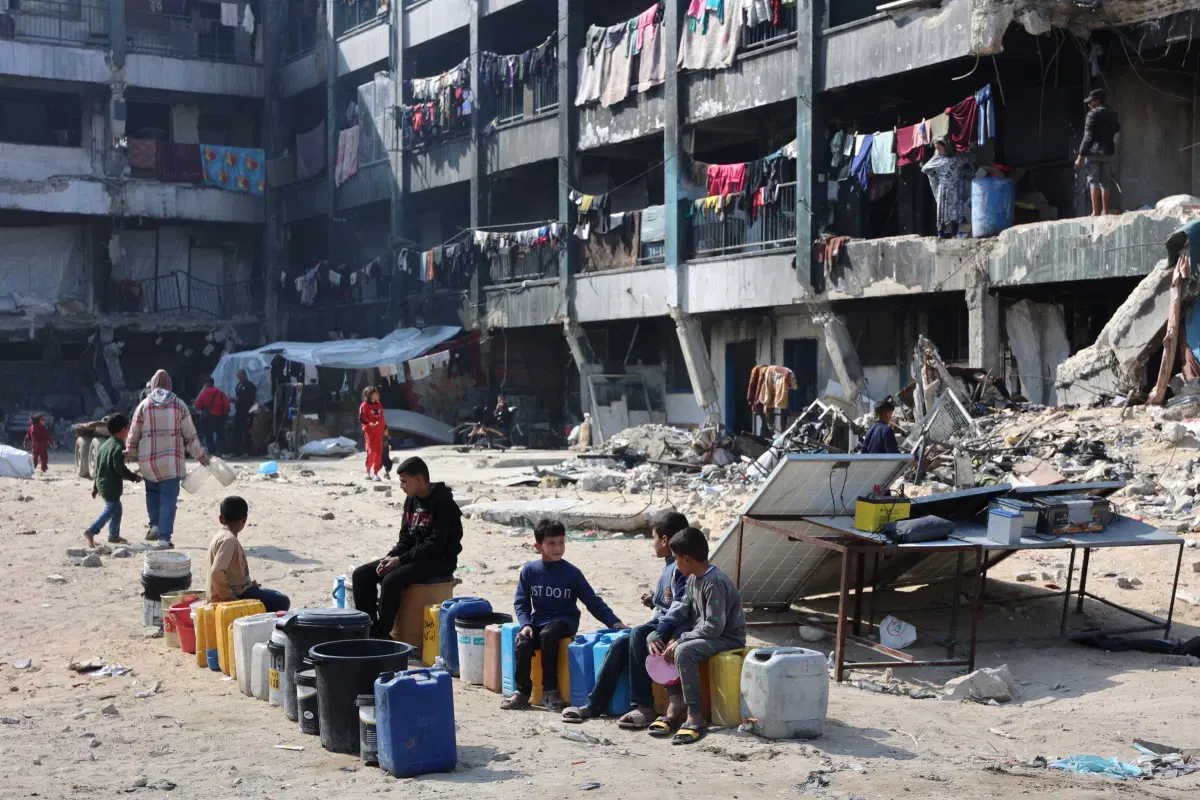
On Thursday, Israel and Hamas reached a ceasefire agreement aimed at securing the release of living hostages in exchange for the liberation of hundreds of Palestinian detainees held in Israeli prisons.
Below is a detailed overview of the key elements of this deal, which was negotiated indirectly in Egypt:
Hostage and Prisoner Exchanges
As part of the initial phase, Hamas is set to free 20 living hostages simultaneously, according to a source close to the group’s negotiation team.
In return, Israel will release close to 2,000 Palestinian prisoners, including 250 serving life sentences and approximately 1,700 others detained since the outbreak of the conflict, a senior Hamas official revealed anonymously to AFP.
Israel has not yet confirmed whether it will publish the names of those prisoners slated for release.
The office of Israeli Prime Minister Benjamin Netanyahu emphasized that the agreement to free hostages will only be implemented after receiving formal approval from the cabinet.
“Contrary to reports in some Arab media, the 72-hour countdown will commence only after the cabinet endorses the deal, expected later this evening,” Netanyahu’s office clarified.
Out of the 251 individuals abducted during Hamas’s October 7, 2023 assault that ignited the war, militants continue to hold 47 in Gaza, with Israeli forces asserting that 25 of them have died.
Negotiated Prisoner Lists
A pivotal aspect of the talks involved a list of Palestinian prisoners that Hamas submitted, requesting their release during the ceasefire’s first stage.
Among those on the list is Marwan Barghouti, a prominent figure from Fatah, Hamas’s political rival, according to Egyptian state-affiliated media.
Barghouti, convicted in 2004 on murder charges and labeled a terrorist by Israel, remains a highly influential Palestinian leader, often topping popularity polls and sometimes referred to by supporters as the “Palestinian Mandela.”
Humanitarian Assistance
The agreement guarantees a minimum daily entry of 400 aid trucks into Gaza for the first five days of the ceasefire, with plans to increase this volume thereafter, a Hamas source confirmed.
It also includes provisions for the immediate return of displaced residents from southern Gaza back to Gaza City and northern areas.
Tedros Adhanom Ghebreyesus, head of the World Health Organization, expressed readiness to expand efforts to address urgent medical needs and support the rehabilitation of Gaza’s devastated healthcare infrastructure.
The United Nations agency responsible for Palestinian refugees hailed the deal as a “significant relief” and pledged to supply Gaza with essential food supplies.
“We have sufficient provisions to feed the entire population for the next three months,” stated Philippe Lazzarini, the agency’s chief, via social media platform X.
Planned Israeli Military Withdrawals
The agreement outlines “scheduled withdrawals” of Israeli forces from Gaza, according to a senior Hamas official, and includes “guarantees from former President Trump and the mediators.”
On Thursday, the Israeli military announced preparations to begin troop pullbacks in Gaza as part of the ceasefire arrangement.
Outstanding Issues
The indirect negotiations were based on a 20-point peace framework proposed by Donald Trump, which calls for Hamas’s disarmament and the establishment of a transitional authority in Gaza led by Trump himself after the conflict.
However, these critical points remain unresolved.
Palestinian President Mahmoud Abbas expressed hope that the Gaza agreement could pave the way toward an independent Palestinian state.
Conversely, Netanyahu and several cabinet members have consistently vowed to block any such development.
Next Steps
The deal is expected to be formally signed later on Thursday in Egypt, according to an informed source who requested anonymity.
Israel’s cabinet is scheduled to convene at 1500 GMT to deliberate on the plan to secure the release of all hostages held in Gaza, as stated in an official government release.
Far-right Finance Minister Bezalel Smotrich has declared his intention to oppose the agreement.
A Hamas official indicated that negotiations for the ceasefire’s second phase will commence “immediately.”
Discussions are taking place under strict security at a conference center in Egypt’s resort city of Sharm El-Sheikh.
Al-Qahera News, affiliated with Egypt’s intelligence services, aired footage showing representatives from Hamas, Turkey, Qatar, Egypt, and the United States sharing warm embraces and walking together in high spirits.
However, Hamas and Israeli delegations remain separated in different rooms, with mediators moving between them, and no signs of direct meetings between the opposing parties.