


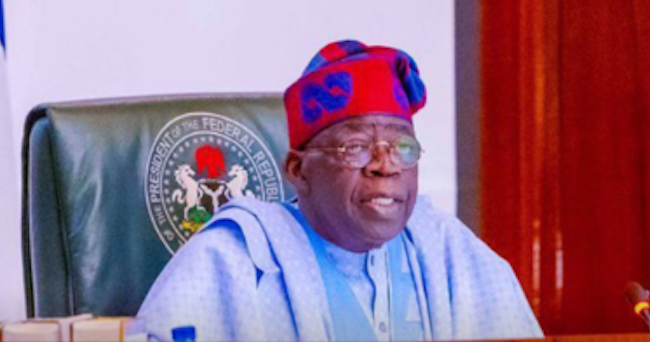
President Bola Tinubu has officially issued a posthumous pardon to the late Maj.-Gen. Mamman Vatsa, who once served as the Minister of the Federal Capital Territory (FCT).
Vatsa was executed on March 5, 1986, after being convicted of treason during the military administration of Ibrahim Babangida.
This development was announced by Bayo Onanuga, the President’s Special Adviser on Information and Strategy, following a National Council of State meeting held at the Presidential Villa in Abuja.
Known both as a soldier and a poet, Vatsa was among 17 individuals who received presidential pardons after the council’s endorsement.
In addition, President Tinubu granted a posthumous pardon to Herbert Macaulay, a foundational nationalist figure and co-founder of the National Council of Nigeria and the Cameroons (NCNC).
Macaulay, who served as the first president of the NCNC, was instrumental in Nigeria’s struggle for independence but was controversially convicted by British colonial authorities in 1913.
Although Macaulay passed away in 1946, the colonial conviction had remained on record until this pardon.
Furthermore, the President extended pardons to four former convicts, including ex-House of Representatives member Farouk Lawan, Mrs. Anastasia Daniel Nwaobia, Hussaini Umar, and Ayinla Alanamu.
Lawan’s conviction was related to fuel subsidy fraud.
These pardons aim to facilitate their reintegration into society, recognizing their expressions of remorse and good behavior.
Also pardoned was Nweke Francis Chibueze, who is serving a life sentence for cocaine trafficking, as well as Dr. Nwogu Peters, who was sentenced to 17 years for fraud and has served 12.
The late Ogoni Nine–Ken Saro-Wiwa, Saturday Dobee, Nordu Eawo, Daniel Gbooko, Paul Levera, Felix Nuate, Baribor Bera, Barinem Kiobel, and John Kpuine-were formally granted pardons as well.
In a further gesture of recognition, Tinubu honored the Ogoni Four-Chief Albert Badey, Chief Edward Kobani, Chief Samuel Orage, and Theophilus Orage-with posthumous national awards.
Exercising his constitutional authority, the President also granted clemency to 82 inmates and reduced sentences for 65 others, while commuting the death sentences of seven inmates to life imprisonment.
These decisions were made following recommendations from the Presidential Advisory Committee on the Prerogative of Mercy (PACPM), chaired by the Attorney General and Minister of Justice, Lateef Fagbemi (SAN).
The committee includes notable members such as Chief Akinlolu Olujinmi, Prof. Alkasum Abba, Prof. Nike Sidikat Ijaiya, Justice Augustine Utsaha, and Dr. Onwusoro Maduka (Secretary), alongside representatives from the Police, Nigerian Correctional Service, NHRC, NSCIA, CAN, and the Ministry of Special Duties.
In accordance with constitutional protocols, PACPM submitted its final report to the Council of State on Thursday.
Onanuga detailed the process: “A total of 175 inmates were interviewed, with 62 applications received on behalf of 119 inmates, totaling 294 cases reviewed.”
He added, “Among those interviewed, 160 were male and 15 female. The committee recommended clemency for 82 inmates, pardons for two, sentence reductions for 65, and commutation of seven death sentences.”
“Fifteen ex-convicts were also recommended for presidential pardons, including 11 deceased individuals such as the Ogoni Nine. The Ogoni Four were additionally recommended for posthumous national honors.”
“Altogether, 175 beneficiaries were put forward for clemency and honors.”
The committee applied rigorous criteria in its evaluations, considering factors such as age (over 60), terminal illness, youth (under 16), and exemplary conduct during incarceration.
Onanuga further explained, “Priority was given to inmates who acquired sustainable vocational skills, demonstrated genuine remorse, received commendations from correctional officers, or were Nigerian prisoners repatriated from abroad.”
The Secretary to the Government of the Federation, George Akume, inaugurated the PACPM on January 15 with the goal of promoting justice, rehabilitation, and human rights across Nigeria.