


By Favour Ulebor, Abuja
The Nigerian Federal Government and the United Kingdom have formalized a significant partnership aimed at intensifying efforts against organised immigration crime and addressing other shared challenges impacting both countries.
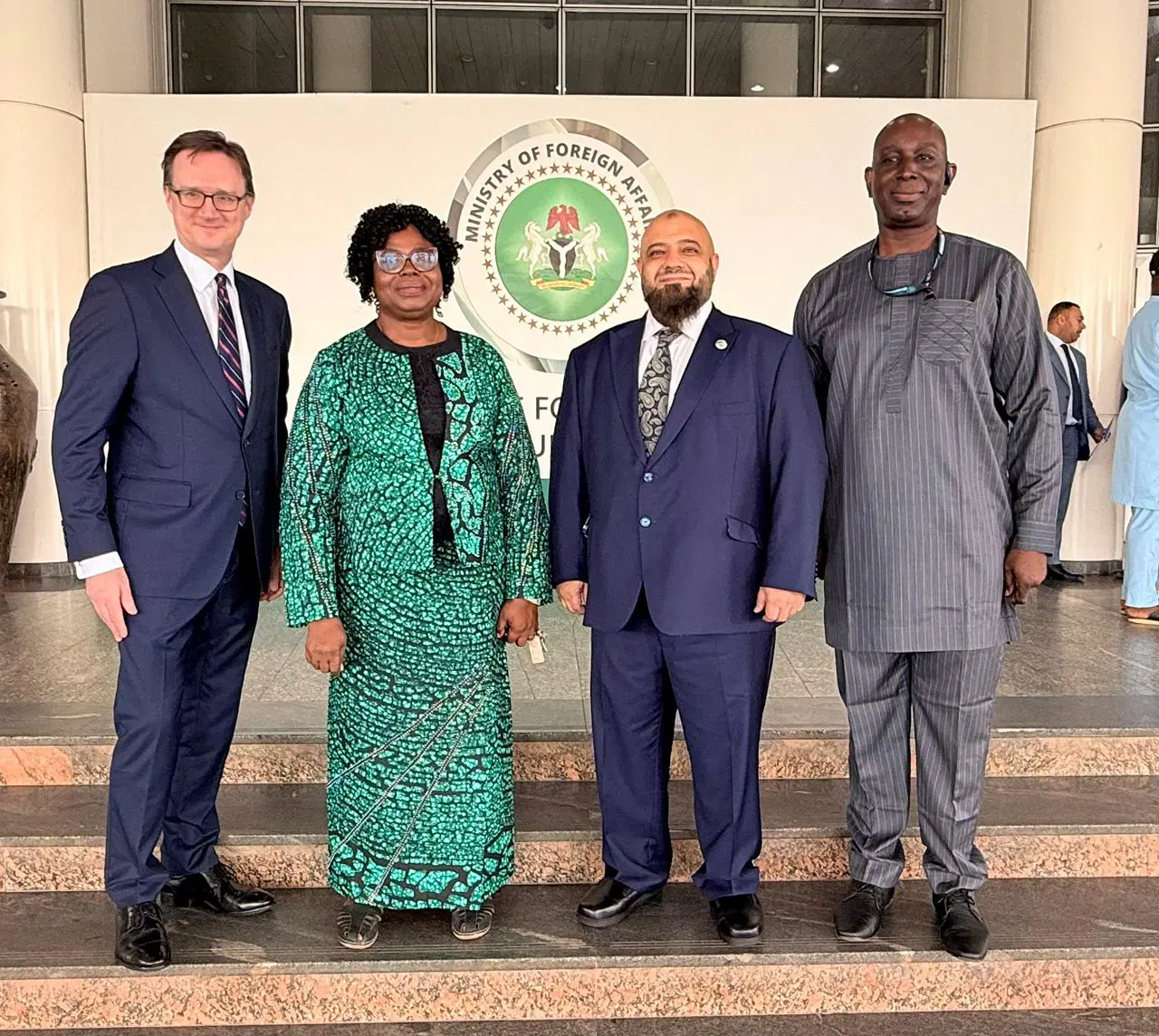
On October 8, in Abuja, the 2025 Nigeria-United Kingdom Migration, Justice, and Home Affairs (MJHA) Dialogue agreement was signed by Ambassador Asari E. Allotey representing Nigeria and Ambassador Asim Hafeez for the UK, as confirmed in a statement received by Vanguard on Friday.
This agreement establishes a comprehensive nine-pillar framework focused on improving migration governance, reinforcing judicial systems, combating organised criminal activities, and fostering deeper bilateral collaboration to enhance security and economic growth.
Building upon the foundation laid during the previous dialogue held in London in March 2024, the two nations reached consensus on pivotal matters such as the repatriation of individuals without lawful residency, advancing visa schemes that facilitate trade and investment, and conducting joint evaluations of serious organised crime threats.
Regarding the e-visa programme, the UK delegation shared updates on streamlining visa application procedures, while Nigeria highlighted advancements in its digital migration reforms, including the rollout of a new e-visa platform.
Both parties committed to tackling visa misuse and irregular migration through a newly signed Memorandum of Understanding (MoU) on Organised Immigration Crime. This MoU aims to strengthen border security operations and enhance the capabilities of law enforcement agencies on both sides.
The agreement is designed to strategically dismantle human trafficking networks and combat document fraud, while fostering improved cooperation between Nigerian and UK border authorities to identify, investigate, and prosecute offenders effectively.
“Our countries are united in the goal of enhancing border and migration management, curbing irregular migration, and boosting prosecutorial and judicial collaboration between the UK and Nigeria,” the statement emphasized.
Under the fourth pillar, focusing on Serious Organised Crime Collaboration, both governments agreed to develop a Nigerian Strategic Serious Organised Crime Threat Analysis. This initiative will facilitate the exchange of criminal intelligence and support the creation of a National Serious Organised Crime Strategy aligned with the UNTOC Convention.
Described as a pioneering effort in West Africa, this collaboration highlights the robust partnership between Nigeria and the UK in combating serious organised crime.
Additionally, the UK handed over the Brighter Futures Prevent Programme to Nigeria’s National Counter Terrorism Centre (NCTC), with Nigeria committing to maintain and expand the programme at federal and state levels.
On matters of extradition, both countries agreed to review and enhance justice procedures, ensure equitable prisoner transfers, and improve coordination under the existing Prisoner Transfer Agreement.
They also pledged to intensify joint actions against human trafficking, narcotics smuggling, and other cross-border crimes through strengthened cooperation between Nigerian and UK law enforcement agencies.
Furthermore, both nations vowed to combat illicit financial flows by bolstering investigative efforts, tightening financial oversight, and promoting transparency to fight corruption and money laundering.
To guarantee the effective execution of this agreement, Nigeria and the UK will convene annual review meetings alternately in Abuja and London to evaluate progress and recalibrate shared priorities.
The forthcoming Nigeria-UK MJHA Dialogue is scheduled for 2026 in the United Kingdom, reaffirming both countries’ dedication to accountability, security, and mutual prosperity.