


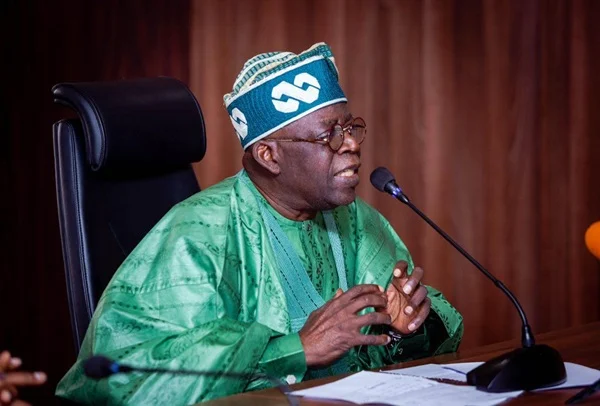
President Bola Tinubu has extended clemency to a total of 175 individuals, including current and former inmates. The decision was influenced by multiple considerations such as demonstrated remorse, exemplary behavior, advanced age, acquisition of vocational skills, and participation in educational programs.
In a statement issued by Bayo Onanuga, the Special Adviser to the President on Information and Strategy, it was revealed that the pardons-vatsa-macaulay-lawan/” title=”Tinubu Grants Historic … to Vatsa, Herbert Macaulay, and Farouk Lawan”>Presidential Advisory Committee on the Prerogative of Mercy, led by Attorney-General and Minister of Justice Prince Lateef Olasunkanmi Fagbemi, thoroughly reviewed each case before recommending the pardons.
The Presidency emphasized that the majority of those granted clemency had shown genuine repentance and maintained good conduct throughout their imprisonment.
Additional factors taken into account included the inmates’ age and health status, their engagement in vocational training, enrollment at the National Open University of Nigeria (NOUN), duration already served, and family responsibilities, especially those involving dependent children.
The beneficiaries comprise a diverse group: two inmates received full pardons, 15 former convicts were pardoned (including 11 posthumously), 82 inmates were granted clemency, 65 had their sentences commuted, and seven death row prisoners had their sentences reduced to life imprisonment.
Among the notable individuals pardoned were Nweke Francis Chibueze, 44, serving a life sentence for cocaine-related offenses, and Dr. Nwogu Peters, 67, who had been incarcerated since 2013 for fraud with a 17-year sentence.
Hon. Farouk M. Lawan, 62, who served five years for corruption following a 2021 conviction, was also among those pardoned.
Others granted full pardons include Mrs. Anastasia Daniel Nwaoba, 63, convicted of fraud; Barrister Hussaini Alhaji Umar, 58, fined N150 million in an ICPC case in 2023; and Ayinla Saadu Alanamu, 63, who completed a seven-year sentence for bribery imposed in 2019.
Addressing historical injustices, President Tinubu posthumously pardoned prominent figures such as Sir Herbert Macaulay, a leading nationalist who was banned from public office and convicted in 1913 by colonial authorities for alleged fund misappropriation. Major-General Mamman Jiya Vatsa, executed in 1986 for an alleged coup attempt, also received a posthumous pardon.
The Ogoni Nine, including Ken Saro-Wiwa and his colleagues sentenced for murder, were similarly granted posthumous pardons, with the Presidency also recognizing the victims of the case: Chief Albert Badey, Chief Edward Kobaru, Chief Samuel Orage, and Chief Theophilus Orage.
A significant number of clemency recipients were illegal miners; 40 individuals sentenced in 2024 to three years for unlawful mining were pardoned. Among them were Babangida Saliu, 35; Adamu Sanni, 39; Abdulkarem Salisu, 30; and Abdulaziz Lawal, 18. Senator Ikra Aliyu Bilbis committed to overseeing their rehabilitation and empowerment.
The list also featured numerous drug offenders who exhibited remorse and acquired vocational skills during incarceration. Examples include Aluagwu Lawrence, 47, convicted in 2015 for Indian hemp; Ben Friday, 60, sentenced in 2023 to three years or a N1.3 million fine for marijuana; and Oroke Micheal Chibueze, 21, sentenced to five years for cannabis sativa in 2023.
Other drug-related pardons included Kelvin Christopher Smith, 42, sentenced in 2023 for cocaine importation; Azubuike Jeremiah Emeka, 31, sentenced in 2021 for cocaine importation; and Akinrinnade Akinwande Adebiyi, 47, convicted in 2023 for dealing in Tramadol.
Ahmed Adeyemo, 38, who had served over nine years of a 15-year sentence for cannabis at Kirikiri, was granted clemency, as were Adeniyi Jimoh, 31, and Seun Omirinde, 39, both serving 15-year drug sentences since 2015.
White-collar offenders also benefited from the clemency exercise. Daniel Bodunwa, 43, sentenced in 2018 to 10 years for fraudulent land receipt forgery and having served six years, and Rabiu Alhassan Dawaki, 52, sentenced in 2020 to seven years for criminal breach of trust, were among those pardoned.
A particularly notable case was Maryam Sanda, 37, sentenced to death in 2020 for culpable homicide, who had spent nearly seven years at Suleja Medium Security Custodial Centre. Her family’s appeal highlighted her good behavior, remorse, and commitment to rehabilitation, emphasizing the welfare of her two children.
Human trafficking offenders also received mercy. Ife Yusuf, 37, sentenced in 2019 and having served six years at Kirikiri, was pardoned, as was Patricia Echoe Igninovia, 61, whose seven-year sentence for trafficking was reduced to five years.
For the 65 inmates whose sentences were commuted, reasons included remorse, vocational training, good prison conduct, advanced age, health challenges, and educational pursuits, particularly at NOUN.
Yusuf Owolabi, 36, serving a life sentence since 2015 for manslaughter and having spent 10 years at Kirikiri, had his term reduced to 12 years due to his remorse and vocational training efforts.
Similarly, Ifeanyi Eze, 33, sentenced to life in 2021 for manslaughter and incarcerated for four years, had his sentence shortened to 12 years for similar reasons.
Professor Magaji Garba, 67, sentenced in 2021 to seven years for obtaining money by false pretenses and having served three years at Kuje Custodial Centre, had his sentence reduced to four years owing to good conduct and age.
Major S.A. Akubo, 62, sentenced in 2009 to life imprisonment for illegal removal of 7,000 assorted weapons, had his sentence commuted to 20 years following demonstrated remorse and good behavior.
Several individuals convicted in 2020 for conspiracy to hijack a fishing vessel and sentenced to 12 years and a N1 million fine at Ikoyi Custodial Centre had their sentences halved to six years, with fines waived. This group includes Jude Saka Ebaragha, Frank Insort Abaka, Shina Alolo, Joshua Iwiki, David Akinseye, Ahmed Toyin, Shobajo Saheed, Adamole Philip, Mathew Masi, and Bright Agbedeyi.
Kelvin Oniarah Ezigbe, 44, sentenced in 2023 to 20 years for kidnapping with the sentence backdated to 2013, had his term reduced to 13 years due to remorse and NOUN attendance. Frank Azuekor, 42, similarly sentenced in 2023 and having served 12 years since 2013, had his sentence cut to 13 years for good conduct and educational engagement.
Seven death row inmates had their sentences commuted to life imprisonment, reflecting their good behavior, remorse, and extended time spent awaiting execution, some exceeding a decade.
Among them, Emmanuel Baba, 38, sentenced to death in 2017 for culpable homicide and on death row for eight years at Kuje, had his sentence commuted to life. Emmanuel Gladstone, 45, sentenced in 2020 for murder and incarcerated for five years at Katsina, also had his death sentence reduced.
Moses Ayodele Olurunfemi, 51, sentenced in 2012 for culpable homicide and on death row for 13 years at Katsina, had his sentence commuted to life due to good conduct and remorse. Abubakar Usman, 59, sentenced in 2014 and on death row for 14 years, received a similar commutation.
Other death row inmates granted life sentences include Khalifa Umar, 37, sentenced in 2014 and on death row for 11 years at Kano; Benjamin Ekeze, 40, sentenced in 2017 for armed robbery and conspiracy, on death row for 12 years at Kirikiri; and Mohammed Umar, 43, sentenced in 2018 for culpable homicide, on death row for seven years at Onitsha.
Prince Fagbemi formally presented the committee’s detailed report during the Council of State meeting chaired by President Tinubu on Thursday.
This extensive exercise in presidential clemency marks one of the most significant applications of executive mercy in recent Nigerian history, encompassing a wide range of offenses from drug-related crimes and financial fraud to violent offenses and rectification of colonial-era injustices.