


 Maryam Sanda and drug offenders” />
By Dennis Agbo
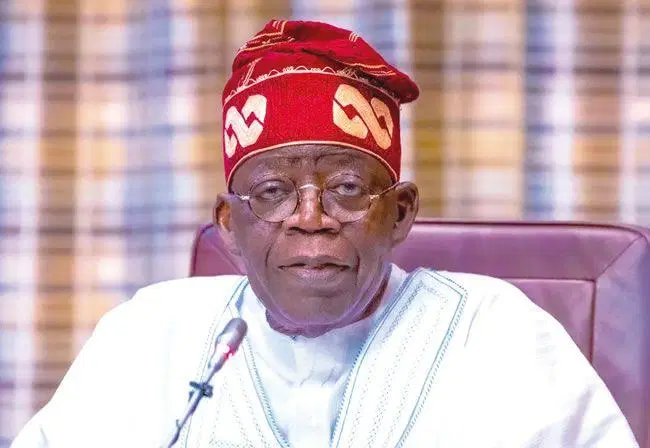
Denge Josef Onoh, the official spokesperson for President Bola Tinubu in Nigeria’s South East, has publicly criticized the recent presidential clemency granted to a group of inmates, following the advice of the Presidential Advisory Committee on the Prerogative of Mercy.
Last week, President Tinubu extended pardons to 175 convicts, including individuals convicted of drug offenses, foreign nationals, and those sentenced for capital crimes. Notably, Maryam Sanda, who received a death sentence in 2020 for the fatal stabbing of her husband, Bilyaminu Bello, during a domestic altercation, was among those pardoned.
Onoh has called on the President to reconsider and revoke the pardons granted to Maryam Sanda and several others convicted of drug-related offenses whose sentences were commuted.
He argues that granting clemency to individuals involved in such grave offenses constitutes a serious miscarriage of justice and threatens to erode the Tinubu administration’s credibility both domestically and internationally. Onoh emphasizes that this decision runs counter to the fundamental principles of justice and responsibility that should guide governance.
Included in the pardoned group were drug offenders like Nweke Francis Chibueze, who is serving a life sentence for cocaine trafficking, and Isaac Justina, whose punishment for cannabis possession was reduced.
Onoh highlighted that these acts of mercy conflict with both ethical standards and legal frameworks, including Nigeria’s 1999 Constitution (Section 175) and international human rights instruments such as the Universal Declaration of Human Rights (Article 10).
“While the Constitution permits such pardons, they clash with the ethical demands of justice and equity, causing profound distress to victims’ families, perpetuating systemic injustices, and weakening the deterrent effect vital for societal order,” Onoh stated.
He further noted that pardoning Maryam Sanda, who caused irreversible harm to the Bello family through lethal violence, undermines the sanctity of human life and the essential principle of accountability.
“Likewise, excusing drug traffickers like Chibueze, whose activities contribute to addiction, social decay, and organized crime, signals a failure in ethical leadership that normalizes exploitation of vulnerable populations, especially youth caught in narcotics abuse,” he added.
Onoh warned that such clemency decisions risk portraying Nigeria as a sanctuary for impunity, damaging its reputation as Africa’s largest democracy and discouraging foreign investment, particularly given the country’s low ranking on corruption indices such as Transparency International’s 2024 score of 25/100.
On the international front, this move could weaken Nigeria’s diplomatic influence. Global organizations like the UN Office on Drugs and Crime, which have previously commended Nigeria’s anti-narcotics initiatives, may now perceive the government as enabling repeat offenses, straining cooperation under treaties like the 1988 UN Convention Against Illicit Traffic in Narcotic Drugs, to which Nigeria is a party.
Considering that approximately 70% of Nigeria’s 220 million population is youth, according to World Bank statistics, these pardons risk fostering disillusionment and criminal tendencies among younger generations. Social learning theory (Bandura, 1977) suggests that witnessing unpunished crimes by prominent figures can normalize deviance, potentially increasing youth involvement in drug abuse (currently at 14.4% prevalence per UNODC 2023) and violence, thereby jeopardizing Nigeria’s Vision 2050 demographic goals.
Moreover, these pardons demoralize law enforcement agencies such as the NDLEA, whose officers risked their lives to secure convictions like Chibueze’s in 2010, and the police who conducted the extensive investigation into Sanda’s case from 2017 to 2020. This discouragement comes at a time when these agencies are already underfunded, with the NDLEA’s 2025 budget set at just ₦120 billion.
“Such decisions erode the deterrent foundation of the rule of law, as reinforced by Nigeria’s Evidence Act (2011) and Supreme Court rulings emphasizing consistent law enforcement to maintain public order,” Onoh explained.
Given these significant concerns-rooted in constitutional, ethical, psychological, and socio-economic considerations-Onoh insists that President Tinubu should annul the pardons granted to Maryam Sanda and the specified drug offenders. He urges a transparent review by the advisory committee to restore justice, heal societal wounds, boost morale within security forces, protect the nation’s youth, and improve Nigeria’s international reputation.
Onoh concluded that reversing these clemencies would honor the resilience of citizens who bear the brunt of injustice, framing such a move not only as correction but as a vital moral obligation for a fair and just federation.
He also acknowledged that perceptions of justice can vary, often influenced by power dynamics rather than absolute truths.