


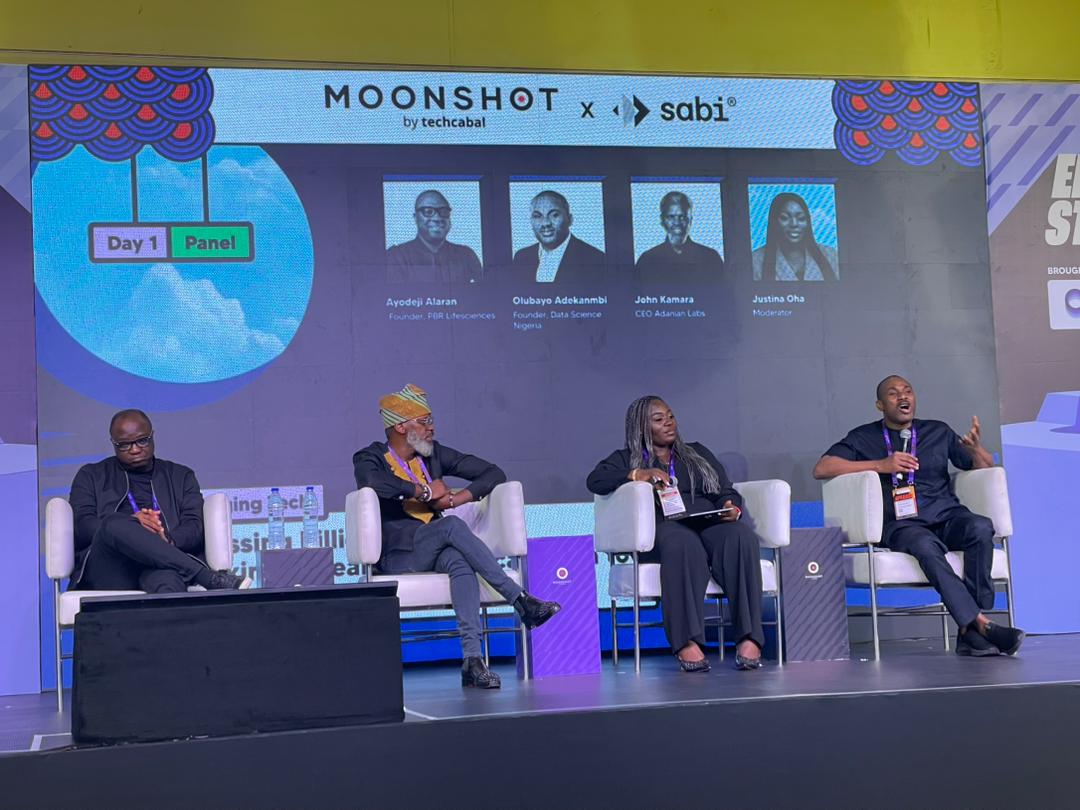
A notable gap persists in African research, both in studies centered on the continent and those led by African experts. During the Moonshot 2025 panel discussion, “Rethinking Research for Africa’s Tech to Grow,” Ayo Alaran, founder of PBR Lifesciences, emphasized the urgent need to strengthen collaborations between academic institutions and industry pioneers as a crucial strategy for progress.
He pointed out that research efforts must go beyond scholarly articles and actively drive practical innovations within technology and business landscapes. Alaran remarked, “The fundamental challenge lies in the insufficient grasp of real-world problems. There is a disconnect from the genuine demands of customers and industry sectors.”
He further noted, “It is essential to pinpoint issues that resonate with both researchers and industry stakeholders, fostering shared motivations to address them effectively.”
A 2024 analysis by the World Economic Forum (WEF) reveals that Africa has the lowest researcher-to-population ratio worldwide, with a mere 20 researchers per million people, starkly contrasted with Europe’s 246. This disparity framed one of the most engaging debates at Moonshot 2025.
The panel featured John Kamara, CEO of Adanian Labs; Bayo Adekanmbi, founder of Data Science Nigeria and EqualyzAI; alongside Ayo Alaran. Moderated by Justina Oha, CEO of Digital Equity Africa, the discussion explored strategies to close the divide between academic research and market-driven innovation, aiming to fast-track Africa’s technological advancement.
Adekanmbi, whose organization was instrumental in developing Nigeria’s National AI Strategy through extensive research and stakeholder engagement, highlighted the critical need for effective policies that improve data availability.
“We must establish more cooperative platforms backed by both governmental bodies and private enterprises, as these initiatives benefit society and fuel economic development,” he explained. “For example, policy frameworks could designate a small percentage of specific taxes-around 0.5%-to support open-source platforms that empower researchers and emerging businesses.”
“In nations such as Kenya, companies are mandated to allocate a portion of their Corporate Social Responsibility (CSR) budgets to programs that support startup ecosystems. Such regulatory measures are vital to ignite innovation and cultivate new ideas,” Adekanmbi concluded.