


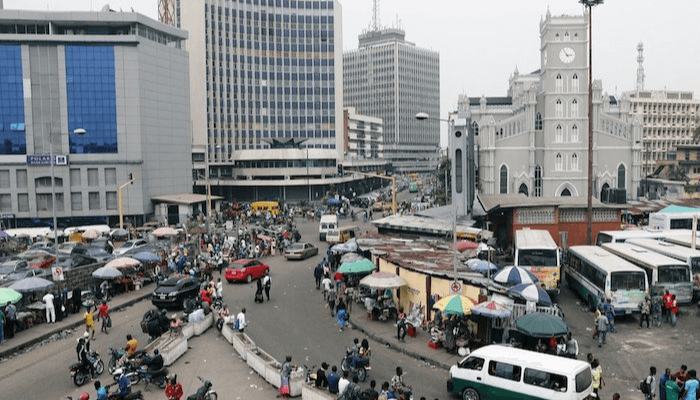
There is a well-known adage that defines insanity as repeating identical actions while anticipating different results. In Nigeria’s scenario, this mirrors the tendency to overlook practical alternatives and expect a flawed economic system to suddenly deliver success. Despite the country’s wealth in natural and human resources, it remains ensnared in a persistent loop of poverty, food scarcity, and unemployment. For example, by September 2025, the price of a single onion in many Nigerian markets had surged past N250, a steep increase from roughly N100 just two years earlier. This spike goes beyond mere inflation; it highlights a fundamental failure to rethink and reform development policies.
How did a nation once renowned for its robust agricultural exports become reliant on imported food? Part of the explanation lies in the so-called “oil curse.” Following the discovery of oil in Oloibiri in 1956 and the influx of petrodollars during the 1970s, agriculture-the former pillar of Nigeria’s economy-was neglected. Key crops such as cocoa, groundnuts, palm oil, and rubber, which previously generated substantial foreign exchange, were eclipsed by crude oil exports. Unlike other resource-rich nations that reinvested oil revenues into building diverse industries, Nigeria failed to develop a strong industrial base or diversify its economic portfolio. The repercussions of this oversight are now painfully clear.
True economic diversification means more than just reallocating resources; it requires distributing risk across multiple sectors. The Portfolio Theory, introduced by economist Harry Markowitz and originally applied to financial investments, recommends spreading assets across at least 20 different holdings to reduce risk. This principle is equally relevant to national economies. Yet, Nigeria remains heavily dependent on a single commodity, leaving it exposed to global market fluctuations.
While the necessity of diversification is widely acknowledged, the greater obstacle lies in shifting entrenched mindsets. Nigeria continues to cling to oil revenues despite the global pivot toward renewable energy sources. The core issue is not a shortage of capital but a deficit of innovative thinking within the country’s leadership.
As Niccolò Machiavelli famously stated, “There is nothing more difficult to carry out than the initiation of a new order.” Reform threatens established interests deeply embedded in Nigeria’s political and economic fabric. Even when reforms are proposed-such as the current government’s attempts to eliminate subsidies and harmonize exchange rates-their execution is often partial, reactive, or poorly communicated, fostering distrust and resistance.
Nigeria possesses over 70 million hectares of arable land, yet it spends more than $10 billion annually on food imports, according to the Central Bank of Nigeria. Meanwhile, food inflation remains elevated, hovering around 33.4 percent as of August 2025, turning staples like rice, pepper, and yam into unaffordable luxuries for many families.
Reforming agricultural policy requires more than subsidies or direct farmer support; it demands investment in value addition. For instance, cassava should be processed into flour, starch, ethanol, and animal feed rather than exported raw. Similarly, cocoa should be transformed into finished products like chocolate, boosting both local industry and export earnings. Pricing mechanisms must strike a balance between incentivizing producers and processors while protecting consumers from erratic price fluctuations.
Tourism is another largely underexploited sector. Nigeria’s rich cultural heritage-from the ancient Nok Terracotta artifacts to the Osun-Osogbo Sacred Grove-holds tremendous potential. Yet, domestic tourism remains neglected. With 36 states and over 250 ethnic groups, Nigeria could harness its cultural diversity to generate significant economic benefits if the sector were prioritized. Tourism is not merely about scenic attractions; visitors seek authentic cultural experiences, local cuisine, and meaningful interactions.
Renewable energy offers a promising avenue for growth. Situated in the sunbelt with over 300 days of sunshine annually, Nigeria has enormous solar energy potential that remains largely untapped. In contrast, countries like India, which invested early in solar and wind power, have risen to become global leaders in renewable energy production. With only about 57 percent of Nigerians having access to electricity-and even fewer enjoying reliable power-Nigeria must adopt similar strategies to close its energy deficit.
Likewise, resources such as rubber, palm oil, and limestone present untapped opportunities. Malaysia, which once imported palm seedlings from Nigeria, has evolved into a global palm oil powerhouse and is advancing into biofuels and bioplastics. Meanwhile, Nigeria continues to import refined petroleum products and basic household goods, missing out on value-added manufacturing prospects.
What Nigeria urgently needs is not just economic diversification but also an expansion of intellectual and ideological horizons. The government must shift from a patronage-driven system to one that fosters transformative change. The civil service should evolve from a passive bureaucracy into a proactive engine of innovation and development. Public policies must be informed by data and evidence rather than political convenience or speculation.
Educational reforms should prioritize critical thinking, problem-solving, and entrepreneurship. Expanding technical and vocational training is vital to address skill gaps in sectors such as construction, carpentry, agriculture, renewable energy installation, and tourism services.
Decentralizing development efforts is equally crucial. The Federal Government cannot be the sole architect of economic progress. States should be empowered to craft their own economic strategies through local content initiatives, regional trade partnerships, and homegrown innovations.
As the global economy shifts away from fossil fuels toward knowledge-driven, service-oriented, and sustainable industries, Nigeria must avoid falling behind. The era of oil-dependent growth is waning. What remains is a narrow window to leverage existing oil wealth to build a diversified economy fueled by creativity, innovation, and inclusiveness.
Diversifying Nigeria’s economy alone is no longer enough. We must also broaden our perspectives, challenge long-held assumptions, and embrace new leadership paradigms. Only through such comprehensive transformation can Nigeria break free from the cycles of poverty, food insecurity, and economic stagnation. The moment has arrived to move beyond oil and outdated mindsets.