


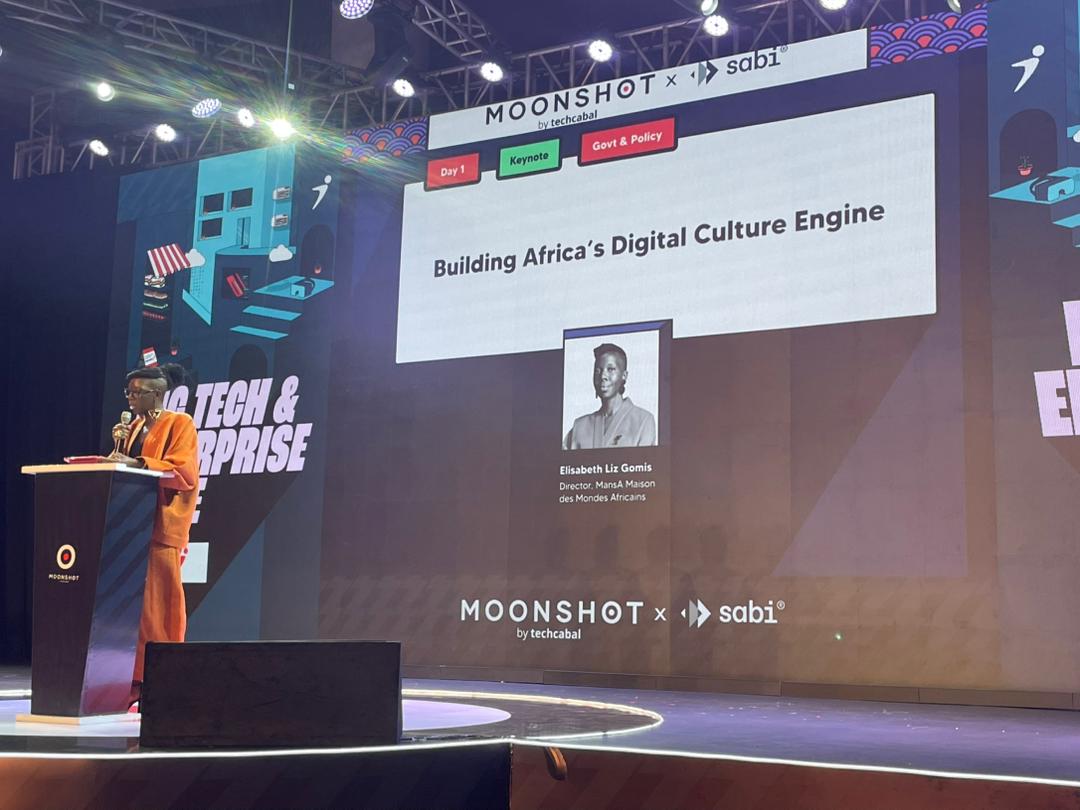
Elizabeth Liz Gomiz, the head of MansA Maison des Mondes Africains, emphasizes that Africa’s destiny hinges on controlling the instruments that shape its narratives.
Speaking at the Moonshot event hosted by TechCabal on Wednesday, October 15, she remarked, “Creativity alone isn’t sufficient when the essential tools, systems, and platforms are owned externally. The digital realm has evolved into the core space where culture is crafted, stories are told, and both symbolic and financial value are generated. However, the infrastructure, platforms, and algorithms that govern these spaces are predominantly developed outside Africa.”
With artificial intelligence, data, and digital ecosystems emerging as the new arenas of cultural influence, there is a risk that African stories will be interpreted through lenses unfamiliar with the continent’s realities. Currently, giants like Netflix and Amazon Prime dominate the distribution of African content. Gomiz aims to shift this paradigm through MansA, an initiative dedicated to directly empowering African creators.
One of MansA’s flagship endeavors, MansA Lab, is set to launch in November 2025. This incubator will nurture a select group of entrepreneurs, artists, designers, and innovators who are actively redefining African cultural narratives. The project’s mission is to enable Africans to reclaim their stories and foster genuine connections between Africa and Europe, moving away from what Gomiz describes as “structured dependencies.”
“Our mission is straightforward,” Gomiz explained. “We want future AI systems to understand our languages, recognize our faces, resonate with our rhythms, and honor our myths. The future won’t be constructed from imported data sets; it will be built upon our own archives, tales, and cultural sensibilities. To achieve this, we must accelerate progress, which requires substantial investment. Supporting creators is just as crucial as advancing technology.”
She advocates for storytelling investments at both national and continental levels, highlighting that the way a nation narrates its identity shapes global perceptions, which in turn affects commerce, innovation, tourism, and national pride.
“The creative future won’t be crafted in Paris,” she asserted. “It will emerge from cities like Lagos, Dakar, Nairobi, and Abidjan. The driving force behind Africa’s digital culture comprises creators, technologists, and visionaries.”
“Our focus isn’t merely on linking artists to existing platforms; it’s about granting them control over their narratives, financial resources, and creative pace. This engine can’t be imported; it must be attuned to our languages, memories, and rhythms. We don’t need a substitute engine; we need a vibrant, collective, and defiant one-and that engine already exists. It’s called creation.”