


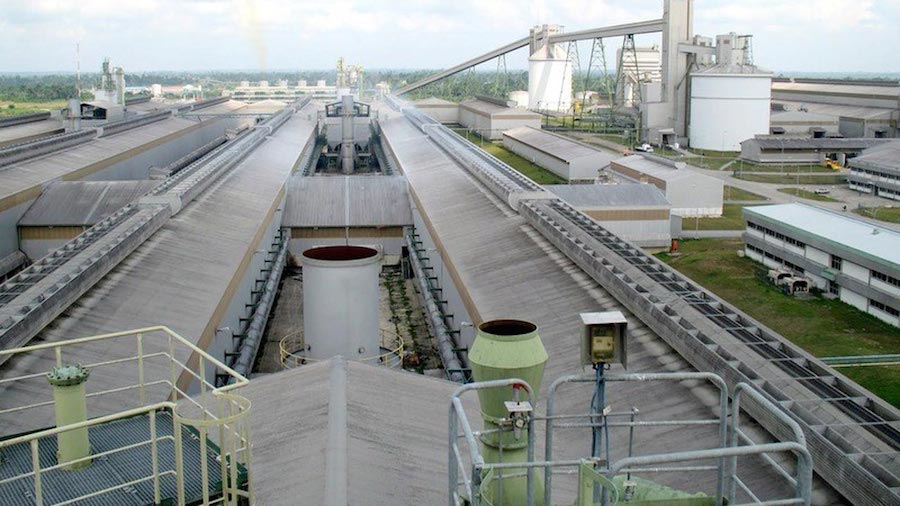
In a decisive effort to boost Nigeria’s electricity generation capabilities, the Federal Government has pledged to rejuvenate the Rusal Aluminium Company of Nigeria (ALSCON) situated in Ikot Abasi, Akwa Ibom State, by integrating it into the national power grid.
During a formal inspection of the plant, Power Minister Adebayo Adelabu underscored ALSCON’s pivotal role in Nigeria’s industrial sector and the broader economy.
Although ALSCON was established years ago, its progress has been hindered by the lack of a dependable alternative power supply, limiting Nigeria’s ability to fully leverage the significant investments poured into the facility.
Once fully operational, the plant is projected to inject 540 megawatts (MW) of electricity into the national grid and generate roughly 15,000 jobs, both directly and indirectly, benefiting Nigerian workers and youth.
The plant’s infrastructure includes six turbines, each with a capacity of 90 MW, collectively producing 540 MW. Minister Adelabu also emphasized ALSCON’s strategic importance as a key supplier of raw materials to aluminium manufacturers downstream, highlighting its integral position within the aluminium production value chain.
He stated, “For nearly 30 years, this major investment has been stalled by the absence of grid connectivity. We fully appreciate ALSCON’s vast potential-not only in aluminium processing across upstream, midstream, and downstream sectors but also as a significant source of employment and a means to reduce foreign exchange outflows on imported raw materials.”
The minister outlined immediate and medium-term strategies to link ALSCON to the national grid. These include the construction of a 330/132KV substation by the Niger Delta Power Holding Company and the deployment of 330KV DC transmission lines stretching from Ikot Ekpene to Ikot Abasi, enabling the full evacuation of the plant’s 540 MW output.
Adelabu also revealed plans to boost the plant’s capacity by an additional 120 MW. By transforming an existing open circuit line into a combined circuit, each turbine could potentially increase output by 20 MW, elevating the total capacity to 660 MW.
“This expansion would have a profound effect on the national grid,” he remarked. “Following consultations with the company and stakeholders, we have developed a clear action plan. I will personally supervise the execution to guarantee timely progress.”
The minister expressed confidence that within three months, the short-term initiatives would be completed, allowing ALSCON to resume operations and initially create up to 3,000 jobs.
Addressing the persistent challenge of gas supply for power generation, Adelabu stressed the importance of agreeing on a commercially sustainable gas price. He noted that the gas market is competitive, with suppliers inclined to favor buyers offering more attractive rates.
“The gas infrastructure is already in place and operational, with a pipeline located less than 500 meters from the plant that currently supplies other power stations. The critical factor is negotiating a mutually acceptable price with gas providers to ensure a steady fuel supply for the turbines,” he added.
Development Advisor Viacheslav Krylov acknowledged the operational setbacks ALSCON has encountered since presidential directives in July 2024 aimed at restarting the plant. He highlighted that the lack of an alternative power source and insufficient current energy options have delayed the plant’s revival.
Nonetheless, Krylov confirmed ongoing initiatives to scale production to a full capacity of 200,000 metric tons within six years, which would sustain over 15,000 direct and indirect jobs for Nigerians.