



At the dawn of the new millennium in 2000, when Safaricom first activated its network, only around 17,000 Kenyans had access to mobile phones. At that time, calls were costly, handsets were bulky, and network coverage was patchy or nonexistent. Fast forward twenty-five years, Safaricom has evolved into a vital national infrastructure, reshaping how Kenyans connect, conduct financial transactions, trade, and engage with digital platforms.
Early Beginnings
Safaricom’s roots trace back to a small division within the Kenya Posts & Telecommunications Corporation (KPTC), the government’s sole telecommunications provider. Established in 1993 with an analogue system, it was initially a minor segment of the postal service.
The company’s transformation began in 1997 when it was registered as a private limited liability company and upgraded to a global digital communication standard. This move granted Safaricom nationwide recognition and a structural advantage that would have been difficult for a foreign newcomer to achieve.
The pivotal moment arrived in May 2000 when Vodafone Group, a global telecom giant, acquired a 40% stake and assumed management control. This partnership brought in international investment, cutting-edge technology, and a bold commercial vision.
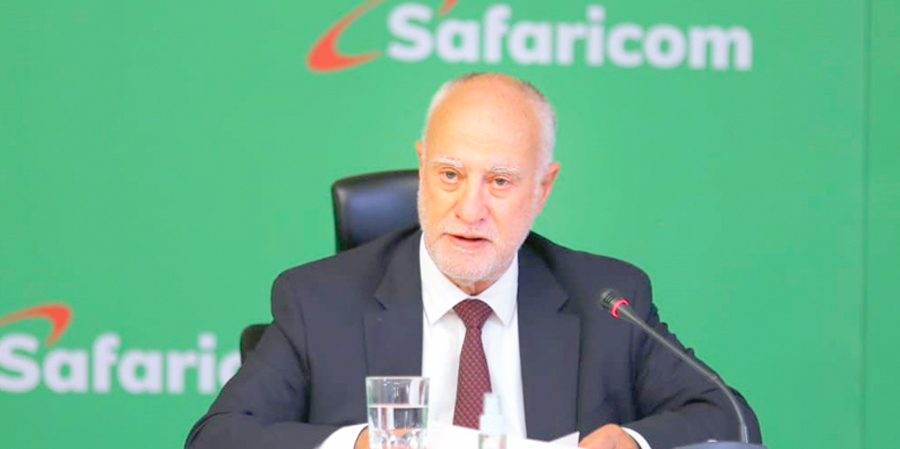
Michael Joseph’s appointment as the inaugural CEO in July 2000 marked the start of a new chapter. Under his guidance, Safaricom expanded from fewer than 20,000 subscribers to a dominant player boasting over 16 million users by 2010.
In 2008, the Kenyan government further solidified Safaricom’s foundation by offering 25% of its shares through an initial public offering (IPO) on the Nairobi Securities Exchange (NSE). This landmark event enabled everyday Kenyans to become shareholders in the country’s most successful enterprise.
The public listing also reduced the government’s direct control, releasing Safaricom from the constraints of the State Corporations Act and granting it greater operational freedom and commercial flexibility.
The Revolutionary M-PESA
One of Safaricom’s most groundbreaking innovations was M-PESA. In 2003, Safaricom collaborated with Vodafone to launch a social enterprise initiative, supported by a £1 million grant from the UK’s Department for International Development (DFID).
The original concept aimed to develop a mobile platform enabling microfinance clients to receive and repay loans, thereby reducing the risks and costs associated with cash handling.
The pilot, which began in October 2005, revealed an unexpected user behavior: customers were not only repaying loans but also using the system to transfer small sums of money to friends and family. This user-driven adaptation highlighted a critical demand for a secure, affordable, and convenient peer-to-peer money transfer service.
Recognizing this shift, Safaricom officially launched M-PESA in 2007 as a broad money transfer platform tailored to the Kenyan market’s needs.
Another strategic masterstroke was leveraging Safaricom’s extensive network of airtime vendors as M-PESA agents. Overnight, thousands of small retail outlets, often adorned in Safaricom’s signature green, became informal banking points, creating a distribution network far surpassing that of traditional banks.
Today, M-PESA boasts over 32 million users in Kenya and processes transactions exceeding half of the nation’s annual GDP. Its success has inspired similar mobile money systems across Africa and earned global acclaim from economists and development organizations.
Traditional banks, which had long underserved much of the population, initially saw M-PESA as an unregulated rival encroaching on their market. In December 2008, a coalition of banks petitioned the Finance Minister and the Central Bank of Kenya (CBK) to impose stricter regulations or slow M-PESA’s expansion.
However, then-CBK Governor Njuguna Ndung’u recognized that M-PESA did not fit the conventional definition of a deposit-taking institution and allowed it to operate under a special regulatory framework. This regulatory flexibility was as vital to M-PESA’s success as Safaricom’s innovation, setting a precedent for fintech regulation across Africa.
As M-PESA’s influence grew, the initial opposition from banks softened into collaboration. In 2012, Safaricom introduced M-Shwari, a joint venture with the Commercial Bank of Africa (now NCBA Bank), offering savings accounts and microloans directly through the M-PESA platform.
This partnership was mutually beneficial: Safaricom expanded its financial services without needing a banking license, while NCBA accessed millions of customers beyond its physical branches.
Nonetheless, some of these financial products have attracted criticism, which continues to this day.
Leadership Under Peter Ndegwa
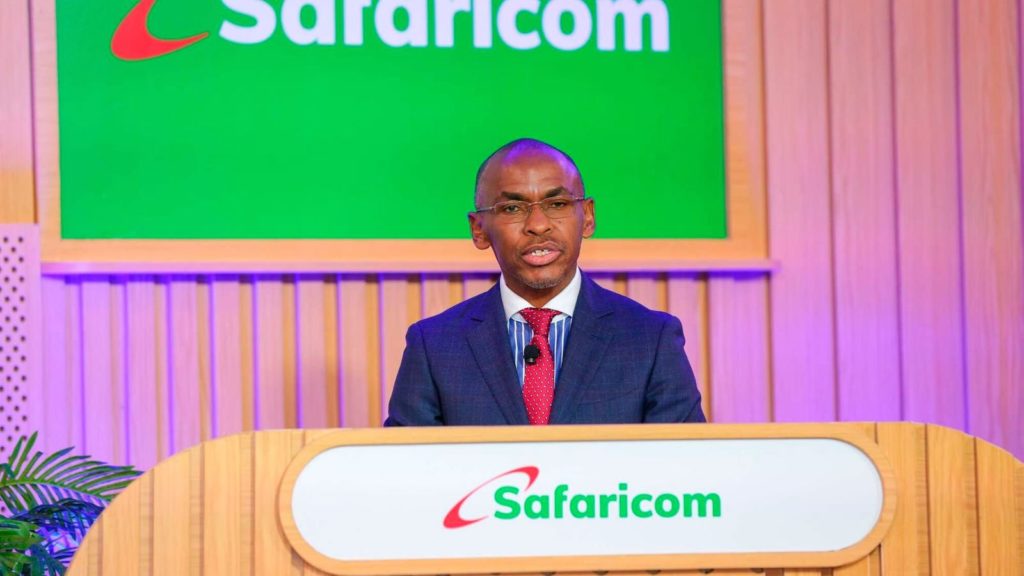
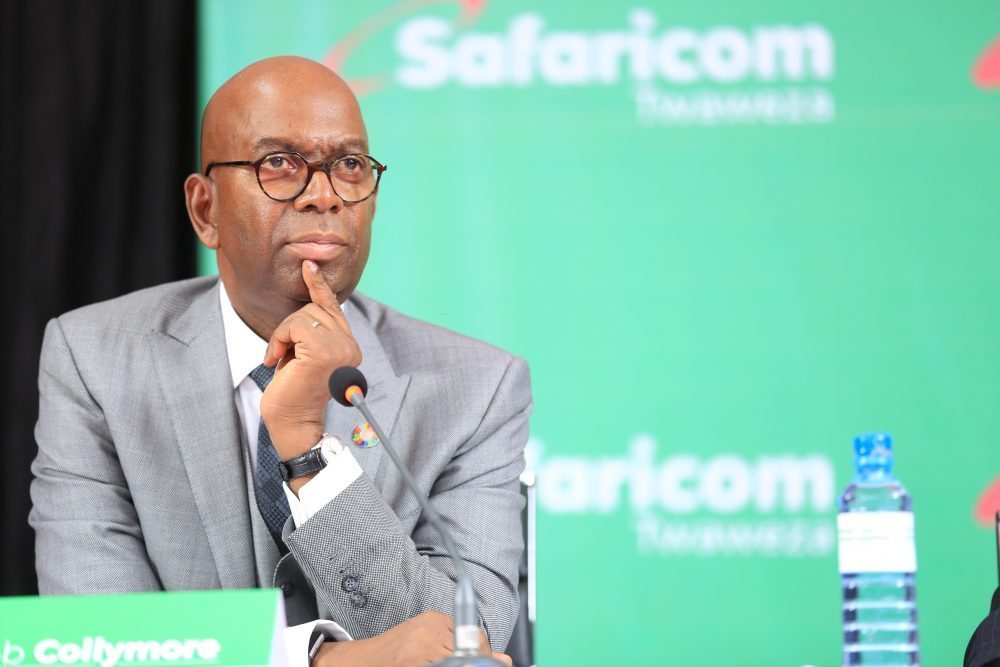
Peter Ndegwa assumed the role of Safaricom’s CEO in 2020, becoming the first Kenyan to lead the company. He succeeded the late Bob Collymore, who helmed the firm from 2011 to 2019. Ndegwa has steered the company through a more complex landscape marked by inflationary pressures, new mobile money levies, and intensified competition from Airtel and emerging fintech firms.
“From the inaugural mobile call on our network in 2000 to becoming a cornerstone of Kenya’s digital economy, our journey has been defined by innovation, inclusivity, and impact,” Ndegwa remarked recently. “We are profoundly thankful to our customers who have been part of this remarkable success story.”
Looking ahead, Safaricom is focusing on what Ndegwa terms its “next chapter,” which includes expanding enterprise solutions, cloud services, the Internet of Things (IoT), and regional growth through Safaricom Ethiopia.
Since its 2022 launch, the Ethiopian subsidiary has attracted over 10 million subscribers and is extending its 4G coverage to reach about half of the country’s population. However, the venture faces hurdles such as security challenges and recent currency reforms that have increased operational expenses.
Ndegwa envisions transforming Safaricom from a conventional telecom operator into a “purpose-driven technology company” by 2030. This strategy involves evolving beyond basic voice and data services to become a digital ecosystem hosting financial services, e-commerce, entertainment, and cloud computing for businesses. The development of the M-PESA “Super App,” which integrates various third-party mini-applications, exemplifies this approach.
Controversies: Lending Practices, Market Dominance, and Data Privacy
Building on M-Shwari’s success, Safaricom introduced Fuliza in 2019, an overdraft service allowing M-PESA users to complete transactions even with insufficient funds. The service quickly became indispensable, with Kenyans borrowing KES 288 billion ($2.2 billion) through Fuliza in just the first half of 2022, highlighting its role in everyday financial management.
Despite the convenience, these digital credit products have sparked debate over their social impact. Critics warn that easy access combined with high fees can trap users in cycles of “digital debt.”
A 2017 draft report by UK consultancy Analysys Mason, commissioned by Kenya’s Communications Authority (CA), labeled Safaricom as “dominant” in mobile communications and mobile money, with market shares exceeding 80% in key areas.
The report argued that Safaricom’s dominance stemmed less from efficiency and more from high entry barriers and strong network effects. It recommended separating M-PESA from Safaricom’s core telecom business and enforcing infrastructure sharing-proposals Safaricom opposed and which remain unimplemented despite pressure from lawmakers.
More recently, Safaricom has faced scrutiny over its money market fund, Ziidi. A formal complaint alleges that Safaricom grants Ziidi zero-rated access to the M-PESA platform-allowing free deposits and withdrawals-while charging fees to rival funds, raising concerns about anti-competitive conduct.
Additionally, Safaricom is embroiled in a lawsuit currently before Kenya’s High Court over the alleged theft of personal data-including names, identification numbers, and betting histories-of 11.5 million subscribers by former senior employees. Although Safaricom asserts it maintains stringent security measures and complies with data protection laws, these incidents have undermined public confidence and spotlighted the company’s vast control over sensitive customer information.
Safaricom has undeniably revolutionized Kenya’s economy by connecting people, digitizing money, and integrating millions into the financial system.
Yet, its overwhelming market power raises critical questions about competition, privacy, and its relationship with the government.
Competitors like Airtel are gaining ground, and emerging technologies such as Starlink pose potential threats to Safaricom’s core business.
Many agree that after 25 years, Safaricom’s legacy is firmly established, having fundamentally altered Kenya’s socio-economic landscape. The company’s next major challenge lies in expanding beyond Kenya without leveraging its dominant position to stifle the very ecosystem that fueled its growth. Ethiopia represents a significant test, where unlike Kenya’s supportive regulatory environment, Safaricom must navigate a more stringent framework and a slower growth trajectory.