



Elon Musk‘s AI venture, xAI, has unveiled Grokipedia, a new AI-powered encyclopedia designed to rival Wikipedia. At its debut on Monday, the site reportedly featured more than 800,000 articles generated by artificial intelligence.
In a post on X, Musk shared that Grokipedia’s mission is to deliver truthful and impartial information in every search result. He has long expressed concerns that Wikipedia’s content can sometimes reflect biased viewpoints.
While acknowledging that Grokipedia is still a work in progress, Musk emphasized the platform’s commitment to continuous improvement.
“Grok and Grokipedia.com aim to provide the truth, the entire truth, and nothing but the truth. Perfection is unattainable, but we will relentlessly pursue this ideal,” Musk stated.

Back in October, Musk revealed that xAI was developing Grokipedia as an alternative to Wikipedia, criticizing the latter for perceived political partiality. He described the new platform as a crucial tool for xAI’s broader mission to deepen understanding of the universe, promising it would surpass Wikipedia in quality.
This announcement followed comments from David Sacks, a White House AI advisor and Silicon Valley investor, who has openly criticized Wikipedia’s alleged left-leaning bias.
Sacks argued that “Wikipedia is irredeemably biased, maintained by a legion of left-wing activists who resist reasonable edits.” Musk echoed these sentiments by amplifying critiques of Wikipedia on X, dubbing it “wokepedia” due to its supposed ideological slant.
Currently, Grokipedia’s interface remains minimalistic, reflecting its early development stage. The homepage features a prominent search bar similar to Wikipedia’s, and articles are structured with familiar elements like headings, subheadings, and references.

Grokipedia’s Current Dependence on Wikipedia
Upon launch, Grokipedia contained roughly 800,000 AI-generated entries, a fraction of Wikipedia’s nearly 8 million human-authored articles, according to The New York Times.
Interestingly, Grokipedia openly acknowledges its reliance on Wikipedia content. Many articles carry a disclaimer stating: “This content is adapted from Wikipedia, licensed under Creative Commons Attribution-ShareAlike 4.0 License.”
Wikipedia itself has a page about Grokipedia, noting that “many entries are derived from Wikipedia articles, with some nearly identical in wording.” Indeed, some Grokipedia pages appear to be close replicas of their Wikipedia counterparts.
Unlike Wikipedia, Grokipedia does not currently permit users to edit articles directly. Instead, Musk explained that users can request Grok to add, update, or remove content, and the AI will either comply or explain why it cannot.
Musk also highlighted plans for Grokipedia to fact-check information before presenting it, acknowledging the current dependence on Wikipedia content but promising to resolve this by December 2025.
He further teased that the upcoming version 1.0 will be a substantial upgrade, stating, “Version 1.0 will be ten times better, but even at 0.1, it’s already superior to Wikipedia.”
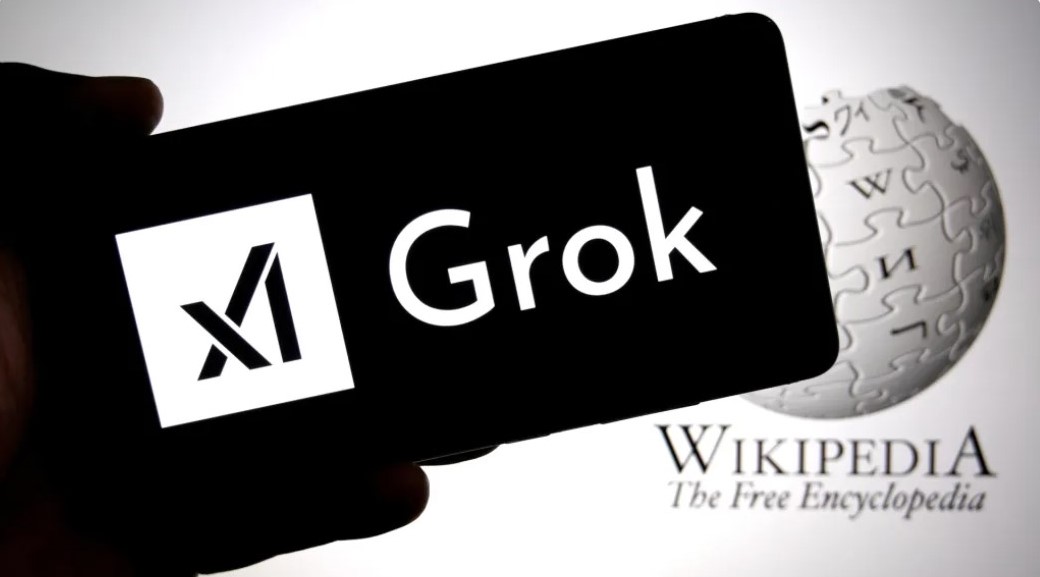
This launch arrives amid intensifying competition in AI-driven search technologies.
Just last week, OpenAI introduced a new web browser that integrates its ChatGPT AI, positioning itself as a direct competitor to Google. This innovation aims to redefine the browsing experience by making AI chatbots a central gateway for online queries, potentially increasing user engagement and digital ad revenue.