



Earlier in 2025, somewhere between the quiet passing of one idea and the uneasy birth of another, Moore Dagogo-Hart, a software engineer at heart, awoke in the half-light of his Lagos residence with something lodged in his sleepy mind. A word he hadn’t heard before and couldn’t place, yet it rang like a coin dropping into a well quarter-full with his dreams. He turned it over in his $thoughts, cautious that if he let go too soon, it’d fade as morning gathered.
For some time, it meant little. Then, with the recall of his past challenges and ongoing ventures, the word soon began to gain weight.
At that point, nothing like it existed. But for Moore, Syx Labs, a patchwork built from the wreckage of a previous project, was close enough. In 2022, Apple rejected Nebula, a crypto wallet from his first company, Solarsoft, meant to put blockchain tools in African hands. The decision, driven by Apple’s caution towards crypto, halted the dream almost overnight. Moore filled the void the way engineers often do: by building again.
Moore describes Syx Labs, his small team of software developers, as a survival project, a bench in a storm, a place to test ideas while the dust settled. In the middle of that chaos, Moore’s long-time friend, Tobiloba Asu-Johnson, who was building Zap Africa, a non-custodial crypto exchange designed to give Nigerians control over their assets, reached out. When Moore joined as co-founder and CTO, his team became the engine behind the platform, its architecture and the systems that made it hum.
When Zap Africa’s user count jumped to 10,000 in a single day, a brief “scale came quite fast” celebration was clouded by a moment of realisation. While everything else stayed in place, Syx Labs had outgrown its purpose; yet another reminder that the idea behind it was born of necessity, not a vision.

It was in that moment that Moore recalled the dream from weeks before, a name representing something broader than software. If Solarsoft had been about blockchain and Syx Labs about weathering a storm, Cognito would be about tools that helped people and businesses think better.
“With Syx Labs, I always felt something was missing; it was still tied to the remnants of Solarsoft. When we reached the milestone with Zap,” Moore said, “I realised I was mentally ready to build products that could shape Africa’s future. Syx Labs no longer reflected that.”
Ultimately, he reinvented the company as Cognito Systems, with Zap Africa as its first client. They worked as a field unit, 12 people aligned on speed and precision, each moving where the other braked. He describes it as “a forge, not a factory”, a place where ideas arrive white-hot, are hammered into form, and are only set aside once the work is completed.
Cognito builds for context, not for consensus
The first proof of Moore’s vision came in 2023 with Zap Africa, which demonstrated that locally built systems could scale reliably. In 2024, Cognito Systems took that further with Black Pride Canada, a nonprofit serving queer and Black communities. It adapted its technology to detect emotional cues and alert responders in real time, a system that has since supported 70 crisis callers and improved mental health response via anonymised data.
In 2025, the team built an automated shopfront for J Bottoms, a Lagos fashion label, which processed over $30,000 in its first four months. Later, they helped Pluto Homes integrate its listings into Google’s property ecosystem, transforming stagnant bookings into steady, algorithm-driven traffic.
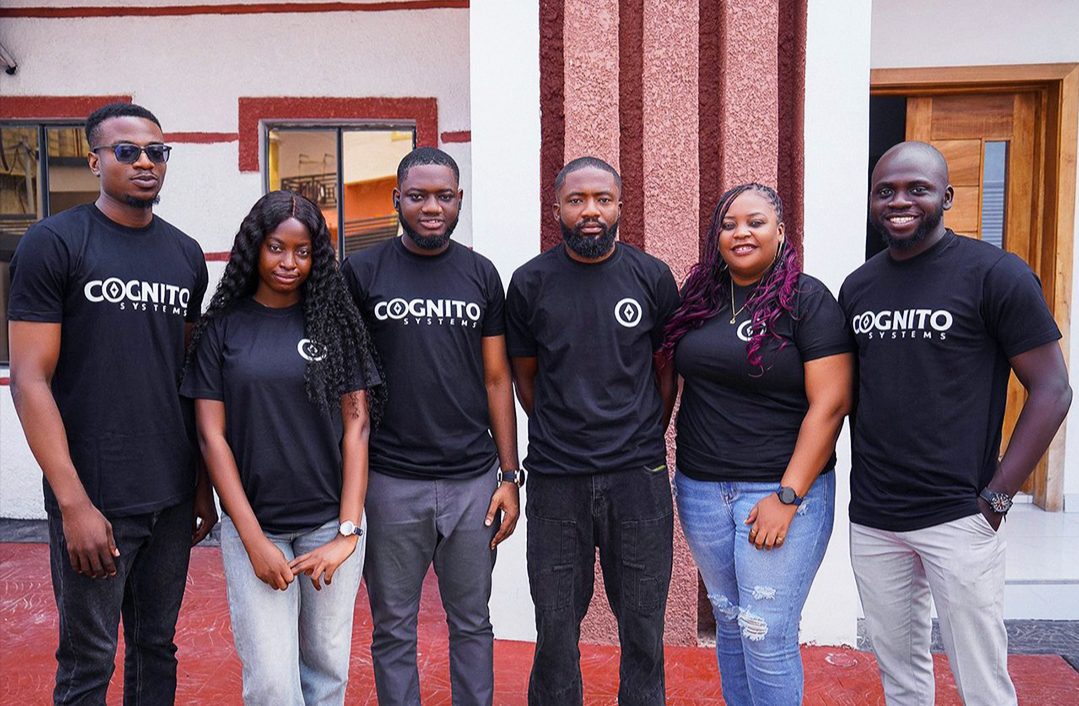
Its approach mirrored a shift from conventional dev shop models. Rather than selling hours or manpower, the company offers sustainable systems. Its revenue models are equally strategic: equity stakes, revenue-sharing agreements, and traditional service fees. To date, they have generated roughly $70,000 in revenue, with an additional $60,000 in their pipeline.
The birth of Martha AI
Cognito Systems’ early projects showed the limits of manual support. At Zap Africa, after-hours enquiries from crypto traders overwhelmed the team. That experience led to the development of Martha AI, a B2B assistant built to automate customer service.
Named after the founder’s sister, Martha reflects familiarity. “We named it after her because she loves to talk. It felt natural for a system whose job is to constantly communicate with people,” Moore revealed.
Its initial goal was to streamline interactions, reduce wait times, and automate query handling. From there, it evolved. Using customer data from Zap Africa, it was trained to switch between Nigerian English, pidgin, and local languages such as Hausa and Yoruba. Beyond answering questions, it analyses sentiment and context.
The beta version of the product is set for release this November, with a full launch planned for early 2026. Early testers are invited to join a waitlist and share feedback to shape future development. Moore explains that the goal is to collect real-world insights before the system begins handling critical workloads.

Martha AI has already delivered results. Beyond streamlining client support systems, its deployment with Black Pride Canada refined real-time sentiment analysis and tested how AI performs in sensitive human interactions, revealing its wider potential for both commercial and social use.
Its strength lies in localisation and adaptability. Built on OpenAI technology, it delivers context-aware responses that reflect local language and culture, which global tools like Intercom or Zendesk can miss. A coming feature, “smart escalation,” will flag complex queries to the right team members. The product fits into a broader plan to automate full business workflows, extending to engineering, product, and finance.
Now, Cognito Systems is shifting from client projects to in-house products, aiming to define a new model for local technology. One built on tools that think contextually and act with understanding.”