


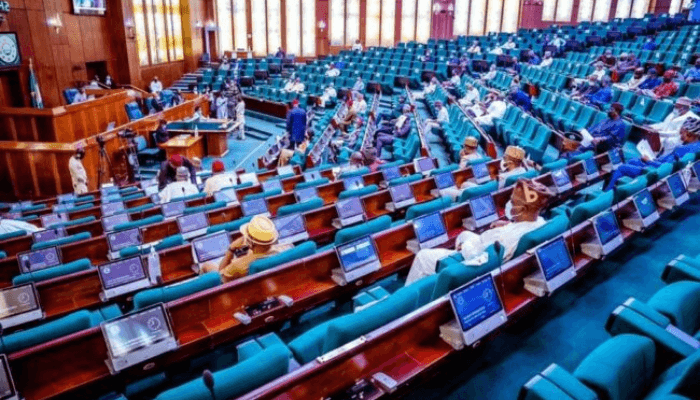
Last Wednesday, House of Representatives members adopted over 50-point resolutions on how to address the deteriorating security situation in Nigeria, outlining what they consider priority steps for federal government action.
This follows a special plenary session which the green chamber held last week. For three days, Tuesday to Thursday, the House devoted its plenary to one subject – insecurity- that has become impossible to ignore.
At the centre of the discussions was a demand that has long lingered without transparency: the financing of terrorism. The House called on the federal government to publicly identify, sanction and prosecute individuals and organisations funding armed groups, instead of issuing occasional notices about frozen accounts with no names attached.
The lawmakers argued that the silence surrounding financiers has made accountability nearly impossible.
Read also: It’s time to publicly name, prosecute financiers of terrorism, banditry – Reps tell FG
Another resolution targeted the legal process. Lawmakers recommended the creation of a special court to handle terrorism, kidnapping and banditry cases exclusively. They said trials should be open and conducted without secrecy, pointing to how closed proceedings in high-profile cases have fuelled speculation rather than clarity. The aim, they said, is to ensure the public can follow how justice is handled in matters declared a national threat.
The conversation on weapons was more revealing. Benjamin Kalu, Deputy Speaker stated that terrorists have been able to access arms “through backdoor business where government equipment are outsourced.” The House responded by asking for a digital tracking system to monitor every firearm owned by security agencies and a comprehensive audit to determine where arms have gone missing. The proposal implies that some weapons used against citizens may have originated from public armouries, whether through neglect, leakage or deliberate diversion.
A tougher stance was also taken against government-backed ransom payments and informal amnesty deals with criminals. According to the adopted recommendations, governments should not negotiate directly with armed groups or fund ransom settlements, arguing that such practices legitimise kidnapping markets and contribute to a cycle of violence.
The welfare and staffing of security personnel was another concern. Lawmakers recommended large-scale recruitment into the armed forces and other agencies, not only to increase presence on the ground but to address operational strain. They also proposed improved salaries, medical support, insurance and housing. The House argued that retaining skilled officers for auxiliary assignments , such as intelligence, forest surveillance or training roles may be more sensible than pushing them into abrupt retirement while security gaps persist.
In discussing security architecture, lawmakers did not limit their proposals to the military, they linked rising violence to poor economic conditions in vulnerable communities, stating that job creation, agricultural support and other livelihood programmes should be part of national security strategy. Their argument was that regions with poor infrastructure, abandoned farms and limited income options create environments that armed groups exploit with ease.
The safety of schools, worship centres and markets also came under scrutiny. The House called for surveillance systems, fencing, early-warning devices and implementation of the Safe Schools Initiative nationwide. These locations have become recurring targets, and lawmakers said the absence of preventive measures continues to leave them exposed.
They also returned to the longstanding debate over state police, recommending a fresh push for constitutional amendments to make it possible.
Read also: Police withdrawal order to upend N108bn VIP security economy
Alongside this, they suggested a substantial reduction in VIP security escorts, with officers redeployed to regular policing. The proposal reflects a mismatch between public demand for safety and the high concentration of police resources around political and wealthy individuals.
The resolutions extended beyond internal policies. Lawmakers proposed that border protection be treated as a national emergency and supported with drones, biometric systems, satellite imaging and other advanced technology. They also asked that future security and defence engagements with foreign governments — particularly those involving the United States — include parliamentary representation to ensure transparency and continuity rather than isolated executive agreements.
In summary, the House claims its resolutions seek reforms across technology use, funding, policing, welfare, judicial processes and socioeconomic support, and it plans to transmit them to the Executive, security agencies, state governments and the Senate.
Whether these recommendations reshape current policy will depend on how different arms of government respond in the coming months. But history does not speak well of resolutions from parliament, which have largely gone unimplemented.
The three-day discussions did not end insecurity, and adopting resolutions is not the same as implementing them.
Although these resolutions are commendable, Nigerians are weary of rhetoric and are demanding concrete action. The House now faces the more difficult task of ensuring that these resolutions are implemented and receive the necessary attention if its efforts are to make any meaningful impact.