


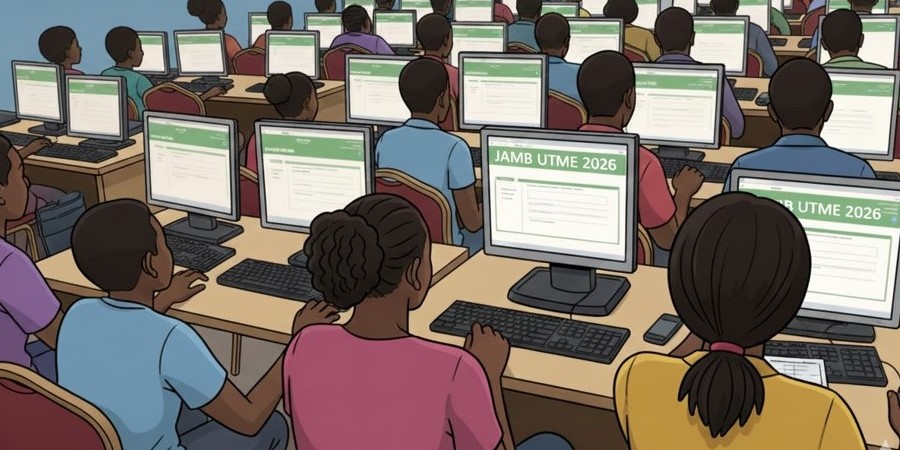
The Unified Tertiary Matriculation Examination (UTME) for the Joint Admission Matriculation Board (JAMB) 2026 is nearing commencement.
Following the conclusion of the UTME 2025 and the admission process into various tertiary institutions, the board has commenced preparations for the next calendar year. Part of the sensitisation campaigns urges candidates to ensure that their names, dates of birth, and state and local government of origin match the details in the National Identification Number (NIN) database.
While the official date for the UTME/DE 2026 registration has yet to be announced, the exercise is expected to commence around mid-February, as in previous years.
To help prospective candidates prepare, this article provides a step-by-step guide on the registration process for UTME/DE candidates.

Who can apply for UTME 2026?
Only candidates who are at least 16 years old by 30th September, 2026, are eligible to apply. Candidates who would be less than 16 years old by 30th September, 2026, can only apply for the trial mock examination.
However, exceptional students below 16 can apply and be considered, provided they score 80% in the UTME, SSCE and Post-UTME, and the exceptional candidates’ examination.
Generating Profile Code
On your mobile device, send the acronym NIN, then a space, followed by your 11-digit National Identification Number to 55019 or 66019. You’ll be charged N50 airtime.
For instance: NIN 00123456789 sent to either 55019 or 66019. Note that there should be a space between the word NIN and your 11-digit NIN. JAMB will send the 10-digit profile code to your phone.
Your NIN and O-level/A-level results must match, as JAMB will automatically generate your bio-data from the NIMC.
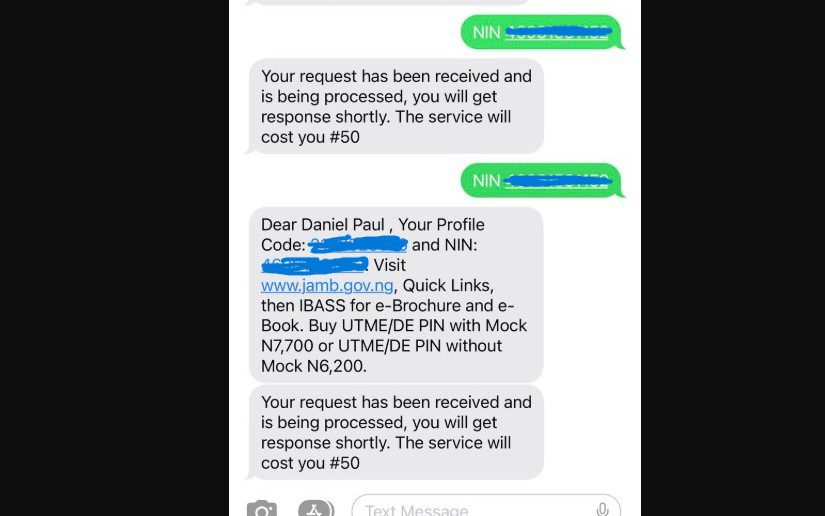
Important details to know about generating profile code
1. The profile code is linked to your phone number and NIN.
2. You cannot use the same phone number previously used by another candidate.
3. The NIN does not need to be already linked to the phone number you are using at the time you send the SMS to generate your JAMB profile code. Ensure you use an active phone number you can access.
4. For returning candidates (applied in 2025 but not successful in gaining admission), you can use the previous profile code. However, you must still have access to the phone number and your profile login details.
To retrieve and reactivate the profile code, send RESEND from the same phone number to either 55019 or 66019 to reactivate the code for new registration. If the phone number is lost, you will have to retrieve it.
To reset your lost or forgotten Profile Password, send “PASSWORD” space [the email address] as a text message from the same mobile number to 55019 or 66019.
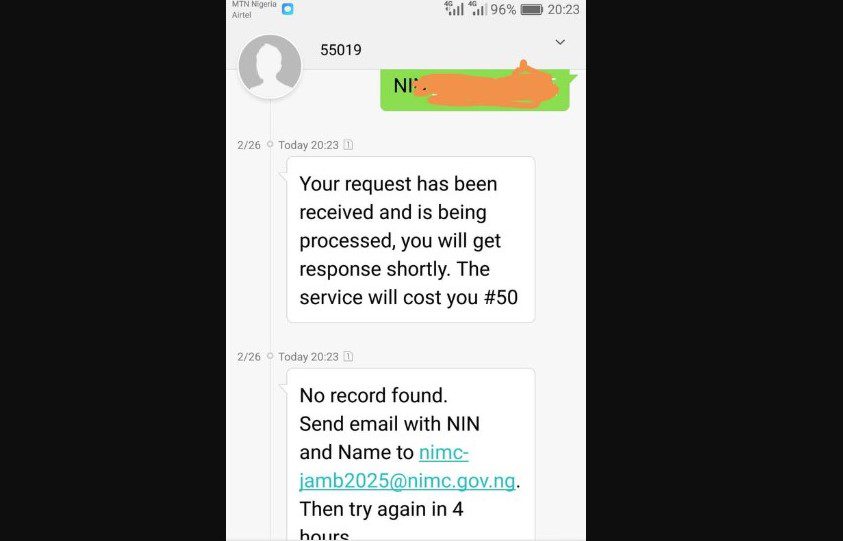
5. For the “Record Not Found” query, send an email with the NIN and Name to [email protected]. Then try again in 4 hours. If issues persist, visit the nearest NIMC for validation.
Also Read: UTME 2025: How students manipulated the JAMB system to commit high-tech malpractices.
Getting an e-PIN
After generating your profile code, you can get an e-PIN using it. The e-PIN can be purchased from Banks, JAMB-accredited registration centres, verified online platforms and vendors.
As of the 2025 UTME/DE application, there are four application options that candidates can select from:
1. UTME with Mock: N8,700
2. UTME without Mock: N7,200
3. Direct Entry (DE): N5, 700
4. Trial-Testing Mock Examination for underage candidates: N3,500
After payment, the e-PIN will be sent to your registered phone number linked to your NIN and profile code.
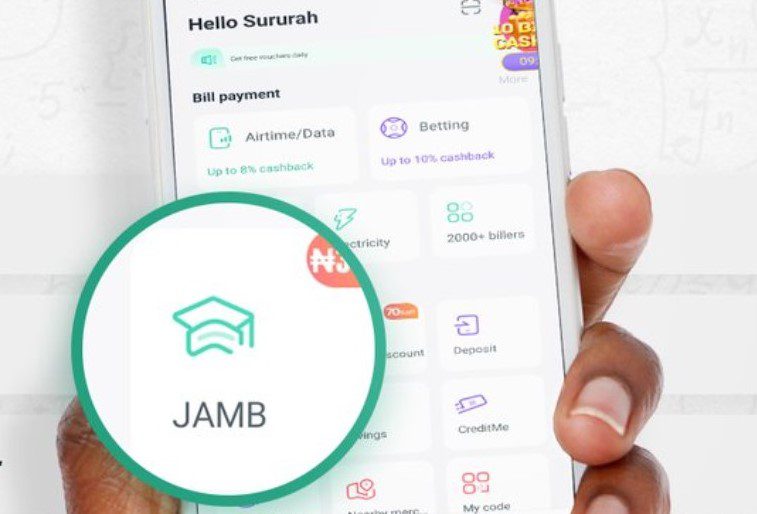
To purchase your e-PIN yourself
Step 1: Visit any fintech app such as Kuda, PalmPay, OPay
Step 2: Look for “JAMB” or “Education” in the app
Step 3: Select the JAMB service (UTME ePIN or UTME ePIN with Mock).
Step 4: Enter the 10-digit Profile Code you received and your linked phone number.
Step 5: Confirm the payment using your app’s security (PIN, Fingerprint, Face ID).
Step 6: Your e-PIN will be sent to the phone number you used via SMS and/or email.
Registration at an accredited CBT centre
The next step is to present the Profile code and e-PIN at any JAMB-accredited CBT Centre for registration.
Note: Candidates purchasing the e-PIN from a JAMB-accredited CBT centre will automatically proceed to registration. Candidates who purchase e-PIN from Banks and online platforms will locate the nearest JAMB-accredited CBT centres. Registration is free.
At the point of registration, your photograph and biometrics (all ten fingerprints) would be captured at the CBT centre. The Registration Slip would be printed after successful registration.
Ensure to cross-check that your details are correct before confirming with your fingerprint. Ensure that your particulars on the NIN match the information on your other supporting documents.
Also Read: All you need to know about the JAMB’s Central Admissions Processing System (CAPS).
Documents needed at the point of registration
UTME
- Choice of institutions and programmes (course of study).
- Valid and functional personal e-mail address that the candidate can always access.
- Qualification with grades and dates, if not awaiting results.
- Relevant certificates will be uploaded if no result is awaited.
- A PIN can be uploaded to facilitate the automatic upload of O-level and/or A-level grades.
- UTME subjects and choice of examination town(s) for the optional Mock examination and UTME
DE
- Registration/Matriculation Number of the previous school attended where the qualification was obtained.
- Course(s).
- Awarding Institution.
- Year of graduation.
Jamb made provisions for candidates with disabilities. Such people must indicate their disability at the point of registration. They would then be identified and assigned to the JAMB Equal Opportunity Group (JEOG) centres for special attention.