


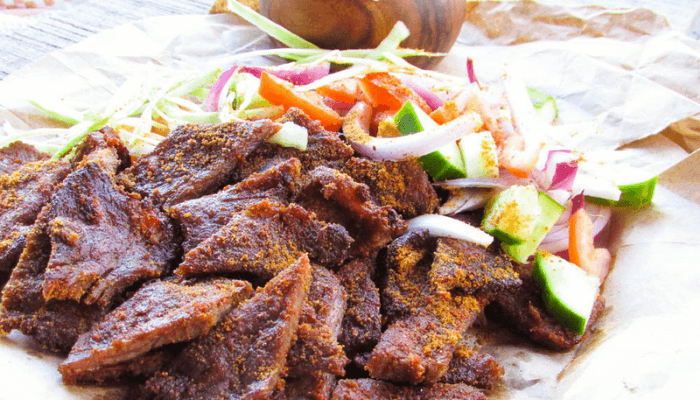
At dusk in Lagos, the smoke rising from a Suya stand does more than tease the appetite, it tells the story of a nation. Ibrahim Musa, fanning hot coals on a street in Yaba, represents an industry bigger than most Nigerians realise. For the price of a spicy needle of Suya, consumers buy convenience, flavour, and cultural identity. But beneath that smoky theatre lies one of the most complex and undervalued economies in the country, the informal protein market built on cattle, logistics, spice merchants, and open-fire grills.
According to the Nigerian Economic Summit Group (NESG), more than 5 million Suya vendors operate nationwide, feeding millions and sustaining a market worth over N200 billion yearly. Yet, like many informal sectors in Nigeria, it thrives on creativity while bleeding from inefficiency. The journey from herder to street vendor, from rural cattle clusters in Sokoto to midnight grills in Port Harcourt, is long, fragmented, and largely undocumented.
Today, Nigeria stands on the brink of a transformation that could rewrite this story, a N160 billion cold-chain revolution that is redefining how protein travels, how long it lasts, and how safe it is for human consumption.
Nigeria loses more than 45 percent of perishable food yearly, and meat is one of the worst casualties. Fewer than 1,000 refrigerated trucks service a market that moves 11 million tonnes of perishables every year, according to BusinessDay Intelligence. In practical terms, this means that meat spoils before it reaches the consumer, vendors pay more for inputs due to scarcity, and food safety is unpredictable.
Producers cannot scale because cooling infrastructure is scarce and costly, and the result is a paradox. Nigeria is one of Africa’s largest consumers of meat, yet prices remain high, safety concerns persist and profits leak out of the value chain long before they reach those who need the income most. The Suya market mirrors Nigeria’s broader informal economy, vibrant and indispensable, yet structurally fragile.
In the last five years, a quiet revolution has taken shape, not at the grill, but in logistics and cold storage. ColdHubs operates 58 solar-powered cold rooms in 28 states, extending meat shelf life from two days to 21 days. Ecotutu offers pay-as-you-chill storage units that have cut post-harvest losses for small suppliers by up to 85 percent. Figorr and Koolboks are using Internet of things (IoT) technology to track temperature and ensure safety throughout the supply chain.
These players are not fixing only spoilage; they are fixing value. Where there is cold, there is shelf life. Where there is shelf life, there is scale. And where there is scale, there is employment and capital formation.
As ColdHubs founder Nnaemeka Ikegwuonu put it, “If you can control temperature, you can control value.” In Nigeria today, cold has become a currency. If cold-chain solutions continue to expand, three major shifts are likely.
First and foremost, it will enhance street culture to scalable enterprise, as analysts predict that integrating cold storage, professional processing, and micro-franchising could turn suya into a global food export the way Thailand scaled shrimp or Korea commercialised kimchi. Branding, packaging standards and traceable sourcing could generate foreign exchange from a product Nigerians already like.
It will transform our nutrition deficit to protein security.
Nigeria’s per-capita protein intake is 53g per day, compared with the global average of 68g, according to FAO. With urban consumers demanding high-protein convenience foods, Suya could evolve beyond street consumption to become a processed meat snack, a packaged protein source, and a mass-market nutritional product.
Given that global demand for processed meat snacks is projected to reach $22 billion by 2030, the export window is real if safety and consistency become non-negotiable, and it will move us from informal chaos to tax-enabled growth.
The suya value chain may already rival Nigeria’s poultry sector but remains untaxed, unregulated and undocumented. Formalisation could open financing for MSMEs, expand employment, and build a backbone of standards without killing street culture.
To unlock the full benefits of cold-chain innovation, Nigeria needs a deliberate strategy, not scattered solutions. Five actions stand out – public-private investment in cold infrastructure.
Solar-powered abattoirs, modular cold rooms and affordable refrigerated transport would slash losses and drive job creation.
Secondly, MSME financing for logistics and processing. Without access to credit, informal vendors cannot transition into formal enterprises or adopt safe handling technologies.
Thirdly, hygiene and food safety certification for Suya vendors.
Without standards, scale becomes impossible. Training and certification, not crackdowns, should be the approach.
Fourthly, a national protein policy. Food security plans should go beyond grains. Affordable protein is critical to cognitive development, workforce productivity and long-term public health, and lastly, promotion of branded, export-ready Nigerian protein products, as regulation and support should encourage innovation, not punish informality.
Suya is more than food; it is a cultural export waiting to happen. It represents creativity, hustle, flavour, resilience, and the power of Nigeria’s informal markets. But a market that feeds millions should not operate on improvisation alone. Safety and scale must coexist.
The smoke rising from Musa’s grill in Yaba tells a story of survival. But if the cold-chain revolution continues at pace, tomorrow’s smoke could tell a story of prosperity, of a street tradition evolving into an engine of nutrition, export potential, and jobs.
Nigeria does not need to replace the Suya culture; it needs to give it the infrastructure to rise. The future of the protein economy is not only in the fire. It is also, and increasingly, in the cold.