


Since 2020, the British International Investment (BII) has significantly expanded its Africa portfolio. In 2021, the development finance institution (DFI) invested about £2.2 billion ($2.9 billion) in African businesses, exceeding a pledge made at the 2020 UK-Africa Investment Summit. Going forward, BII set a strategy to commit £1.5–2 billion ($2–2.6 billion) annually from 2022 to 2026, with Africa as a core focus.
That focus has allowed BII’s annual commitments to Africa to explode, despite global headwinds. In 2023, £725 million ($970 million) was invested in Africa (about 55% of BII’s total that year) before surging to £1.09 billion ($1.45 billion) in 2024, nearly a 40% increase year-on-year.
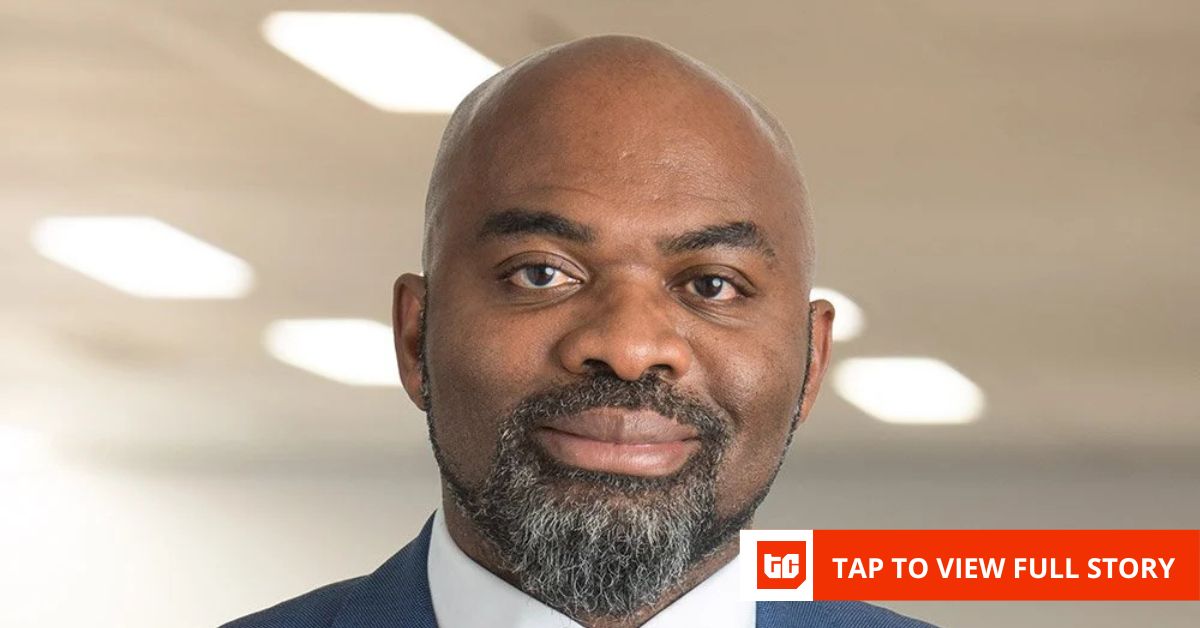
This period coincides with Chris Chijiutomi, a British-Nigerian with two decades of experience in investing across Europe, Asia, and Africa, becoming the managing director and head of Africa for BII. Now, Africa comprises roughly 60% of BII’s new investments by value in recent years, showing the continent’s priority in BII’s portfolio.
BII has also steadily expanded its exposure to early-stage ventures and technology startups in Africa, positioning venture capital as a core instrument of its development mandate. As a limited partner, it has anchored several Africa-focused funds, including TLcom Capital’s TIDE Africa Funds I and II, Sawari Ventures in North Africa, and Novastar Ventures in East and West Africa.
Alongside fund investments, BII has selectively deployed capital directly into startups like mPharma, to strengthen pharmaceutical supply chains; Moove, via structured credit to expand mobility financing for ride-hailing drivers; and equity investments in TradeDepot, Moniepoint, and Egypt’s Paymob. It has also backed off-grid energy companies such as M-KOPA and Lumos.
For this week’s Ask an Investor, I spoke with Chijiutomi to understand the firm’s increased focus on Africa, the sectors that he’s willing to invest in, BII’s sudden profitability jump, how the firm picks its startups and funds, and the sector that has provided the most returns.
This interview has been edited for length and clarity.
Is there any sector where you think your views have changed the most since you became BII’s Head of Africa?
When I started this role, I would say renewable energy—especially decentralised renewable energy—was fairly nascent. The solar panels were relatively quite expensive, including the battery, and the uptake was also quite limited. Therefore, the technical and commercial viability was still quite nascent.
But if I look at where I am now, and I remember driving from the airport to our office here, I could see a lot of solar panels on people’s rooftops. I could see solar panels on the streetlights. So I think, for me, what we call decentralised renewable energy—DRE—has been one area that has seen an absolute increase in uptake.
That’s obviously also a function of the gap that exists in a country like Nigeria in terms of electricity access. That’s one key area. And what have we been doing in this space? We invested this year in a $7.5 million facility for a company called Odyssey Energy Solutions, which is a company that’s specifically focused on energy access with renewables. We provided a facility last year—$30 million—to InfraCredit, and InfraCredit is supporting a lot of renewable energy developers in Nigeria. That’s one area that jumps out at me in terms of a key sector that has evolved.
The other one—probably more broad—is the whole venture capital space, the VC space, where people are using technology to develop solutions for their day-to-day problems in markets like Nigeria and broader West Africa. So those two areas, I would probably say, were areas where I’ve seen the most change since I took on the Head of Africa role.
What do you think is spurring this change?
On DRE, it’s just the fact that no country can develop without energy infrastructure. The challenge we have in Africa—and especially Sub-Saharan Africa—is the lack of energy access.
A country like Nigeria, with over 200 million people—at least that’s the last count—has less than 6,000 megawatts of electricity on the grid. Then, when you think about the rural and the peri-urban areas, a lot of them lack access to electricity. Just that failure is what’s led people to think about alternative solutions, and I think that’s where the DRE solutions come into play.
I think on the VC side, with the uptake of the internet and the uptake of telecoms, that has really driven a lot of smart young Africans to think about how to use technology to solve their day-to-day problems—be it things related to payment systems, things related to logistics, or even things related to farming and climate-related data. I think all of this is all about problems that are preventing the continent from developing and growing. Those are the reasons why I think the uptake really has kind of moved onto that next level.
Since you became Head of BII for Africa, what has been your Africa tech strategy? Has it evolved from before you took on the role, or have you maintained the same strategy at BII?
I would say it’s evolved. Prior to me taking on the Head of Africa role, we’ve been investing in the venture capital space and also the private equity space, and the two kinds of interlink. I think since I’ve taken on the role, a big focus of mine has been: How can we find local African entrepreneurs to back? How can we make sure we go deeper in this area and we look for the right type of managers to basically give them our capital and the responsibility to manage it for us?
If I look at some of the things we’ve done in this market, we’ve invested in Ventures Platform, and they’ve been investing in some really smart companies. I had a breakfast meeting this week with Aruwa Capital, a female-led VC business that’s looking to invest in a range of sectors. We have companies like CardinalStone. We have companies like Verod Capital, which are also in some of these spaces.
The other big excitement for me, in terms of companies that we’ve backed here that we continue to see as growth, is companies like Moniepoint, which is now a unicorn in terms of valuation. And also, in Southern Africa, we backed a company called TymeBank. Again, these are two fast-growing companies that are employing a lot of young, smart, diverse people.
How do you pick the fund managers that you invest in, and how do you pick companies?
The first thing for us is alignment. Alignment in understanding their strategy—what exactly are they aiming to do? How have they thought through that strategy? How have they thought through even just the execution of that strategy?
That’s important because I need to match that against our own priorities and how we think about the sectors or the subsectors we invest in. That’s the first thing that enables a deep conversation: Does the strategy align?
I think the second one is about the promoter—in terms of the sponsor or founder—and the team that they have with them. Is this a team that you can back? Do they have the track record? What’s their reputation in the market? What’s their understanding of working with a development finance institution like ourselves? What is their long-term aspiration?
It’s a lot about understanding and getting very close to the founders. But also, do they have a deep bench of a team? Because, you know, if something does happen to a founder—we call it typically a key-man event—what’s the bench of people within the organisation to actually carry on and continue to execute that?
I think the other one is really around the market that they operate in—either the country or the region. Again, is there an alignment with us? Do they really understand this, or are they just putting it there because they think that makes sense for us? Why are they focusing on a particular area? We dig deep into understanding some of that. Um, I think trust is a massive word. You are giving responsibility to these promoters with your capital. My capital is UK taxpayers’ capital. So we have a financial responsibility, and we want to make sure they too understand that.
We also look at the other partners that they might already have. Some of these founders have raised their own first money to start up. Who have they raised the money from? Are these partners that align with our values? Are there other shareholders that we believe are creating alignments—that are also looking to invest in either the direct VC companies or actually the funds?
How do you think about tech here in Africa, and what are the things that excite you, tech-wise?
Let me maybe go through the bits that excite me. I think the fintech space—we talked about Moniepoint and TymeBank. There are other fintech businesses that we’re looking at, which are basically really opening the inclusion story for people that are underserved—people that ordinarily would not have been able to open a bank account, or even had the time to go into a branch to try and withdraw money or move money.
The second one is the commerce space. So basically: How can you combine tech with logistics—the ability to purchase, buy, and deliver goods? We’ve seen businesses where you have—you know, let me call them market women, largely because a lot of these businesses are dominated by women—who have been able to use their app and their phone to basically order inventory that then gets delivered to them. They then use that same app to pay or get credit from suppliers that are giving them [inventory]. And I remember visiting a business in Nigeria a year ago, where we were able to talk to the store owner, and what she explained was that she now doesn’t need to shut her shop to go to Lagos Island market to buy all these goods, because everything can be done from her phone. Just the utilisation of tech to support the MSME—micro, small, medium enterprise—I think is a game changer, because the majority of businesses in Africa fall within that category.
Agritech, too, because of the size of arable land in Africa. I still say that the largest employer of people on the continent remains in the agri sector. How can we use technology to help get inputs, such as fertilisers and seeds, to farmers? How can we utilise technology to provide farmers with real-time information on the cost of their crops and how they can sell them, ensuring they are not being cheated by shifts in economics that favour those who buy them? How can you use technology to help farmers understand climate change—predicting the weather patterns, when they should plant, when they should harvest—all of this?
Agritech—and where I have seen agritech investment the most from us is in East Africa, because the farming sector there is a lot more advanced.
Climate tech is becoming an area of interest. So all things like electric vehicles—two-wheelers, three-wheelers, and at some point four-wheelers. I’ve just come back from Ghana, and I’ve started seeing people driving four-wheelers because of the challenges of fuel. In Nigeria, I was at Marina the other day, where I saw a bank that has an EV fleet (electric vehicle fleet), and they had solar panels on the top of their car parking port, and they’re using technology to determine when they now need to inject electricity for charging. I was very impressed.
I was going through your report from last year, and something that jumped out to me was a focus on profitability in the reports. I found that really interesting because I haven’t really seen that with other DFIs—talking about profitability and putting it on the front foot. What’s inspiring that focus? Because—from 2023—it was a £44 million loss, then you quickly jumped the next year to like £213 million pounds in profit. How do you guys think about profitability? How was that jump achieved?
There are different dimensions to it. When we invest, we invest with two things in mind, and all of this is really around understanding risk.
First thing is: what impact is our investment going to create, and is our money needed? Then the second thing is sustainability—what’s the return expectation? So we’re always matching the impact you create versus the return. So that’s always a balance: anytime the teams are bringing opportunities, we always have to consider the two.
Profit matters in the sense that we have to ensure that we are building businesses that can stand alone, that can grow in time without DFI capital. For that to occur, these companies, at some point, need to start returning dividends or making a profit so that they become self-sustaining.
So for me, profitability is something that’s inbuilt if you really want these businesses to grow without our capital. If we want to mobilise commercial money into these businesses—for example, a big objective for BII in the upcoming strategy is what we call capital mobilisation. How can we mobilise, in an African context, local pension funds, sovereign wealth funds, and high-net-worth individuals to invest in some of our assets? A lot of them will not invest unless these assets are making a profit. Therefore, that consideration.
Impact—which we define around inclusivity, productivity, and sustainability—is embedded in what we do, and then the commercial side is also linked. Why have we shown a result, as you’ve just indicated? A number of things.
I think one is timing. You know, there are some bets we’ve made in terms of companies we’ve invested in that are now starting to yield dividends or yield returns back to us. You know, we’re a long-term investor, so sometimes there’s an element of the cycle.
There are companies like Moniepoint—just using that as an example—when we invested, Moniepoint was nowhere near a unicorn. It’s become a unicorn. So that means some of our capital has now increased in value. Again, that flows through to our annual accounts.
We have a number of funds that we’ve invested in, which are longer-term. Some of the businesses have now matured, and then they’re starting to deliver returns. I think because our portfolio—which is just under $9 billion—there is variability in terms of when some of these investments start to return commercial value, and really that’s what’s translated into our accounts that you’ve just indicated.
You have mentioned Moniepoint a lot; how did the exit from the company happen?
There was a capital raise by Moniepoint where they wanted to bring in a number of different investors. So you had other investors coming into the company, and we realised some of our gains from that. But we still remain an investor in Moniepoint today.
So it was a partial exit?
Yes. When we invest equity, we sometimes have board seats. We typically invest, and we are typically a significant minority. By exception, we’ve done the majority. But what we do is we enable these companies to have the right governance structure and to have the right board composition, and with management and the board, they make the decisions. At some point in its journey, the board and the management of Moniepoint indicated that for them to continue to grow, they needed capital. The way to do that was to raise capital.
One of the kind of strong investors in Moneypoint is DPI—which is a fund manager that BII is also invested in—and they’ve worked with the company to get the company kind of ready in terms of the delivery of its business plan, in terms of the right governance structure, and in terms of the team build-out. Through that, they’ve then helped and worked with the company management and board to decide when to go out and raise capital.
It’s not something that BII exclusively drives or influences. It’s something that is driven by the management and the board of the companies we invest in. And of course, we then can vote or have a view, but ultimately it’s really a majority-led decision, driven by the governance of these companies.
Where have you seen the most returns in all your investments since you became Head of BII for Africa two years ago?
In terms of where I see returns, not in the sense of monetary, but in terms of impact, for every dollar we’ve invested, I will probably say digital infrastructure. The reason is that it includes telecom, so our telecom and technology division is because I have seen and witnessed the direct impact of technology on the continent.
From being able to video call my uncle in the village and physically see him, and the kind of impact I feel from that, to being able to transfer money to him without having to leave my base. And you can also then think about the multiple people who are able to support their direct or extended families. All of this is possible because of the technology that now exists—because of the digital infrastructure—from data centres to cables to mobile phones to towers.
So I think that is one subsector that I feel has been able to create a big impact, in terms of my vantage point, and this is across the continent.
In 2024, BII invested over £1 billion on the African continent. If you were allocating the next billion into Africa, what three themes or sectors would you bet on—and which one would you totally not touch at all?
I think about: how can we create quality jobs for Africans? How can we empower more women or those who are excluded from society? How can we develop solutions to mitigate the effects of climate change? There are quite a few various things in there, but some of our conversations so far have centred around technology. Digital infrastructure, for me, is driving a lot of growth in a lot of countries in Africa.
All things digital—be it from digital telecom infrastructure, data centres, cables, towers—anything that enables humans and businesses to ultimately communicate, store data, exchange data, and use that platform for growth.
We are a big investor in the telecom space, and I hope we will continue to find the right business opportunities to invest in.
The other one—and I think if I look at what Africa went through during COVID, during the Russia-Ukraine war, and more recently with what’s happened across the Atlantic in terms of the US pulling out USAID in a lot of countries in Africa—I think this is the right time for Africans to try and take more control of their destiny.
Africans need to think about local production. Local production enables jobs. It also prevents African companies from relying on imports, which people found during the Russia-Ukraine war, where Africa realised a lot of its wheat was coming from Ukraine and Russia.
All things local manufacturing and value addition in terms of food processing—these are big areas for us, and big areas where I would love to invest. Cobalt, copper—all of these things are raw materials in the continent, but how do we add value in processing such that we’re not just exporting raw and then paying a lot more for processed goods?
Anything to do with energy—climate-related: from energy to water, in terms of adaptation and resilience, to food systems. Africa suffers the most from the impact of climate change, either through drought or through flooding and excessive rainfall.
Those are the three categories that I would focus on: digital infra, manufacturing, and then all things related to climate/energy.
I would avoid sectors that are solely reliant on things like subsidies—100% dependent on government actions—because I think we understand that when you have a change of government, a single policy can totally unbundle some of these types of businesses. So businesses—or sectors—where subsidy is playing too much of a role are probably sectors that I would personally avoid investing in for now.
When you look at your exposure on the continent—you’re heavily invested in Nigeria, Kenya, a bit of Egypt, and several other African countries—where do you feel you are underinvested and can probably do more in this country because of what you’re seeing on the ground?
Not that I’m biased, but just if I look at the demographics, and just driving around, or when you fly over Nigeria, you see just the sheer lack of sustainable infrastructure. Nigeria, just for its size and its importance in the region, continues to be a country where I think we can invest more. I think today we’re already very heavily invested in Nigeria, but the opportunity here is huge.
As a countercyclical investor, I do believe we will continue to see the right type of opportunities to increase our exposure here, but also to diversify our portfolio. I have a great team based in Lagos—a team that has really grown our footprint and exposure here.
Another place where I want us to actually ramp up more is the French-speaking West and Central Africa. This year, we recruited a director of West African origin—French-speaking— and she’s also come from a development finance institution. She’s based in the region, and that’s one region I do believe we have the opportunity to grow. It’s not been a traditional region for BII, but in the last 12 months, we’ve invested—and I’ve been investing—in the financial services area.
We’ve just done a co-investment with an influential bank in West Africa. We are invested in another microfinance-type bank. I have just literally come back from the Democratic Republic of Congo, where we’re building a port with Dubai Ports World—that’s in DRC, a French-speaking country. We have an agro-processing business, but that’s not enough. We can absolutely do more, and the opportunities there are huge.
Another thing I noticed from the report was: Africa now takes 60% of BII’s new commitments. That’s a 40% jump from 2023. What changed—internally, or maybe it’s external conditions—that justifies that acceleration?
We are a countercyclical investor. We should be investing when things are going badly, because that’s when other capital is moving out. In the last three or so years, the continent has faced some significant challenges: the effect of COVID, Russia-Ukraine—um—all of this has had a knock-on impact. And, you know, we’re still feeling it. We increased our investment appetite during that period.
Particularly, we’ve seen a lot in climate investing. You know, a minimum of 30% of our capital has to go into climate finance transactions, and we’ve beaten that. And again, that’s been something where it’s been more targeted and very focused.
I think we’re focusing on partnerships—and those partnerships are helping us to identify the right opportunity in the frontier markets. I mentioned earlier that we have an initiative called the Africa Resilience Investment Accelerator. This is a collaboration between BII, Proparco (the French DFI), and the three of us. We’re going into countries that we all individually don’t have specific experience in—working with companies, finding the right opportunities, and investing.
That’s what’s led us to invest in Ethiopia—in a bank there. That’s what’s leading us to make some investments in Sierra Leone. Those types of initiatives have really helped us accelerate activities we’re doing.
Then mobilisation: we are now starting to originate to share, where we’re bringing other capital providers into some of our investment deals. The last one I’ll end with is: We’ve increased our presence in Africa. We have more people in our local offices who are now closer to markets, who are closer to companies, who are closer to the opportunities, and therefore we’re able to transact and invest for market-level impact better. I would say everything I’ve described—the big catalyst—has been having the right type of people in Africa to drive our investment activities.
If you look ahead to 2033, what would you count as a successful decade for Chris, being Head of BII for Africa?
I would like to continue to shift and build our volume of people in Africa. Again, I believe that having people close to the market creates a closer relationship with the companies that we’re backing, but also with the stakeholders in the markets—be it government, be it industry bodies. BII continuously having the right profile in Africa, for me, is a success.
My visit to West Africa this week—some people that I’ve spoken to are still shocked about the amount of business we’ve been doing here. Therefore, it means we need to publicise more, for me, because if you publicise more, then some of these opportunities will come knocking.
In terms of success: more people and more activity.
I think continuing to deliver on our climate target is important, because 30%—I mentioned earlier—is our target. I want us to continue to exceed that, but make sure we’re driving climate investing in Africa.
A big success for me—and I’m sure my boss will be putting this in my KPI—is how I can mobilise more African pension fund money alongside BII into new asset classes? You know, the days of just sitting there and investing in government securities, T-bills—it’s just not sustainable when you look at inflation, and when you look at some of the experiences of pension funds. You want them to invest in areas that match the liabilities and the assets that they have. So, infrastructure, maybe private credit funds.
The ability where I’m able to stand up and say I’ve been able to mobilise capital from pension funds in Africa into African assets—I think is a big one for me. And for us to continue to be seen as the lead investor in frontier markets. I think that’s the type of thing I would like to reflect on in 2033 as success measures for me in my current role.