


On Tuesday, the Benin Traditional Council (BTC) expressed uncertainty regarding the purpose behind introducing the Iyaloja title into Edo State.
The Council emphasized that if the Iyaloja role is intended as a national institution, then the Iyaloja of Nigeria should first implement this framework across all Nigerian states before BTC can acknowledge its legitimacy and underlying intentions.
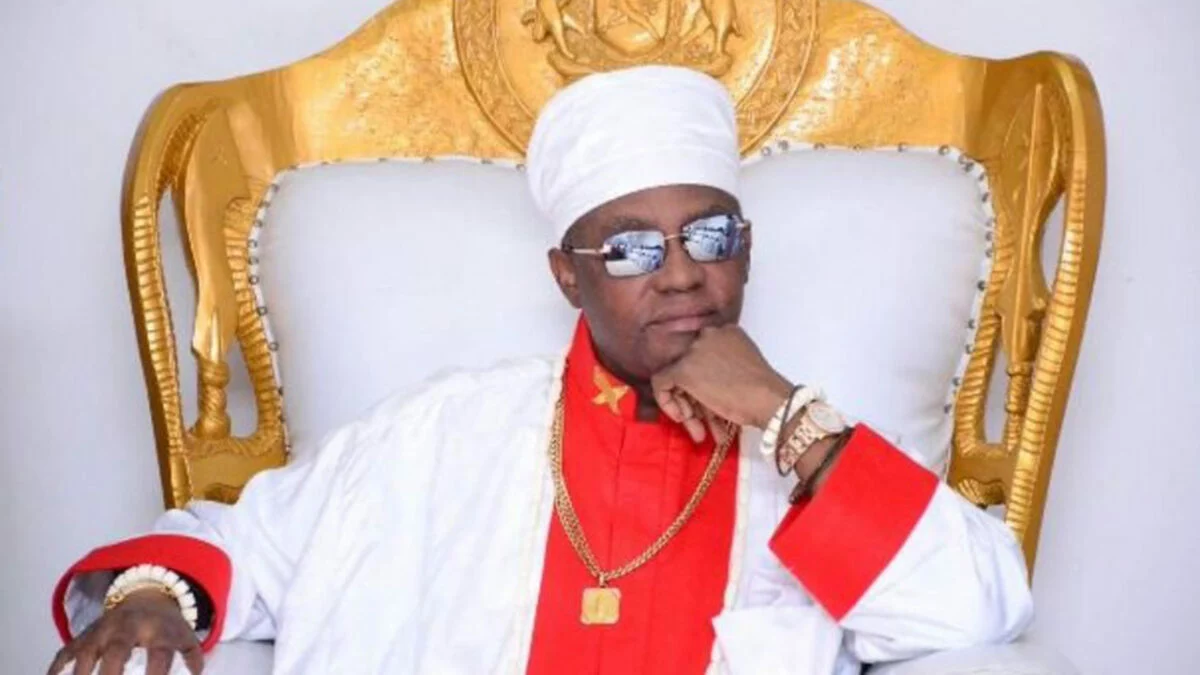
This position was outlined in an official statement issued on behalf of Oba Ewuare II, the Benin monarch, and endorsed by six senior palace chiefs.
The statement raised concerns about whether an Edo woman could legitimately hold the title of Iyaloja in Lagos or at the national level.
“Is it feasible for the Iyaloja concept to be applied in cities like Aba, Owerri, Keffi, Kaduna, Kano, Sokoto, and other regions across Nigeria?” the Council questioned.
BTC noted that had the Edo State government engaged them earlier regarding the Iyeki (market leader) title, they would have provided valuable guidance rooted in tradition.
The Council cautioned that any alteration to the longstanding cultural framework of the Iyeki title risks disrupting communal harmony.
Market women recently visited the palace to express gratitude to the Oba for affirming that the Iyaloja title does not align with Benin customs and traditions.
The statement criticized the politicization of open markets through trade associations, describing such practices as contradictory and harmful to the cultural essence of Benin’s market traditions.
It also voiced concern over market women being manipulated as political instruments under the guise of Market Associations in Edo State, urging both the women and political actors to refrain from involving the revered name of the Oba in partisan conflicts.
The Palace reiterated that proper consultation regarding the traditional role of Iyeki Rdole in Benin culture would have prevented the current disputes and tensions.
“In Benin tradition, there is no such thing as a general Iyeki title, which the Iyaloja concept seems to suggest. Instead, Iyeki is selected exclusively by market women themselves. Once chosen, the candidate is presented to the Palace for formal approval,” the statement clarified.
“Following confirmation, the market women proceed to install her as the Iyeki of their specific market. The Palace does not appoint Iyeki; this authority rests solely with the market women. Each Iyeki operates independently, yet maintains a cultural, spiritual, and religious bond with the Palace.”
“There exists a direct functional relationship between the Iyeki and the Palace. Just as Benin culture does not recognize honorary chieftaincy titles, it similarly rejects honorary Iyeki titles. Each Iyeki carries out spiritual duties for the Palace and the welfare of the market. We strongly advise against politicizing the Iyeki role.”
“We trust that the market women, led by their Iyeki, have now understood their traditional ties to the Palace and the responsibilities that come with it. They should remain attuned to the Palace’s stance and act accordingly.”
“The Palace believes that if proper consultation had occurred regarding the Iyeki’s traditional role, the controversies and tensions currently experienced would have been averted.”
“We remain unclear about the objectives behind introducing the Iyaloja title in Edo State. Should this be a nationwide initiative, then the Iyaloja of Lagos or Nigeria must first apply this concept uniformly across all Nigerian states before its authenticity and purpose can be accepted.”
“Furthermore, we question whether an Edo woman can legitimately serve as Iyaloja of Lagos or Nigeria. Can this Iyaloja concept be extended to cities such as Aba, Owerri, Keffi, Kaduna, Kano, Sokoto, and other parts of Nigeria?”