


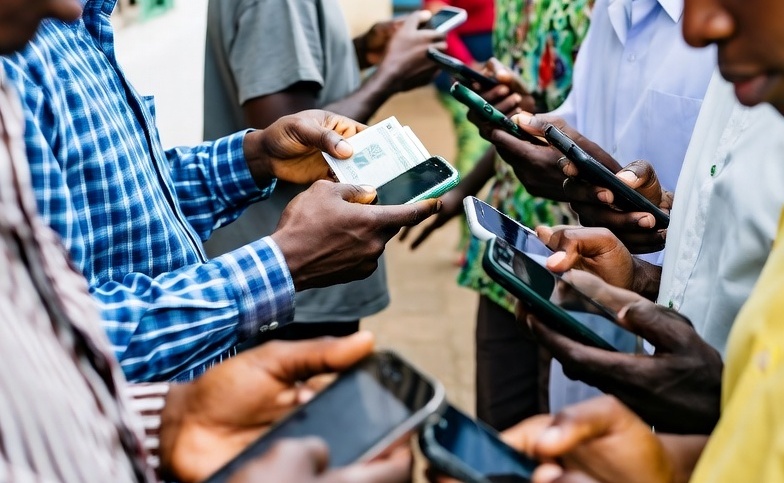
In recent years, Nigeria has emerged as a leading force in Africa’s digital payments landscape. The widespread adoption of mobile banking applications, fintech innovations, and USSD services has revolutionized how millions conduct financial transactions, making them quicker, more convenient, and widely accessible.
Data from the Nigeria Inter-Bank Settlement System (NIBSS) reveals that electronic payment volumes soared to N600 trillion in 2023, a remarkable increase from N387 trillion the previous year. This surge highlights the deep integration of digital financial services into everyday Nigerian life.

However, this rapid growth has also exposed vulnerabilities. Cybercriminals are increasingly targeting weak security infrastructures, insufficient regulatory oversight, and a general lack of consumer awareness to execute more complex fraud schemes.
Unlike more developed countries where stringent regulations and sophisticated fraud detection mechanisms safeguard users, Nigeria’s digital payment ecosystem remains comparatively fragile.
If these security challenges are not addressed, they risk eroding public trust in digital payments, potentially hindering the nation’s efforts to expand financial inclusion.
Factors Driving Nigeria’s Digital Payment Expansion
Nigeria’s digital payment surge is fueled by several key elements. With over 180 million active mobile subscriptions, the country ranks among Africa’s largest mobile markets, providing a fertile ground for digital financial services.
Innovative fintech companies such as Paystack, Flutterwave, OPay, and Kuda have developed intuitive platforms that simplify payments, transfers, and merchant transactions, further accelerating adoption.
The convenience of electronic banking channels offers a stark contrast to the often cumbersome and time-consuming traditional banking experience, making mobile and internet banking the preferred choice for many users.
Additionally, the Central Bank of Nigeria‘s (CBN) cashless policy has significantly reduced dependence on physical cash, encouraging more digital transactions.
This transformation has been particularly impactful for small and medium-sized enterprises, enabling them to accept payments digitally and reach a broader customer base. Moreover, millions of previously unbanked Nigerians are now gaining access to financial services through these fintech solutions.
Nevertheless, the very channels that facilitate this convenience also introduce new cybersecurity risks.
Examining the Cybersecurity Challenges
The cybersecurity landscape within Nigeria’s payment sector is multifaceted. Common threats include phishing scams, social engineering tactics, fraudulent emails and SMS, deceptive phone calls aimed at extracting login details, SIM swap fraud, account takeovers, insider collusion, malware infections, and counterfeit applications.
According to the NIBSS Annual Fraud Report, attempted fraud incidents surged by 45% in 2023 alone, with mobile and online platforms being the primary targets. Financial losses reached billions of naira, and many cases remain unreported to authorities.
Regulatory Comparisons: Nigeria Versus Developed Markets
The CBN has established guidelines covering mobile banking, Know Your Customer (KYC) protocols, and the cashless policy, while the Nigeria Data Protection Regulation governs data privacy.
Despite these frameworks, enforcement is inconsistent, and many fintech operators function with limited supervision. Fraud reporting mechanisms are disjointed, and victims often struggle to recover lost funds.
In contrast, the European Union enforces the Payment Services Directive 2 (PSD2), mandating strong customer authentication methods like two-factor authentication for online payments. The Payment Card Industry Data Security Standard (PCI-DSS) sets global benchmarks for card transaction security.
In the United States, financial institutions are obligated to report breaches and fraud attempts, and they collaborate through the Financial Services Information Sharing and Analysis Center (FS-ISAC) to share threat intelligence.
The United Kingdom’s Open Banking initiative enforces secure data sharing under rigorous security standards.
While developed countries maintain proactive and stringent regulatory environments with clear penalties for non-compliance, Nigeria’s approach tends to be more reactive and fragmented.
The Impact of Inadequate Cybersecurity
Weak security measures in Nigeria’s digital payment ecosystem have repercussions beyond monetary losses. They undermine consumer confidence, damage the reputations of fintech firms and banks, stall financial inclusion progress, and pose broader economic risks.
Conversely, in mature markets, robust trust in digital platforms fosters thriving e-commerce and online payment ecosystems supported by secure infrastructures.
Telecommunications-related fraud, such as SIM swap scams, has led to significant customer losses in Nigeria, with millions of naira stolen through coordinated attacks. Victims often face lengthy or nonexistent reimbursement processes.
For example, UK banks operate under the Contingent Reimbursement Model (CRM), which mandates compensation for customers defrauded through authorized push payment scams, thereby reinforcing accountability and trust.
Similarly, in the US, consumer liability for credit card fraud is limited, with financial institutions and merchants absorbing most losses. Nigeria’s absence of comprehensive consumer protection leaves users vulnerable to bearing the full impact of fraud.
READ ALSO: Payment Gateways simplifying business operations for Nigerians
Bridging the Security Divide
To fortify its digital payment security, Nigeria can adopt best practices from global leaders. Implementing mandatory multi-factor authentication-such as biometric verification or token-based systems-across all banks and fintech platforms is critical.
Leveraging artificial intelligence for real-time fraud detection can enhance the accuracy of identifying suspicious activities, minimizing false alarms while effectively combating fraud.
Public education initiatives are essential to raise awareness about phishing, SIM swap dangers, and counterfeit applications.
Strengthening regulatory enforcement by mandating PCI-DSS compliance and expanding consumer fraud liability protections will further safeguard users.
Encouraging collaboration among banks, fintech companies, and telecom providers to share threat intelligence-similar to the FS-ISAC model internationally-can improve collective defense mechanisms. Additionally, equipping law enforcement agencies with the necessary tools and training to investigate and prosecute cybercrimes is vital.
Nigeria’s digital payment revolution is a significant milestone, yet its sustainability depends on closing cybersecurity gaps. Without robust protections, fraud risks could erode years of progress and diminish public confidence.
Experiences from advanced economies demonstrate that a combination of stringent regulation, cutting-edge technology, and consumer education forms the foundation for a secure and thriving digital payment ecosystem. By embracing these strategies, Nigeria can ensure its digital payments sector continues to drive economic growth and financial inclusion.