


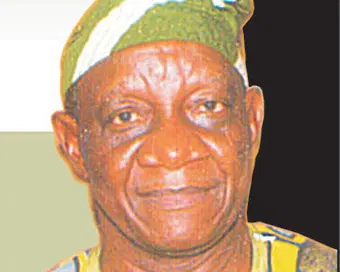
Tinubu‘s toughest challenger, by Dele Sobowale” />
‘2027: Jonathan Weighs ADC Option Amidst Comeback Rumors’ – News Bulletin, October 5, 2025.
“Ultimately, every political party collapses under the weight of its own deceptions.” – Dr. John Arbuthnot, 1667-1735.
As the 2027 presidential election approaches, former President Goodluck Jonathan is emerging as the most formidable contender against President Tinubu. Other leading candidates are struggling to finalize their presidential or vice-presidential tickets, especially as coalition talks falter. Meanwhile, supporters of Atiku, Kwankwaso, and the Obidients remain caught in the illusion of solo electoral triumphs.
Among these political miscalculations, the Peoples Democratic Party (PDP) is arguably the most entrenched in denial. Its members cling tenaciously to what has become a hollow political structure, seemingly oblivious to the party’s waning influence. Remarkably, nearly half of the current All Progressives Congress (APC) lawmakers were once PDP stalwarts who opted to remain within the APC’s fold rather than return to their former party. Those contemplating a departure from APC are more inclined to join the African Democratic Congress (ADC) than to rejoin the PDP.
Jonathan appears to have grasped this political reality, which explains his increasing gravitation toward the ADC. This strategic pivot could be his most astute move yet, positioning him as the ideal figure to rejuvenate the party. Below is an analysis of why Dr. Goodluck Jonathan could present a serious challenge to the APC.
Economic Context: A Contrast Between 2015 and 2027
“The past remains unchangeable, even by divine forces.” – Agathon, 447-401 BC.
When Nigerians were surveyed about whether their lives were better in 2015 compared to now and the near future, the overwhelming consensus was that 2015 was more prosperous. There is also widespread doubt that conditions will improve significantly by 2027. Given that 2015 marked the low point of Jonathan’s administration, this public sentiment suggests that Tinubu faces a steep uphill task convincing citizens of his superior economic management. Jonathan’s route to victory depends on assembling a stellar team of economic strategists to clearly articulate his vision, potentially eclipsing Tinubu’s economic claims.
It is crucial to highlight that the economic turmoil Tinubu inherited was largely a legacy of Buhari’s administration, not Jonathan’s. Key economic metrics favor Jonathan’s tenure. For example, the average GDP growth rate during Jonathan’s presidency (2010-2015) hovered around 5.5%, outperforming the combined average of Buhari’s eight years and Tinubu’s initial two years. The exchange rate was stable, below N200 to the US dollar when Jonathan left office, whereas it now fluctuates near N1,500. The price of rice, a staple, was about N8,000 per 50kg bag in 2014 but has since skyrocketed to N60,000. Similarly, petrol prices have surged from roughly N240 per litre to between N850 and N1,200, depending on market dynamics. These figures starkly highlight the economic decline under APC stewardship.
In 2015, Nigeria was far from being the global epicenter of poverty-a dubious distinction it has since acquired under the APC’s so-called ‘change’ agenda.
Security and Infrastructure: A Comparative Overview
“Good governance protects individual freedoms within the framework of societal order.” – US President Grover Cleveland, 1837-1908.
Jonathan has candidly admitted to failures during his administration, notably the unresolved Chibok girls’ abduction. However, he can justifiably argue that the widespread armed lawlessness by herdsmen and the surge in nationwide violence were largely absent during his tenure. Security threats were more localized in the North, unlike the pervasive insecurity witnessed today. Crimes that now threaten national stability were virtually unknown in 2014.
On infrastructure, Jonathan can point to the numerous well-maintained highways he left behind-such as Benin to Sapele, Owo-Ifon, Calabar-Itu, Lagos-Kogi, Ibadan-Ife, Jebba-Mokwa, and Abuja-Kaduna-that have since deteriorated into perilous routes after twelve years of APC governance.
Fuel Subsidy Debate: Revisiting 2012
“Life’s path often circles back like a returning wave.”
One of Jonathan’s strongest criticisms of Tinubu centers on the fuel subsidy removal. Former Governor Fayemi of the APC recently confessed that he and others in the now-defunct Action Congress of Nigeria (ACN) opposed Jonathan’s 2012 subsidy removal plan, despite acknowledging its necessity. This admission undermines Tinubu’s claim to sole credit for the policy and highlights the enormous losses Nigeria suffered due to subsidy fraud between 2012 and 2023. Jonathan’s challenge to his detractors is straightforward: why resist a policy proven to benefit the nation?
Jonathan: The Most Acceptable Southern Candidate for Northern Electorate
There appears to be a certain providential appeal associated with the name Goodluck. For Northerners willing to allow the South to complete two presidential terms, Jonathan represents the safest option. Peter Obi has pledged to serve only one term, but doubts linger about his sincerity, with fears he might mobilize a mass movement reminiscent of the 1970s ‘Go On With One Nigeria’ (GOWON) campaign. Jonathan, having already served one term, can only seek one more, making him a more predictable and palatable southern candidate-provided he meets eligibility criteria.
Looking Forward
‘2027 Presidential Election: Court Petition Seeks to Bar Jonathan and INEC’ – VANGUARD, October 7, 2025.
“Those who seek power often find it necessary to neutralize their strongest rivals.” – Critias, circa 404 BC.
To avoid a direct contest between Tinubu and Jonathan, moves are underway to disqualify the former president. While such legal maneuvers are not unexpected, the timing seems premature since Jonathan has yet to formally announce his candidacy or party affiliation. Nevertheless, the very existence of this lawsuit underscores Jonathan’s position as Tinubu’s main challenger.
Tinubu has responded forcefully, with his Senior Special Adviser, Bayo Onanuga, issuing sharp warnings to Jonathan’s camp. Politics is a battlefield without bullets, where all tactics are permissible. Onanuga’s blunt message-“if you can’t stand the heat, get out of the kitchen”-reflects the fierce nature of this contest.
Jonathan currently holds the momentum but must tread carefully, seeking thorough advice, especially from constitutional experts, to confirm his eligibility. While politicians often display unrestrained ambition, a former president should avoid the embarrassment of disqualification. As Duc de Levis (1764-1830) observed, “Nobility carries its obligations.” Ideally, Jonathan should aspire to statesmanship and rise above partisan conflicts. Yet, if he chooses to re-enter the race, his conduct must embody dignity beyond political skirmishes.
Though uncertainty surrounds Jonathan’s potential candidacy, his involvement would guarantee a fiercely competitive election. It is plausible that prominent politicians from the South-East and South-South, who previously defected to the APC, might realign with Jonathan’s camp.
For political analysts and citizens alike, this anticipated showdown promises to be the defining electoral battle of the century.
Let the contest commence!
• Follow me on Facebook @ J Israel Biola.